 Back
Carbon and the Molecular Diversity of Life
Study Guide - Smart Notes
 Tailored notes based on your materials, expanded with key definitions, examples, and context.
Carbon and the Molecular Diversity of Life
Introduction to Carbon in Biology
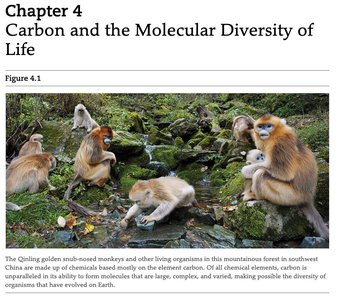
Carbon is the foundational element of life, forming the backbone of the vast majority of biological molecules. Its unique chemical properties allow it to create large, complex, and diverse molecules, including proteins, DNA, and carbohydrates, which are essential for life.
Key Point: Living organisms are primarily composed of carbon-based compounds.
Key Point: Carbon's versatility enables the formation of molecules with various sizes, shapes, and functions.
Example: The diversity of life, such as the variety of animal species, is underpinned by the molecular diversity made possible by carbon.
Organic Chemistry and the Origin of Life
Definition and Scope of Organic Chemistry
Organic chemistry is the study of compounds containing carbon. These compounds range from simple molecules like methane to complex macromolecules such as proteins and nucleic acids. Most organic compounds also contain hydrogen atoms.
Key Point: Organic compounds are central to the structure and function of living organisms.
Key Point: The field of organic chemistry was redefined to include all carbon compounds, regardless of their origin.
Example: The Miller-Urey experiment demonstrated that organic molecules could form under prebiotic Earth conditions, supporting the hypothesis that life's building blocks could arise naturally.
Mechanism vs. Vitalism
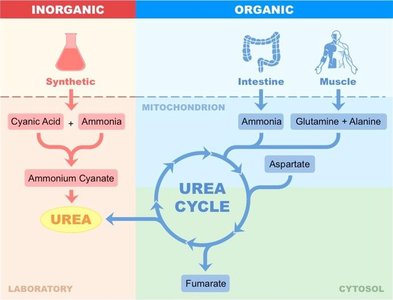
The concept of mechanism in chemistry asserts that the same physical and chemical laws apply to both organic and inorganic compounds. This view replaced the earlier idea of vitalism, which held that organic compounds could only be produced by living organisms.
Key Point: Laboratory synthesis of organic molecules, such as urea, demonstrated that life’s chemistry follows universal chemical laws.
Carbon’s Atomic Structure and Bonding
Electron Configuration and Bonding Capacity
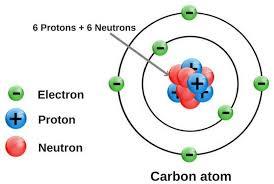
Carbon has an atomic number of 6, with four electrons in its outer shell. This configuration allows carbon to form four covalent bonds with other atoms, enabling a wide variety of molecular structures.
Key Point: Carbon can bond with many elements, including hydrogen, oxygen, nitrogen, and other carbons.
Key Point: The ability to form single, double, or triple bonds leads to molecular diversity.
Types of Carbon Compounds
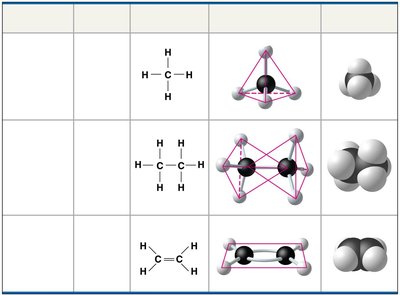
Carbon forms the basis of many types of molecules, including hydrocarbons, carbohydrates, proteins, and nucleic acids. The structure of these molecules can be represented in various ways, such as molecular formulas, structural formulas, ball-and-stick models, and space-filling models.
Example: Methane (CH4), ethane (C2H6), and ethene (C2H4) are simple hydrocarbons with different bonding arrangements.
Valence and Bonding Patterns
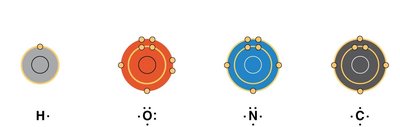
The number of covalent bonds an atom can form is determined by its valence electrons. Hydrogen forms one bond, oxygen two, nitrogen three, and carbon four.
Key Point: This predictable bonding pattern allows for the construction of complex molecules.
Molecular Diversity from Carbon Skeletons
Variation in Carbon Skeletons
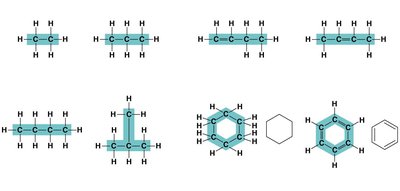
The diversity of organic molecules arises from variations in the carbon skeletons, which can differ in length, branching, double bond position, and the presence of rings.
Key Point: Structural diversity leads to functional diversity in biological molecules.
Example: Isomers are molecules with the same molecular formula but different structures and properties.
Hydrocarbons
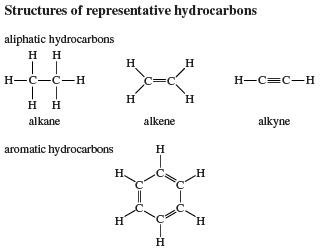
Hydrocarbons are organic molecules consisting entirely of carbon and hydrogen. They are nonpolar and hydrophobic, serving as important energy sources in biological systems.
Example: Fatty acids contain long hydrocarbon tails, which store energy in fat molecules.
Isomers: Structural Diversity
Types of Isomers
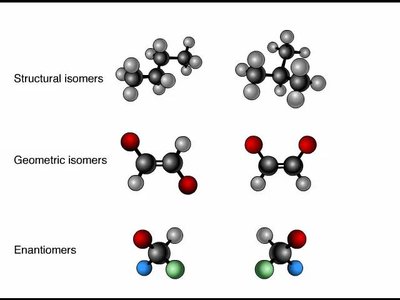
Isomers are compounds with the same molecular formula but different structures. The main types are:
Structural Isomers: Differ in the covalent arrangement of atoms.
Cis-Trans (Geometric) Isomers: Have the same covalent bonds but differ in spatial arrangement around a double bond.
Enantiomers: Are mirror images of each other and cannot be superimposed.
Biological Importance of Isomers
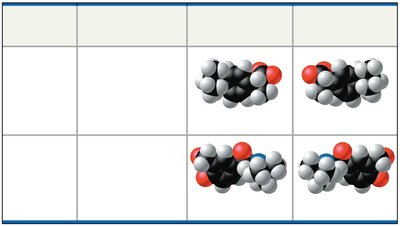
Isomers can have dramatically different biological activities. For example, only one enantiomer of a drug may be biologically active.
Example: S-ibuprofen is effective as a pain reliever, while R-ibuprofen is not.
Functional Groups and Molecular Function
Key Functional Groups in Biological Molecules
Functional groups are specific groups of atoms attached to carbon skeletons that determine the chemical behavior of organic molecules. The seven most important functional groups in biology are:
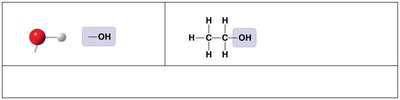
Hydroxyl (—OH)
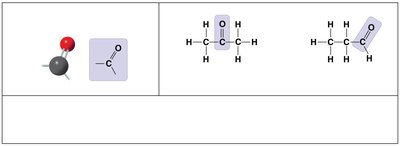
Carbonyl (C=O)
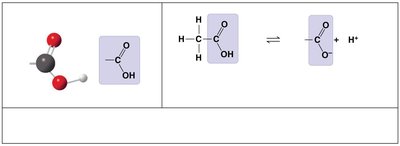
Carboxyl (—COOH)
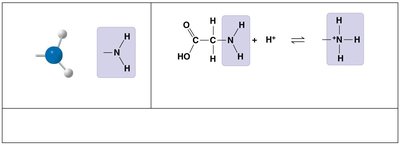
Amino (—NH2)
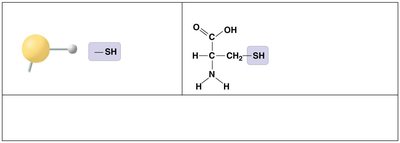
Sulfhydryl (—SH)
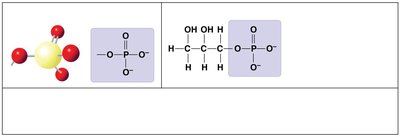
Phosphate (—OPO32−)
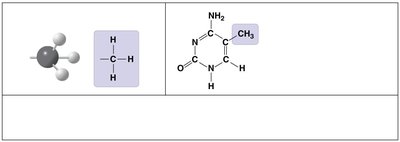
Methyl (—CH3)
Functional Group | Structure | Group Properties | Example |
|---|---|---|---|
Hydroxyl | —OH | Polar, forms hydrogen bonds with water | Ethanol |
Carbonyl | C=O | Polar, found in sugars (ketoses and aldoses) | Acetone, Propanal |
Carboxyl | —COOH | Acts as an acid (donates H+) | Acetic acid |
Amino | —NH2 | Acts as a base (accepts H+) | Glycine |
Sulfhydryl | —SH | Forms disulfide bonds, stabilizes proteins | Cysteine |
Phosphate | —OPO32− | Contributes negative charge, energy transfer | Glycerol phosphate |
Methyl | —CH3 | Affects gene expression, shape of molecules | 5-Methyl cytosine |
ATP: The Energy Currency of the Cell
Structure and Function of ATP
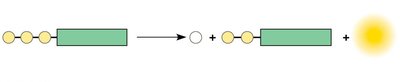
Adenosine triphosphate (ATP) is a key organic phosphate molecule that stores and transfers energy within cells. ATP consists of adenosine attached to three phosphate groups. Hydrolysis of ATP releases energy used for cellular work.
Equation:
Summary: The Chemical Elements of Life
The versatility of carbon enables the vast diversity of organic molecules, which forms the molecular foundation for all biological diversity. Understanding carbon chemistry is essential for studying life at the molecular level.
