 Back
Carbon and the Molecular Diversity of Life
Study Guide - Smart Notes
 Tailored notes based on your materials, expanded with key definitions, examples, and context.
Carbon and the Molecular Diversity of Life
Introduction to Carbon Chemistry
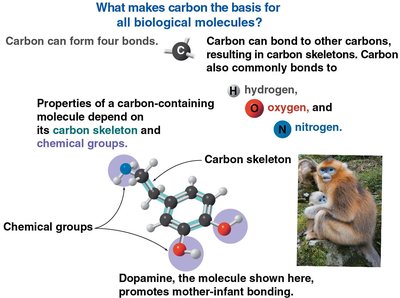
Carbon is a fundamental element in biology due to its unique ability to form four covalent bonds, allowing for a vast diversity of stable organic molecules. This versatility underpins the molecular complexity required for life.
Organic chemistry is the study of compounds that contain carbon.
Carbon atoms can bond with other carbons, hydrogen, oxygen, nitrogen, sulfur, and phosphorus, forming the backbone of biological macromolecules.
The properties of carbon-containing molecules depend on their carbon skeleton and the chemical groups attached to them.
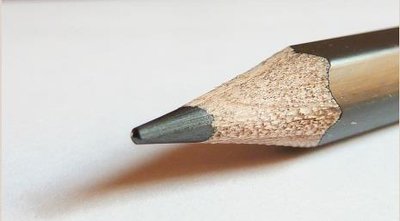
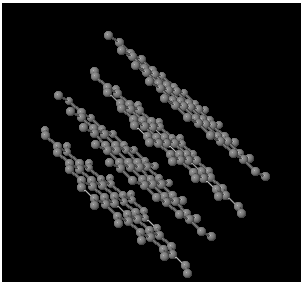
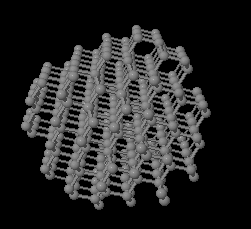
Allotropes of Carbon: Diamond and Graphite
Although both diamond and graphite are composed solely of carbon atoms, their physical properties differ dramatically due to differences in atomic bonding and structure.
Diamond is the hardest known natural substance, with each carbon atom bonded to four others in a tetrahedral lattice.
Graphite is soft and slippery, consisting of layers of carbon atoms arranged in hexagonal sheets with weak forces between layers.

Valence and Bonding Properties of Carbon
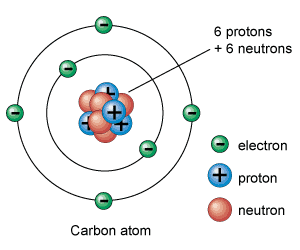
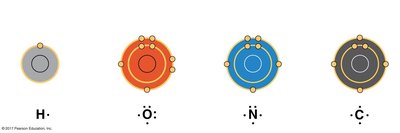
Carbon has four electrons in its outer shell and needs four more to achieve a full octet, allowing it to form up to four covalent bonds. This property enables carbon to act as a versatile backbone for complex molecules.
Carbon typically forms single or double bonds, which are stable across a wide range of temperatures.
The number of unpaired electrons in the valence shell determines the number of covalent bonds an atom can form (its valence).
Common Bonding Partners of Carbon
The most frequent bonding partners of carbon in biological molecules are hydrogen, oxygen, and nitrogen. The electron configuration of carbon allows for covalent compatibility with many elements, contributing to molecular diversity.
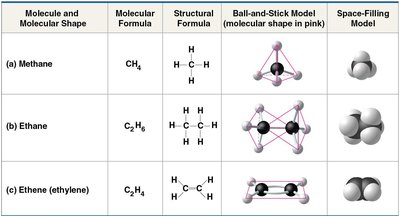
Examples: Methane (CH4), Ethane (C2H6), Ethylene (C2H4).
Carbon Skeletons and Molecular Diversity
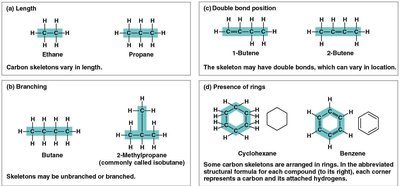
Carbon skeletons form the framework of most organic molecules. They can vary in length, branching, double bond position, and the presence of rings, contributing to the diversity of organic compounds.
Hydrocarbons are organic molecules consisting only of carbon and hydrogen, often serving as energy sources.
Carbon can form single, double, or triple bonds, and both polar and nonpolar bonds.
Isomers: Structural, Cis-Trans, and Enantiomers
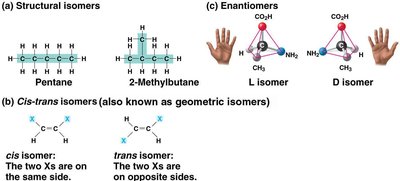
Isomers are compounds with the same molecular formula but different structures and properties. The three main types are:
Structural isomers: Differ in the covalent arrangement of atoms.
Cis-trans (geometric) isomers: Differ in spatial arrangement around double bonds.
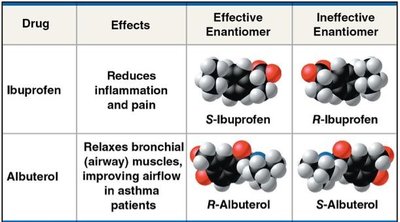
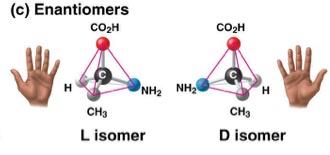
Enantiomers: Mirror images of each other, important in biological systems due to their different effects.
Functional Groups and Molecular Function
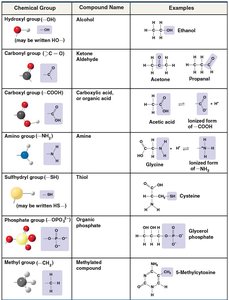
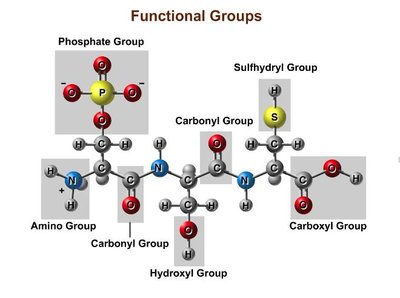
Functional groups are specific groups of atoms attached to carbon skeletons that determine the chemical reactivity and properties of organic molecules. They are key to molecular function in biological systems.
Common functional groups include hydroxyl, carbonyl, carboxyl, amino, sulfhydryl, phosphate, and methyl groups.
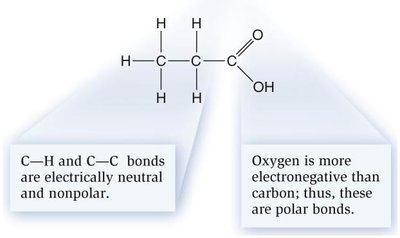
Functional groups can make molecules polar or nonpolar, affecting solubility and reactivity.
Amphipathic Molecules
Some molecules contain both polar and nonpolar functional groups, making them amphipathic. This property is crucial for the formation of biological membranes and other structures.
Adenosine Triphosphate (ATP): An Important Organic Phosphate
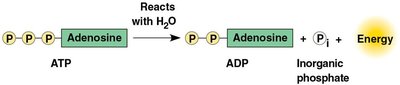
ATP is a key energy-carrying molecule in cells, consisting of adenosine attached to three phosphate groups. The hydrolysis of ATP releases energy used for cellular processes.
ATP stores potential energy in its phosphate bonds.
Hydrolysis reaction:
Polymer Formation and Breakdown
Biological macromolecules are often polymers, formed by linking monomers through dehydration reactions and broken down by hydrolysis reactions.
Dehydration reaction: Joins monomers by removing water.
Hydrolysis reaction: Breaks polymers into monomers by adding water.
Summary: The Versatility of Carbon
The ability of carbon to form diverse and stable molecules underlies the complexity and diversity of life. Variation at the molecular level is foundational to biological diversity.
