 Back
Carbon and the Molecular Diversity of Life
Study Guide - Smart Notes
 Tailored notes based on your materials, expanded with key definitions, examples, and context.
Carbon and the Molecular Diversity of Life
Introduction to Organic Chemistry
Organic chemistry is the study of carbon-containing compounds, which are the foundation of all biological molecules. The unique properties of carbon allow it to form a vast array of molecules, ranging from simple to highly complex structures. This molecular diversity is essential for the complexity of life.
Organic compounds are molecules that contain carbon atoms bonded to other elements, typically hydrogen, oxygen, and nitrogen.
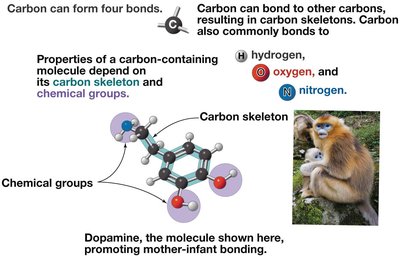
Carbon can form four covalent bonds, enabling the construction of large, complex molecules with various shapes and functions.
Atomic Structure and Bonding of Carbon
The chemical behavior of carbon is determined by its atomic structure, particularly the arrangement of its valence electrons. Carbon's ability to form four covalent bonds makes it uniquely suited to serve as the backbone of biological molecules.
Valence electrons are the electrons in the outermost shell of an atom and determine bonding capacity.
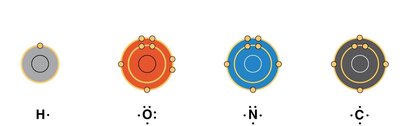
Typical number of covalent bonds formed by key elements:
Hydrogen (H): 1
Oxygen (O): 2
Nitrogen (N): 3
Carbon (C): 4
Carbon Skeletons and Molecular Diversity
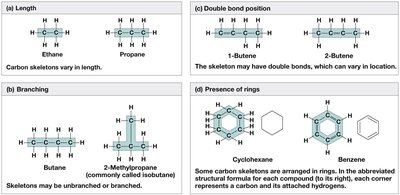
Carbon atoms can bond to each other, forming the skeletons of organic molecules. These skeletons vary in length, branching, and the presence of rings or double bonds, contributing to the diversity of organic molecules.
Carbon skeletons can be straight, branched, or arranged in rings.
The variation in carbon skeletons leads to different chemical properties and biological functions.
Hydrocarbons
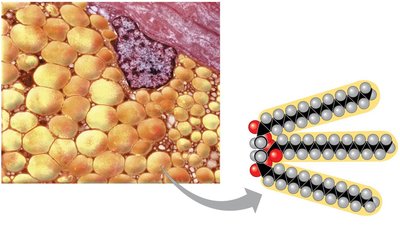
Hydrocarbons are organic molecules consisting entirely of carbon and hydrogen. They are generally nonpolar and hydrophobic, making them important in the structure of biological molecules such as fats.
Hydrocarbons store substantial chemical energy due to their many C–H bonds.
They are found in molecules like fats, which serve as energy reserves in living organisms.
Isomers: Structural Diversity in Organic Molecules
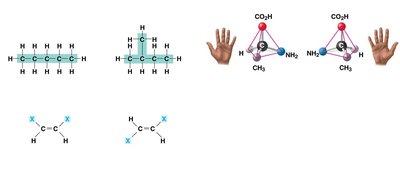
Isomers are compounds with the same molecular formula but different structures and properties. The three main types of isomers are structural isomers, cis-trans isomers, and enantiomers.
Structural isomers: Differ in the covalent arrangements of their atoms.
Cis-trans isomers: Differ in spatial arrangement around a double bond.
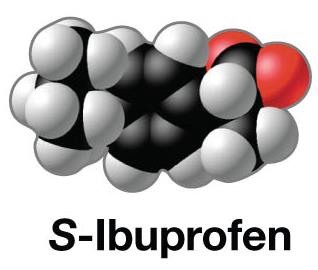
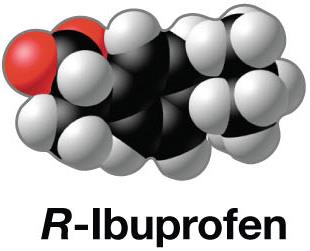
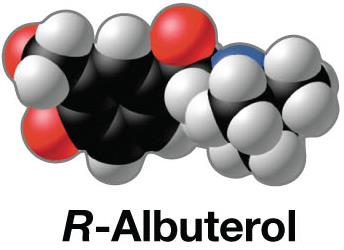
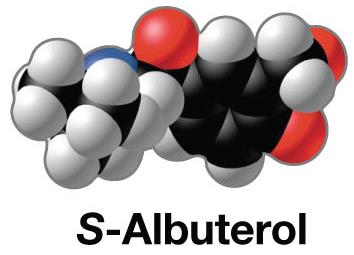
Enantiomers: Mirror images of each other, differing in spatial arrangement around an asymmetric carbon.
Enantiomers are important in pharmacology, as only one form may be biologically active.
Chemical Groups and Molecular Function
The properties of organic molecules are determined not only by their carbon skeletons but also by the chemical groups attached to them. These functional groups confer specific chemical properties and biological functions.
Functional groups are the most reactive parts of organic molecules.
Seven key functional groups in biology:
Hydroxyl (—OH)
Carbonyl (C=O)
Carboxyl (—COOH)
Amino (—NH₂)
Sulfhydryl (—SH)
Phosphate (—OPO₃²⁻)
Methyl (—CH₃)
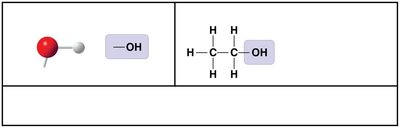
Hydroxyl Group (—OH)
Hydroxyl groups are polar due to the electronegative oxygen atom and can form hydrogen bonds with water, increasing solubility.
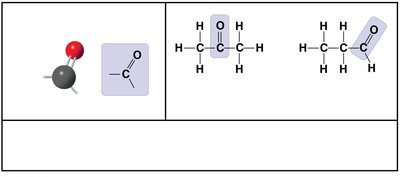
Carbonyl Group (C=O)
Carbonyl groups are found in sugars and can be present as either ketones or aldehydes, depending on the position of the group within the molecule.
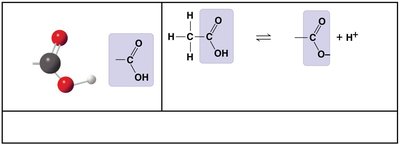
Carboxyl Group (—COOH)
Carboxyl groups act as acids, donating protons (H⁺) and often becoming negatively charged in cells.
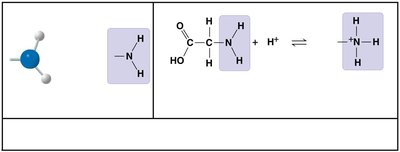
Amino Group (—NH₂)
Amino groups act as bases, accepting protons and becoming positively charged. They are essential components of amino acids.
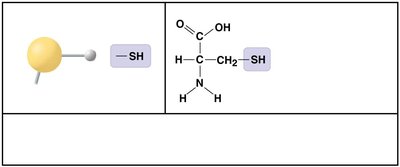
Sulfhydryl Group (—SH)
Sulfhydryl groups can form disulfide bonds, which help stabilize protein structures, especially in cysteine residues.
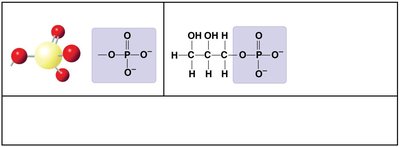
Phosphate Group (—OPO₃²⁻)
Phosphate groups contribute negative charge and are involved in energy transfer, as seen in ATP.
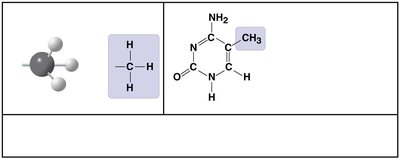
Methyl Group (—CH₃)
Methyl groups are nonpolar and can affect the expression of genes and the function of sex hormones.
ATP: The Energy Currency of the Cell
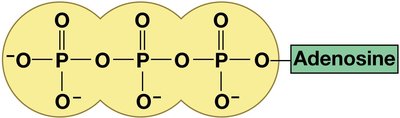
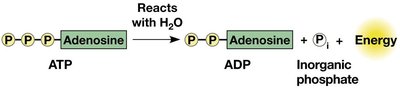
ATP (adenosine triphosphate) is a molecule that stores and transfers energy within cells. Hydrolysis of ATP releases energy that powers cellular processes.
ATP consists of adenosine and three phosphate groups.
The reaction:
Summary: The Chemical Elements of Life
Life is primarily composed of six elements: carbon, hydrogen, oxygen, nitrogen, phosphorus, and sulfur. The ability of carbon to form four covalent bonds leads to a vast diversity of molecular structures, which in turn determines the chemical properties and biological functions of molecules.
Molecular structure and attached chemical groups are key to biological function.
A small set of atoms can create a wide variety of molecules essential for life.
