 Back
Carbon and the Molecular Diversity of Life
Study Guide - Smart Notes
 Tailored notes based on your materials, expanded with key definitions, examples, and context.
Carbon and the Molecular Diversity of Life
Introduction to Organic Chemistry
Organic chemistry is the study of carbon-based compounds, which are the foundation of all living organisms. Organic molecules are defined by the presence of carbon atoms, typically bonded to hydrogen, and often contain C-H bonds. In contrast, inorganic molecules do not contain carbon (with a few exceptions, such as CO2).
Organic molecules: Contain carbon, usually with hydrogen (C-H bonds).
Inorganic molecules: Do not contain carbon (exceptions exist, e.g., CO2).
Living organisms: Primarily composed of organic molecules, but some inorganic compounds are essential for life.
What Makes Carbon Special?
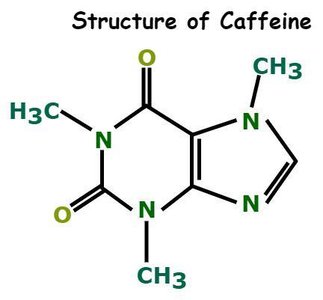
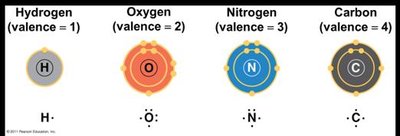
Carbon is unique among elements due to its ability to form four covalent bonds, allowing for a wide variety of molecular shapes and sizes. This tetravalency enables carbon to bond with many elements, including hydrogen, oxygen, nitrogen, phosphorus, and sulfur, and to form chains, rings, and complex structures.
Valence electrons: Carbon has 4 valence electrons, allowing it to form 4 bonds (tetravalent).
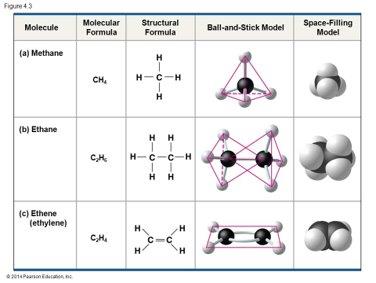
Bonding: Can form single, double, or triple covalent bonds.
Shapes: Carbon atoms bonded to four other atoms form a tetrahedral shape (bond angles = 109.5°); double bonds create planar structures.
Hydrocarbons
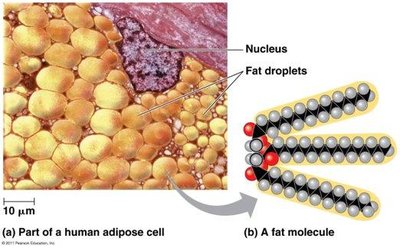
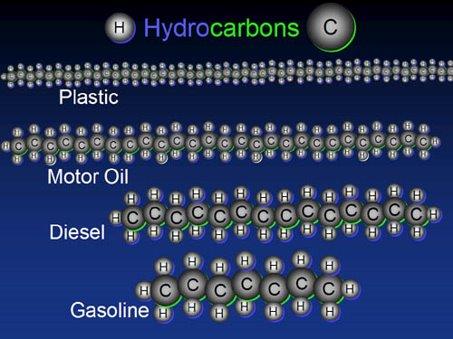
Hydrocarbons are organic molecules consisting entirely of carbon and hydrogen. They can be linear, branched, or ring-shaped, and are important for energy storage in living organisms and as fuels in daily life.
Examples: Fats (energy storage in organisms), gasoline, plastics, fossil fuels.
Properties: Non-polar C-H bonds, making them hydrophobic and excellent for long-term energy storage.
Carbon Skeletons and Isomers
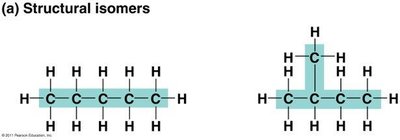
The carbon skeleton is the chain of carbon atoms in an organic molecule. Variations in length, branching, and ring formation lead to molecular diversity. Isomers are compounds with the same molecular formula but different structures and properties.
Structural isomers: Differ in the covalent arrangement of atoms.
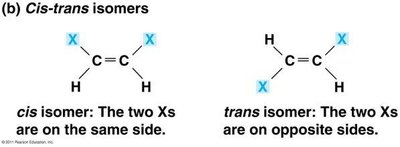
Cis-trans isomers: Differ in spatial arrangement around a double bond (cis = same side, trans = opposite sides).
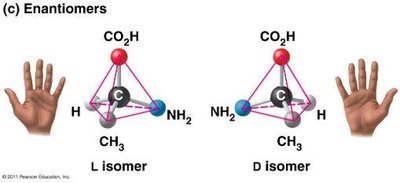
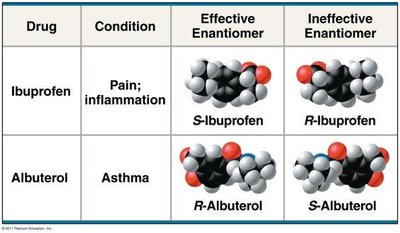
Enantiomers: Mirror images of each other, containing an asymmetric carbon bonded to four different atoms or groups.
Biological Importance of Isomers
Isomers can have dramatically different biological effects. For example, only one enantiomer of a drug may be biologically active, while the other may be less effective or even harmful.
Drug | Condition | Effective Enantiomer | Ineffective Enantiomer |
|---|---|---|---|
Ibuprofen | Pain; inflammation | S-Ibuprofen | R-Ibuprofen |
Albuterol | Asthma | R-Albuterol | S-Albuterol |
Functional Groups
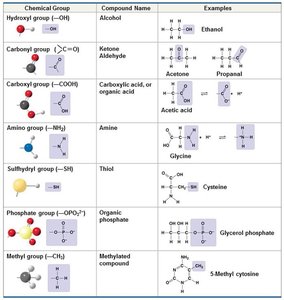
Functional groups are specific groups of atoms attached to carbon skeletons that participate in chemical reactions and confer unique properties to organic molecules. The number and arrangement of these groups determine the characteristics and reactivity of molecules.
Hydroxyl group (–OH): Alcohols; polar, forms hydrogen bonds with water.
Carbonyl group (>C=O): Ketones and aldehydes; found in sugars.
Carboxyl group (–COOH): Carboxylic acids; acts as an acid.
Amino group (–NH2): Amines; acts as a base.
Sulfhydryl group (–SH): Thiols; forms disulfide bonds in proteins.
Phosphate group (–OPO32–): Organic phosphates; involved in energy transfer.
Methyl group (–CH3): Methylated compounds; affects gene expression and molecular function.
Summary Table: Functional Groups
Chemical Group | Compound Name | Examples |
|---|---|---|
Hydroxyl (–OH) | Alcohol | Ethanol |
Carbonyl (>C=O) | Ketone/Aldehyde | Acetone, Propanal |
Carboxyl (–COOH) | Carboxylic acid | Acetic acid |
Amino (–NH2) | Amine | Glycine |
Sulfhydryl (–SH) | Thiol | Cysteine |
Phosphate (–OPO32–) | Organic phosphate | Glycerol phosphate |
Methyl (–CH3) | Methylated compound | 5-Methyl cytosine |
Conclusion
Carbon's unique bonding properties and the diversity of functional groups enable the vast complexity of organic molecules essential for life. Understanding these principles is foundational for studying biological molecules and their functions in living systems.
