 Back
Carbon and the Molecular Diversity of Life
Study Guide - Smart Notes
 Tailored notes based on your materials, expanded with key definitions, examples, and context.
Chapter 4: Carbon and the Molecular Diversity of Life
4.1 Organic Chemistry: The Study of Carbon Compounds
Organic chemistry focuses on the structure, properties, and reactions of carbon-containing compounds. The diversity of life is largely due to carbon's unique chemical versatility.
Miller’s Experiment: Demonstrated that organic molecules could be synthesized abiotically from inorganic precursors, supporting the idea that life's building blocks could form under early Earth conditions.
Carbon’s Role in Biodiversity: Carbon atoms can form a wide variety of molecules with different shapes and chemical properties, enabling the complexity of biological macromolecules such as fructose, glucose, estradiol, testosterone, carbohydrates, lipids, and proteins.
Additional info: Miller’s experiment has been repeated with updated atmospheric models, consistently yielding organic compounds, reinforcing the plausibility of abiotic synthesis.
4.2 Carbon’s Bonding Properties and Molecular Diversity
Carbon has a valence of four, allowing it to form stable covalent bonds with many elements, including itself. This leads to a vast array of possible molecular structures.
Carbon Skeletons: Chains of carbon atoms that vary in length, branching, and ring formation, serving as the backbone for organic molecules.
Hydrocarbons: Molecules consisting only of carbon and hydrogen; they are nonpolar and hydrophobic.
Isomers: Compounds with the same molecular formula but different structures, resulting in different properties.
Structural Isomers: Differ in the covalent arrangements of their atoms.
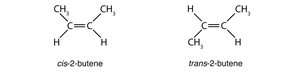
Cis-Trans Isomers (Geometric Isomers): Differ in spatial arrangement around a double bond or ring structure.
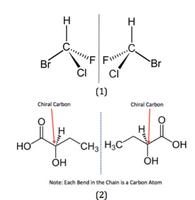
Enantiomers: Mirror images of each other due to the presence of an asymmetric (chiral) carbon atom.
Example: Glucose and fructose are structural isomers; cis-2-butene and trans-2-butene are cis-trans isomers; L- and D-amino acids are enantiomers.
4.3 Key Chemical Groups in Biological Molecules
Certain chemical groups, when attached to carbon skeletons, confer specific chemical properties and reactivity to organic molecules. These functional groups are critical for the structure and function of biomolecules.
Hydroxyl (-OH): Found in alcohols; increases solubility in water.
Carbonyl (>CO): Found in aldehydes and ketones; important in sugars.
Carboxyl (-COOH): Acts as an acid; found in amino acids and fatty acids.
Amino (-NH2): Acts as a base; found in amino acids.
Sulfhydryl (-SH): Important in protein structure (disulfide bonds).
Phosphate (-OPO32-): Involved in energy transfer (e.g., ATP).
Methyl (-CH3): Affects gene expression and molecular recognition.
Example: Estradiol and testosterone have the same carbon skeleton but differ in functional groups, resulting in distinct biological activities.
ATP: The Energy Currency of the Cell
ATP (Adenosine Triphosphate): Consists of adenosine attached to three phosphate groups.
ATP hydrolysis releases energy for cellular work:
Additional info: The high-energy phosphate bonds in ATP are critical for driving endergonic reactions in cells.
Links for Further Study
Chemistryland: Building Organic Molecules
Khan Academy: Chemistry of Life
Crash Course: Carbon… SO SIMPLE
