 Back
Carbon and the Molecular Diversity of Life: Structure and Function of Biomolecules
Study Guide - Smart Notes
 Tailored notes based on your materials, expanded with key definitions, examples, and context.
Carbon and the Molecular Diversity of Life
Overview: Carbon Compounds and Life
Living organisms are primarily composed of water and carbon-based compounds. Carbon's unique chemical properties allow it to form large, complex, and diverse molecules, making it the backbone of organic chemistry. The four main classes of molecules essential to life are carbohydrates, lipids, proteins, and nucleic acids. The first three can form large macromolecules.
Carbon: Structure and Bonding
Electron Configuration and Bonding
Carbon has four valence electrons, enabling it to form four covalent bonds with a variety of atoms. This versatility allows for the construction of complex molecules with diverse shapes and functions. In molecules with multiple carbons, each carbon bonded to four other atoms forms a tetrahedral shape. When two carbons are joined by a double bond, the atoms attached to them lie in the same plane.
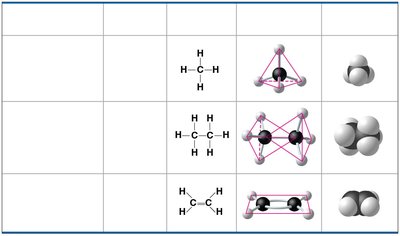
Tetrahedral geometry: Seen in methane (CH4).
Planar geometry: Seen in ethene (C2H4).
Valence and Molecular Architecture
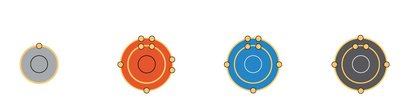
The electron configuration of carbon gives it covalent compatibility with many elements, especially hydrogen, oxygen, and nitrogen. The valences of these elements act as a "building code" for the architecture of living molecules.
Carbon Skeletons and Molecular Diversity
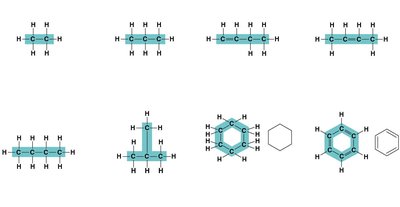
Carbon atoms can bond with other carbons, forming chains that vary in length, branching, double bond position, and ring formation. This diversity in carbon skeletons is the foundation for the molecular diversity of life.
Isomers: Structural Diversity
Types of Isomers
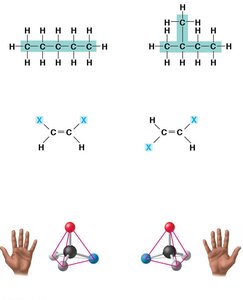
Isomers are compounds with the same molecular formula but different structures and properties:
Structural isomers: Differ in covalent arrangement of atoms.
Cis-trans isomers: Differ in spatial arrangement due to inflexible double bonds.
Enantiomers: Mirror images due to asymmetric carbon; only one is usually biologically active.
Functional Groups: Chemical Groups Important to Life
Overview of Functional Groups
Functional groups are specific groups of atoms within molecules that are responsible for the characteristic chemical reactions of those molecules. The seven most important functional groups in biology are:
Hydroxyl (–OH)
Carbonyl (C=O)
Carboxyl (–COOH)
Amino (–NH2)
Sulfhydryl (–SH)
Phosphate (–OPO32–)
Methyl (–CH3)
Functional Group | Structure | Compound Name | Example |
|---|---|---|---|
Hydroxyl | –OH | Alcohol | Ethanol |
Carbonyl | C=O | Ketone/Aldehyde | Acetone/Propanal |
Carboxyl | –COOH | Carboxylic acid | Acetic acid |
Amino | –NH2 | Amine | Glycine |
Sulfhydryl | –SH | Thiol | Cysteine |
Phosphate | –OPO32– | Organic phosphate | Glycerol phosphate |
Methyl | –CH3 | Methylated compound | 5-Methyl cytosine |
Macromolecules: Polymers and Monomers
Polymer Formation and Breakdown
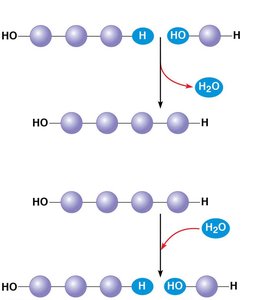
Macromolecules are polymers, long molecules made of repeating units called monomers. Cells synthesize polymers via dehydration reactions (removal of water) and break them down via hydrolysis (addition of water). Enzymes catalyze these reactions.
Carbohydrates: Fuel and Building Material
Monosaccharides and Disaccharides
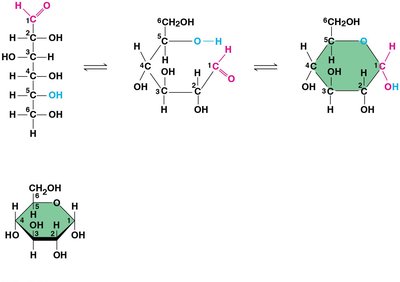
Carbohydrates include sugars and their polymers. The simplest are monosaccharides (e.g., glucose, C6H12O6), which serve as major nutrients and building blocks. Disaccharides are formed by joining two monosaccharides via a glycosidic linkage.
Polysaccharides: Storage and Structure
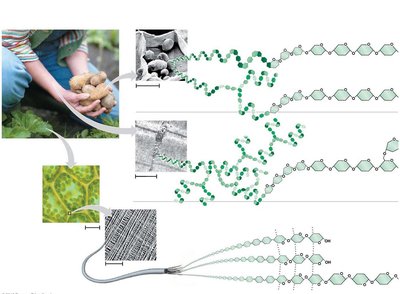
Polysaccharides are large polymers of sugars. They serve storage (starch in plants, glycogen in animals) and structural (cellulose in plants, chitin in fungi and arthropods) roles. The structure and function depend on the sugar monomers and glycosidic linkages.
Lipids: Hydrophobic Molecules
Fats, Phospholipids, and Steroids
Lipids are hydrophobic molecules that do not form true polymers. Fats (triglycerides) are made from glycerol and fatty acids. Phospholipids, with hydrophilic heads and hydrophobic tails, form cell membranes. Steroids, such as cholesterol, have four fused rings.
Proteins: Structure and Function
Protein Diversity and Function
Proteins are polymers of amino acids and account for more than 50% of the dry mass of most cells. They serve many functions, including catalysis (enzymes), defense (antibodies), storage, transport, communication, movement, and structural support.
Levels of Protein Structure
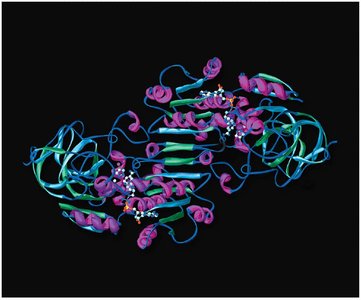
Primary structure: Sequence of amino acids.
Secondary structure: Coils and folds (α-helix, β-sheet).
Tertiary structure: 3D shape due to side chain interactions.
Quaternary structure: Association of multiple polypeptides.
Nucleic Acids: Information Storage and Transmission
DNA and RNA
Nucleic acids (DNA and RNA) store, transmit, and help express hereditary information. DNA provides instructions for its own replication and for protein synthesis via RNA intermediates. Nucleic acids are polymers of nucleotides, each consisting of a nitrogenous base, a pentose sugar, and a phosphate group.
Genomics and Proteomics
Modern Biological Inquiry
Genomics (study of whole sets of genes) and proteomics (study of whole sets of proteins) have revolutionized biology, enabling large-scale analysis of genetic and protein data. These fields contribute to our understanding of evolution, medicine, and conservation biology.
