 Back
Carbon and the Molecular Diversity of Life: Study Notes
Study Guide - Smart Notes
 Tailored notes based on your materials, expanded with key definitions, examples, and context.
Carbon and the Molecular Diversity of Life
Introduction to Carbon Chemistry
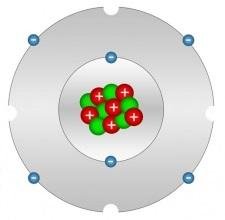
Carbon is a unique element that forms the backbone of all organic molecules, making it essential for life. Its ability to form four covalent bonds allows for a vast diversity of stable and complex molecules.
Valence Electrons: Carbon has four valence electrons, enabling it to bond with up to four other atoms.
Versatility: Carbon can form single, double, or triple bonds, and can create chains, rings, and branched structures.
Organic Molecules: Molecules containing carbon bonded to other elements (especially hydrogen, oxygen, and nitrogen) are called organic molecules.
SECTION 4.1: Organic Chemistry and the Origins of Life
Organic Molecules and Their Importance
Organic chemistry is the study of carbon-containing compounds. Organic molecules are fundamental to the structure and function of living organisms.
Examples: Carbohydrates, lipids, proteins, and nucleic acids are all organic molecules.
Definition: An organic molecule contains carbon atoms covalently bonded to other elements.
The Miller-Urey Experiment
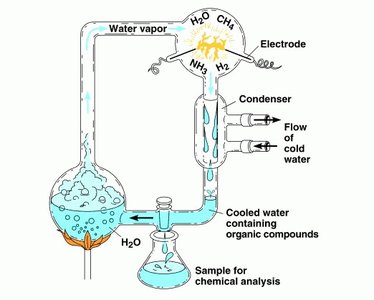
The Miller-Urey experiment (1952) tested whether organic molecules could form under prebiotic Earth conditions. This experiment was foundational in understanding the chemical origins of life.
Setup: Simulated early Earth's atmosphere using water vapor, methane, ammonia, and hydrogen, with electrical sparks to mimic lightning.
Results: Produced amino acids and other organic compounds, demonstrating that life's building blocks could form abiotically.
Significance: Supported the hypothesis that organic molecules necessary for life could arise from inorganic precursors.
Abiotic Synthesis and the Formation of Simple Cells
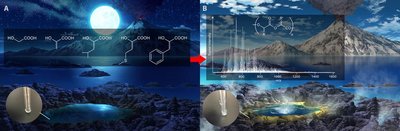
The origin of life likely involved several key steps, beginning with the abiotic synthesis of small organic molecules and culminating in the formation of protocells and self-replicating systems.
Abiotic synthesis of amino acids and nitrogenous bases
Polymerization into macromolecules (proteins, nucleic acids)
Packaging into protocells
Development of self-replicating molecules
Hydrothermal Vents and Alternative Origins
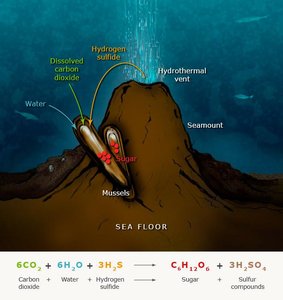
Hydrothermal vents on the ocean floor provide another possible environment for the origin of life. These vents release mineral-rich water, supporting unique ecosystems based on chemosynthesis rather than photosynthesis.
Conditions: Anoxic, alkaline, rich in iron hydroxide, and high temperature (~70°C).
Significance: Experiments show that amino acids and other organic molecules can form under these conditions.
Astrobiology: Life Beyond Earth
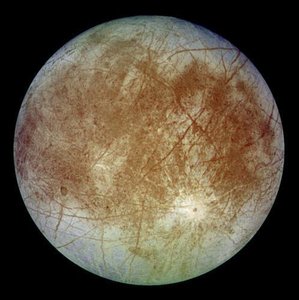
Scientists study icy moons like Enceladus (Saturn) and Europa (Jupiter) as potential habitats for extraterrestrial life due to their subsurface oceans and geological activity.
Enceladus: Features cryovolcanoes and possible chemosynthetic environments beneath its icy surface.
Europa: Covered in ice, with evidence of a subsurface ocean and tidal heating.
Energy Sources: Less solar energy means life would rely on chemical energy (chemosynthesis).

SECTION 4.2: Carbon Bonding and Molecular Diversity
Formation of Carbon Bonds
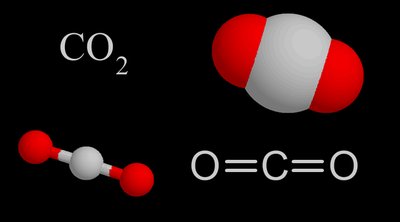
Carbon's four valence electrons allow it to form stable covalent bonds with many elements, including hydrogen, oxygen, and nitrogen. This property is central to the diversity of organic molecules.
Bonding: Carbon forms four bonds; nitrogen forms three; oxygen forms two; hydrogen forms one.
Types of Carbon Structures
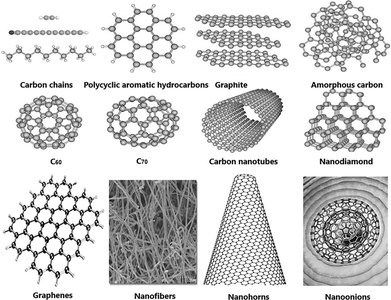
Carbon atoms can bond in various ways, resulting in a wide range of molecular structures with different chemical properties.
Chains: Straight or branched chains of carbon atoms.
Rings: Carbon atoms can form ring structures.
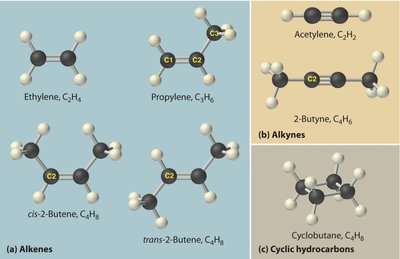
Multiple Bonds: Single, double, or triple bonds between carbon atoms.
Hydrocarbons
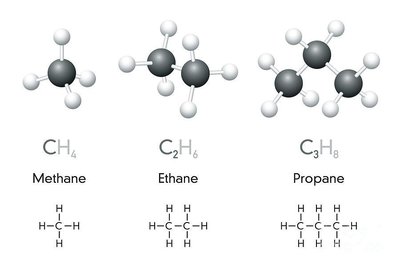
Hydrocarbons are organic molecules consisting entirely of carbon and hydrogen. They serve as the foundation for more complex organic molecules.
Examples: Methane (CH4), ethane (C2H6), propane (C3H8).
Properties: Nonpolar, hydrophobic, and can store large amounts of energy.
Variation in Carbon Skeletons
Carbon skeletons can vary in length, branching, ring formation, and the presence of double bonds, leading to molecular diversity.
Length: Skeletons can be short or long.
Branching: Skeletons may be unbranched or branched.
Rings: Skeletons can form closed rings.
Double Bonds: The position and number of double bonds can vary.
Isomers
Isomers are molecules with the same molecular formula but different structures and properties. They are classified into three main types:
Structural Isomers: Differ in the covalent arrangement of atoms (e.g., chain vs. branched).
Cis-Trans Isomers: Differ in spatial arrangement around a double bond (cis = same side, trans = opposite sides).
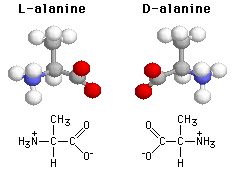
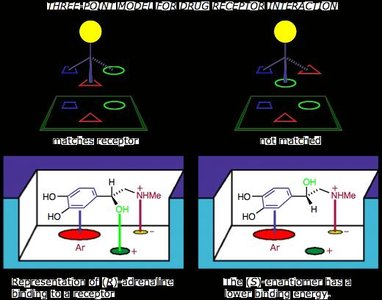
Enantiomers: Mirror images of each other; important in biology because only one form is usually biologically active.
Biological Importance of Enantiomers
Enantiomers can have drastically different effects in biological systems, especially in pharmacology, where only one enantiomer may be effective or safe.
L-amino acids: Incorporated into proteins in living organisms.
D-amino acids: Rare in nature, sometimes found in bacterial cell walls.
SECTION 4.3: Functional Groups and Molecular Function
Functional Groups
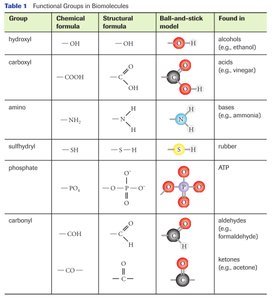
Functional groups are specific groups of atoms attached to the carbon skeleton that determine the chemical properties and reactivity of organic molecules.
Hydroxyl (-OH): Polar, forms hydrogen bonds, increases solubility in water (e.g., alcohols).
Carbonyl (C=O): Found in sugars; if at the end of a molecule, it's an aldehyde; if within, a ketone.
Carboxyl (-COOH): Acts as an acid, donates H+ (e.g., amino acids, fatty acids).
Amino (-NH2): Acts as a base, accepts H+ (e.g., amino acids).
Sulfhydryl (-SH): Forms disulfide bonds, stabilizing protein structure.
Phosphate (-PO4): Adds negative charge, involved in energy transfer (e.g., ATP).
Methyl (-CH3): Affects gene expression and hormone function.
ATP and Energy Transfer
ATP (adenosine triphosphate) is the primary energy carrier in cells. The addition or removal of phosphate groups is key to energy transfer in biological systems.
ATP Structure: Contains three phosphate groups; removal of a phosphate releases energy.
Energy Transfer: ATP → ADP + Pi + energy
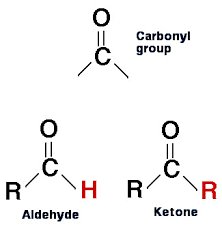
Practice: Identifying Functional Groups
Recognizing functional groups in molecules is essential for predicting their chemical behavior and biological roles.
Example: Ethanol contains a hydroxyl group, making it soluble in water.
Example: Glucose and fructose differ in the placement of their carbonyl group (aldehyde vs. ketone).
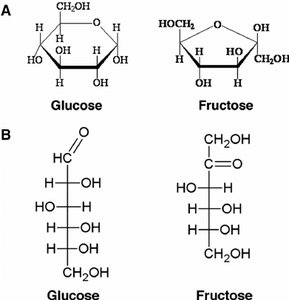
Functional Groups in Nitrogenous Bases and Pharmaceuticals
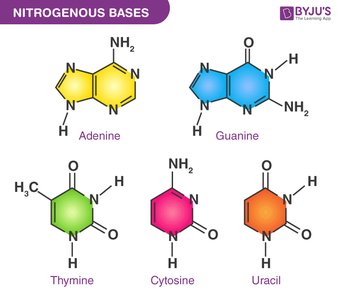
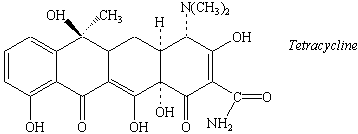
Nitrogenous bases (adenine, guanine, cytosine, thymine, uracil) have different functional groups that affect their hydrogen bonding and pairing in nucleic acids. Pharmaceuticals like tetracycline contain multiple functional groups that determine their biological activity.
Additional info: This guide covers the chemical basis of life, focusing on carbon's role in molecular diversity, the origin of organic molecules, and the importance of functional groups in biological molecules. Understanding these concepts is foundational for further study in biochemistry, cell biology, and genetics.
