 Back
Carbon and the Molecular Diversity of Life: Structure, Isomerism, and Functional Groups
Study Guide - Smart Notes
 Tailored notes based on your materials, expanded with key definitions, examples, and context.
Carbon and the Molecular Diversity of Life
Introduction to Organic Chemistry
Organic chemistry is the branch of chemistry that studies compounds containing carbon. These compounds range from simple molecules to complex macromolecules essential for life. The unique properties of carbon allow it to form a vast array of molecular structures, making it the backbone of biological molecules.
Organic Compounds: Molecules containing carbon, regardless of their origin.
Importance: Organic molecules are fundamental to the structure and function of living organisms.
Carbon’s Bonding Properties
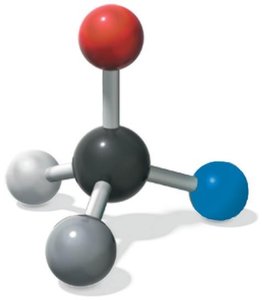
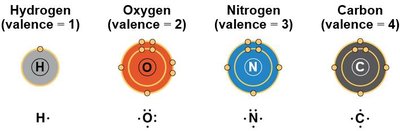
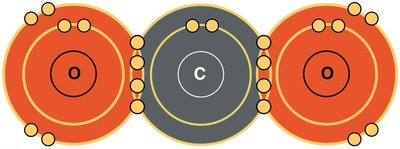
Carbon has four valence electrons, enabling it to form four covalent bonds with a variety of atoms. This versatility allows for the construction of large, complex molecules with diverse shapes and functions.
Valence: The number of covalent bonds an atom can form, determined by the number of unpaired electrons in its valence shell.
Covalent Compatibility: Carbon can bond with many elements, including hydrogen, oxygen, and nitrogen.
Diversity of Carbon Skeletons
Structural Variation in Carbon Compounds
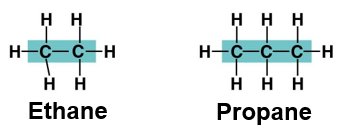
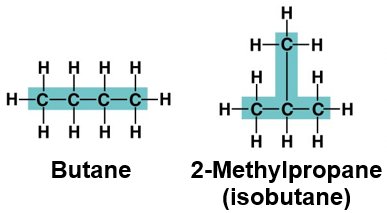
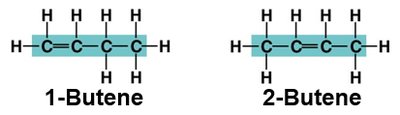
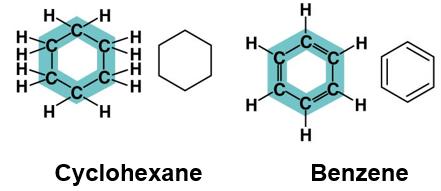
Carbon skeletons can vary in several ways, contributing to the diversity of organic molecules. These variations include differences in length, branching, double bond position, and the presence of rings.
Length: Carbon chains can be short or long, affecting molecular properties.
Branching: Chains may be unbranched or branched, leading to structural diversity.
Double Bond Position: The location of double bonds within the carbon skeleton can change molecular function.
Rings: Carbon atoms can form ring structures, which are common in many biological molecules.
Isomerism in Organic Molecules
Types of Isomers
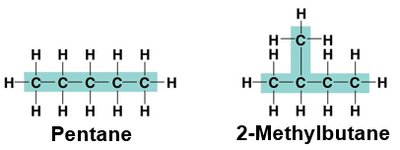
Isomers are compounds with the same molecular formula but different structures and properties. The three main types of isomers are structural isomers, cis-trans isomers, and enantiomers.
Structural Isomers: Differ in the covalent arrangement of atoms.
Cis-Trans Isomers: Have the same covalent bonds but differ in spatial arrangement around a double bond or ring.
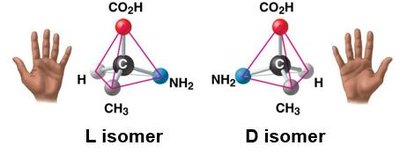
Enantiomers: Are mirror images of each other and cannot be superimposed.
Cis-Trans Isomerism
Cis-trans isomers (also called geometric isomers) differ in the arrangement of atoms around a double bond. In the cis isomer, similar groups are on the same side; in the trans isomer, they are on opposite sides.
Cis Isomer: Groups are on the same side of the double bond.
Trans Isomer: Groups are on opposite sides of the double bond.
Enantiomers and Biological Importance
Enantiomers are isomers that are non-superimposable mirror images. They are especially important in biology because only one enantiomer of a molecule may be biologically active, as seen in many pharmaceuticals.
Chirality: A molecule is chiral if it has an asymmetric carbon atom bonded to four different groups.
Biological Activity: Enantiomers can have drastically different effects in biological systems.
Pharmaceutical Applications of Enantiomers
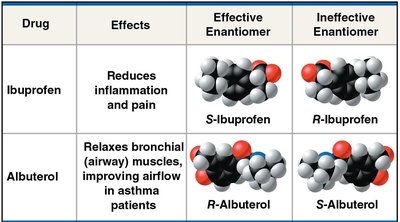
Many drugs exist as enantiomers, but often only one form is effective. The other may be less effective or even harmful. For example, S-ibuprofen is effective as a pain reliever, while R-ibuprofen is not.
Drug | Effects | Effective Enantiomer | Ineffective Enantiomer |
|---|---|---|---|
Ibuprofen | Reduces inflammation and pain | S-ibuprofen | R-ibuprofen |
Albuterol | Relaxes bronchial muscles, improving airflow in asthma patients | R-albuterol | S-albuterol |
Functional Groups and Molecular Function
Role of Functional Groups
The chemical behavior of organic molecules is largely determined by the functional groups attached to the carbon skeleton. These groups participate in chemical reactions and confer specific properties to molecules.
Functional Groups: Specific groups of atoms within molecules that are responsible for characteristic chemical reactions.
Examples: Hydroxyl, carbonyl, carboxyl, amino, sulfhydryl, phosphate, and methyl groups.
Functional Groups in Biological Molecules
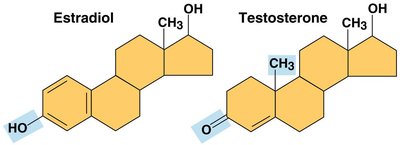
Estradiol and testosterone are steroid hormones that differ only in the functional groups attached to their carbon skeletons, yet they have very different biological effects.
Summary Table: Biologically Important Chemical Groups
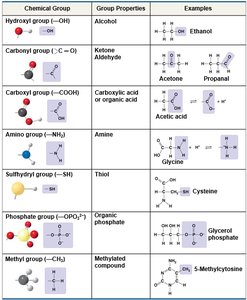
The following table summarizes the most important functional groups in biological molecules, their properties, and examples:
Chemical Group | Group Properties | Examples |
|---|---|---|
Hydroxyl group (–OH) | Alcohol | Ethanol |
Carbonyl group (>C=O) | Ketone, Aldehyde | Acetone, Propanal |
Carboxyl group (–COOH) | Carboxylic acid or organic acid | Acetic acid |
Amino group (–NH2) | Amine | Glycine |
Sulfhydryl group (–SH) | Thiol | Cysteine |
Phosphate group (–OPO32–) | Organic phosphate | Glycerol phosphate |
Methyl group (–CH3) | Methylated compound | 5-Methylcytosine |
Additional info: Functional groups are critical for the structure and function of biomolecules such as proteins, nucleic acids, carbohydrates, and lipids. Their presence and arrangement determine the reactivity and interactions of these molecules in biological systems.
