 Back
Chapter 4: Carbon and the Molecular Diversity of Life
Study Guide - Smart Notes
 Tailored notes based on your materials, expanded with key definitions, examples, and context.
Carbon and the Molecular Diversity of Life
Introduction to Organic Chemistry
Organic chemistry is the study of compounds that contain carbon, regardless of their origin. Organic compounds range from simple molecules to complex macromolecules, and their diversity is foundational to biological systems.
Organic compounds are molecules containing carbon atoms bonded to other elements, most commonly hydrogen, oxygen, and nitrogen.
The study of organic chemistry is essential for understanding the molecular basis of life.
Origin of Organic Molecules and Life
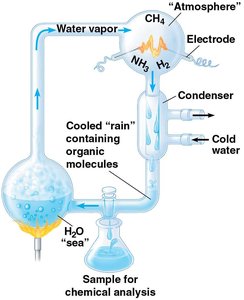
Experiments such as Stanley Miller’s classic experiment have demonstrated the abiotic synthesis of organic compounds, supporting the hypothesis that organic molecules could have formed under prebiotic Earth conditions.
Abiotic synthesis refers to the formation of organic molecules from inorganic precursors without biological intervention.
Major elements of life include carbon (C), hydrogen (H), oxygen (O), nitrogen (N), sulfur (S), and phosphorus (P).
Properties of Carbon
Electron Configuration and Bonding
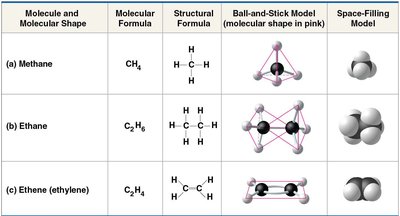
Carbon’s electron configuration allows it to form four covalent bonds, enabling the construction of a wide variety of molecular structures.
Carbon atoms have four valence electrons, allowing them to form up to four covalent bonds with other atoms.
This versatility leads to the formation of large, complex molecules with diverse shapes and functions.
When carbon forms single bonds, the resulting geometry is tetrahedral; double bonds result in planar structures.
Valence and Bonding Partners
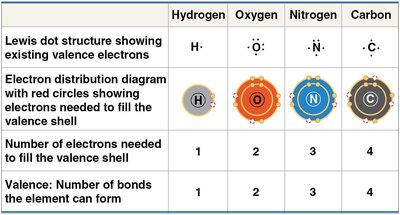
The number of unpaired electrons in the valence shell determines the number of covalent bonds an atom can form (its valence).
Carbon’s most frequent bonding partners are hydrogen, oxygen, and nitrogen.
Molecular Diversity from Carbon Skeletons
Variation in Carbon Skeletons
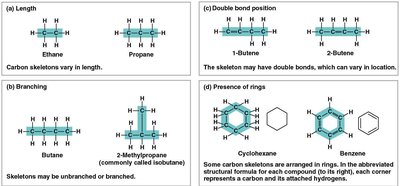
Carbon atoms can form chains, rings, and branched structures, resulting in a vast diversity of organic molecules.
Carbon skeletons vary in length, branching, double bond position, and ring formation.
Examples include linear chains (propane), branched chains (isobutane), and rings (benzene).
Examples of Carbon Compounds
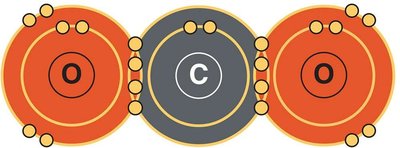
Carbon dioxide (CO2): A simple linear molecule with double bonds between carbon and oxygen.
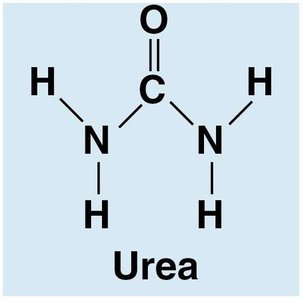
Urea (CO(NH2)2): An organic molecule with both carbonyl and amino groups.
Hydrocarbons
Definition and Biological Importance
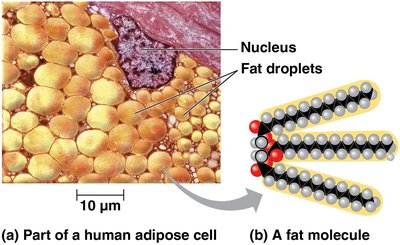
Hydrocarbons are organic molecules consisting entirely of carbon and hydrogen. They are important components of many biological molecules, such as fats, and can store significant amounts of energy.
Hydrocarbons are nonpolar and hydrophobic.
They can undergo reactions that release energy, making them important in biological energy storage.
Isomers
Types of Isomers
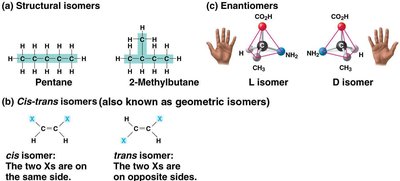
Isomers are compounds with the same molecular formula but different structures and properties. The three main types are:
Structural isomers: Differ in the covalent arrangement of atoms.
Cis-trans (geometric) isomers: Differ in spatial arrangement around a double bond.
Enantiomers: Mirror images of each other, differing in spatial arrangement around an asymmetric carbon.
Biological Importance of Enantiomers
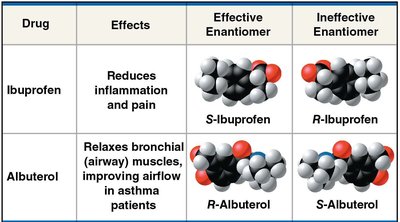
Enantiomers can have dramatically different biological effects. In pharmaceuticals, often only one enantiomer is biologically active.
Examples include the drugs ibuprofen and albuterol, where only one enantiomer is effective.
Chemical Groups and Molecular Function
Functional Groups
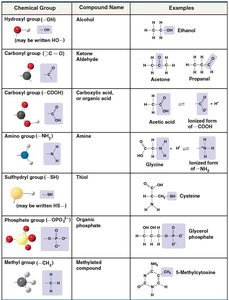
Functional groups are specific groups of atoms attached to carbon skeletons that are most commonly involved in chemical reactions. They determine the properties and reactivity of organic molecules.
The seven most important functional groups in biology are: hydroxyl, carbonyl, carboxyl, amino, sulfhydryl, phosphate, and methyl.
These groups confer unique chemical properties to the molecules to which they are attached.
Examples: Estradiol and Testosterone
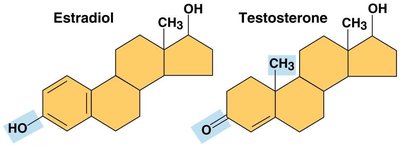
Estradiol and testosterone are both steroids with a common carbon skeleton but differ in the functional groups attached, resulting in distinct biological activities.
ATP: The Energy Currency of the Cell
Structure and Function of ATP
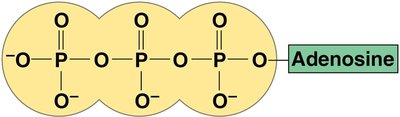
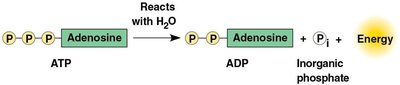
Adenosine triphosphate (ATP) is an important organic phosphate that stores and transfers energy within cells. ATP consists of adenosine attached to three phosphate groups.
ATP hydrolysis releases energy that can be used for cellular work.
Summary: The Versatility of Carbon
The unique properties of carbon, including its ability to form four covalent bonds and a variety of molecular structures, underlie the molecular diversity essential for life. Functional groups and isomerism further expand the diversity and functionality of organic molecules in biological systems.
