 Back
Carbon and the Molecular Diversity of Life – Study Notes
Study Guide - Smart Notes
 Tailored notes based on your materials, expanded with key definitions, examples, and context.
Carbon and the Molecular Diversity of Life
Introduction
Carbon is the foundational element for all biological molecules, enabling the vast diversity of life on Earth. Its unique chemical properties allow it to form a wide variety of stable and complex organic compounds essential for life.
Organic Chemistry and the Origin of Life
Definition and Scope
Organic chemistry is the study of compounds containing carbon, regardless of their origin.
Organic compounds range from simple molecules (like methane) to large macromolecules (like proteins and nucleic acids).
Abiotic Synthesis and the Origin of Life
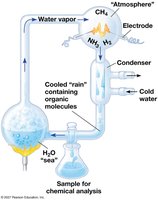
Stanley Miller’s classic experiment demonstrated that organic molecules could form under conditions simulating early Earth, supporting the hypothesis that abiotic synthesis was a stage in the origin of life.
The major elements of life (C, H, O, N, S, P) are found in similar proportions in all organisms, highlighting the universality of organic chemistry in biology.
Properties of Carbon
Bonding and Molecular Diversity
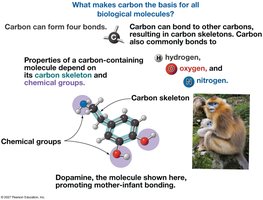
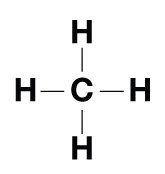
Carbon has four valence electrons, allowing it to form four covalent bonds with a variety of atoms.
This bonding capacity enables carbon to create large, complex, and diverse molecules.
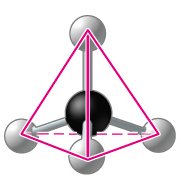
In molecules with multiple carbons, each carbon bonded to four other atoms forms a tetrahedral shape. Double bonds between carbons result in planar structures.
Valence and Bonding Partners
The number of unpaired electrons in the valence shell determines the number of covalent bonds an atom can form (its valence).
Carbon’s most frequent bonding partners are hydrogen, oxygen, and nitrogen.




Molecular Diversity from Carbon Skeletons
Variation in Carbon Skeletons
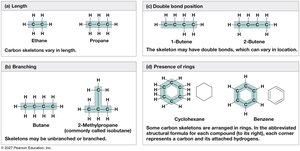
Carbon chains form the skeletons of most organic molecules and can vary in length, branching, double bond position, and ring formation.
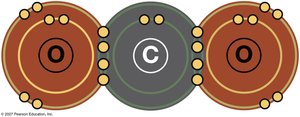
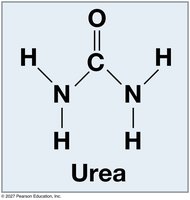
Carbon can also bond with elements other than hydrogen, such as oxygen and nitrogen, forming compounds like carbon dioxide and urea.
Hydrocarbons
Definition and Biological Importance
Hydrocarbons are organic molecules consisting only of carbon and hydrogen.
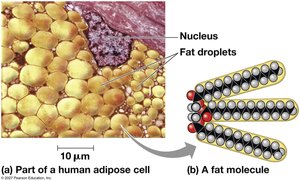
They are components of many biological molecules, such as fats, and can undergo reactions that release large amounts of energy.
Isomers
Types of Isomers
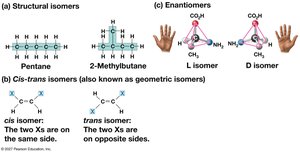
Isomers are compounds with the same molecular formula but different structures and properties.
Structural isomers: Different covalent arrangements of atoms.
Cis-trans isomers (geometric isomers): Same covalent bonds but different spatial arrangements.
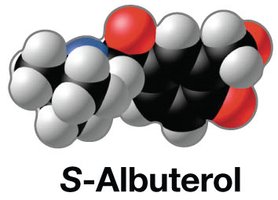
Enantiomers: Mirror images of each other, important in biology and pharmaceuticals.
Biological Importance of Enantiomers
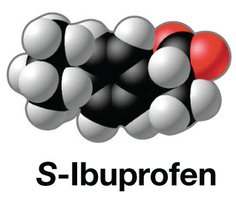
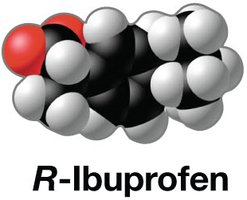
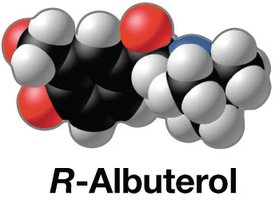
Enantiomers can have drastically different effects in biological systems; often, only one isomer is biologically active.
Examples include pharmaceutical drugs where one enantiomer is effective and the other is not.
Chemical Groups and Molecular Function
Functional Groups
The properties of organic molecules depend on both the carbon skeleton and the chemical groups attached to it.
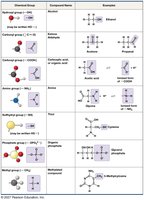
Functional groups are specific groups of atoms within molecules that are most commonly involved in chemical reactions.
The seven most important functional groups in biology are: hydroxyl, carbonyl, carboxyl, amino, sulfhydryl, phosphate, and methyl groups.
Sex Hormones as an Example
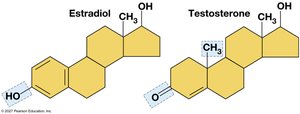
Estradiol and testosterone are both steroids with a common carbon skeleton but differ in the functional groups attached, resulting in different biological activities.
ATP: An Important Source of Energy
Structure and Function of ATP
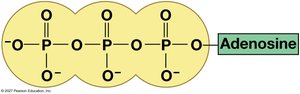
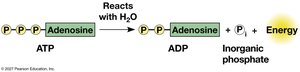
Adenosine triphosphate (ATP) is an organic molecule that stores energy for cellular processes.
ATP consists of adenosine attached to three phosphate groups. The hydrolysis of ATP releases energy used by cells.
Summary
The versatility of carbon enables the diversity of organic molecules, which is fundamental to biological diversity.
Understanding the structure, bonding, and functional groups of carbon compounds is essential for studying biology at the molecular level.
