 Back
Carbon and the Molecular Diversity of Life
Study Guide - Smart Notes
 Tailored notes based on your materials, expanded with key definitions, examples, and context.
Carbon and the Molecular Diversity of Life
Introduction to Organic Chemistry
Organic chemistry is the study of carbon-containing compounds, which form the molecular foundation of all living organisms. The unique properties of carbon allow it to form a vast array of molecules, varying in size, shape, and complexity, which are essential for life.
Organic compounds include proteins, DNA, carbohydrates, and lipids.
Carbon's ability to form four covalent bonds enables the construction of large and complex molecules.
The diversity of life is largely due to the versatility of carbon-based molecules.
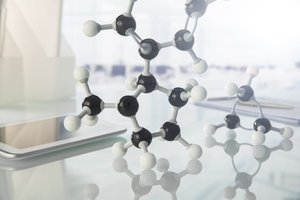
Atomic Structure of Carbon
Carbon atoms have four valence electrons, allowing them to form four covalent bonds with other atoms. This property is fundamental to the diversity and complexity of organic molecules.
Each carbon atom can bond with up to four other atoms, including other carbons, hydrogens, oxygens, and nitrogens.
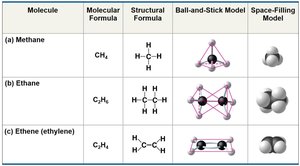
When bonded to four atoms, carbon forms a tetrahedral geometry.
Double bonds between carbons result in planar structures.
Valence and Bonding Capacity
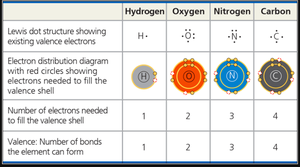
The number of unpaired electrons in the valence shell of an atom determines its valence, or the number of covalent bonds it can form. For carbon, this number is four.
Element | Valence Electrons | Valence (Bonds Formed) |
|---|---|---|
Hydrogen | 1 | 1 |
Oxygen | 2 | 2 |
Nitrogen | 3 | 3 |
Carbon | 4 | 4 |
Carbon Bonding with Other Elements
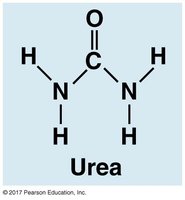
Carbon can form stable covalent bonds with a variety of elements, including hydrogen, oxygen, nitrogen, and sulfur. This allows for the formation of a wide range of organic molecules.
Example: Urea (CO(NH2)2) contains carbon, oxygen, and nitrogen.
Molecular Diversity: Variation in Carbon Skeletons
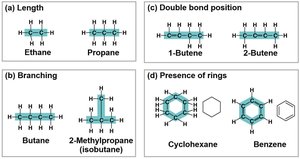
Carbon chains form the skeletons of most organic molecules. These skeletons can vary in length, branching, double bond position, and the presence of rings, contributing to molecular diversity.
Length: Chains can be short or long.
Branching: Chains may be unbranched or branched.
Double bonds: May vary in position.
Rings: Some carbon skeletons form rings.
Hydrocarbons
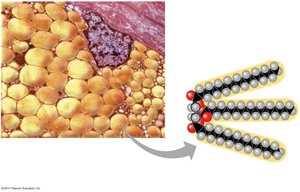
Hydrocarbons are organic molecules consisting entirely of carbon and hydrogen. They are nonpolar and hydrophobic, and their reactions release significant amounts of energy.
Found in fats and other biological molecules.
Serve as energy storage molecules in living organisms.
Isomers
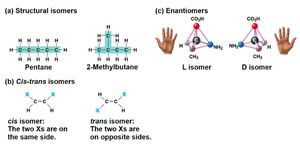
Isomers are compounds with the same molecular formula but different structures and properties. There are three main types:
Structural isomers: Differ in covalent arrangement of atoms.
Cis-trans isomers: Same covalent bonds but different spatial arrangements due to inflexible double bonds.
Enantiomers: Mirror images of each other, often with different biological activities.
Pharmacological Significance of Enantiomers
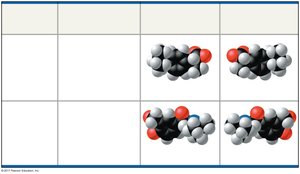
Enantiomers can have dramatically different effects in biological systems. For example, one enantiomer of a drug may be therapeutically active, while the other is inactive or even harmful.
Ibuprofen: Only the S-enantiomer is effective as a pain reliever.
Albuterol: Only the R-enantiomer is effective for asthma treatment.
Functional Groups and Molecular Function
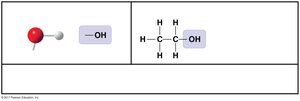
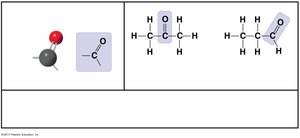
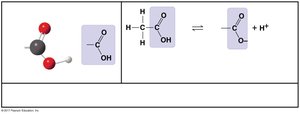
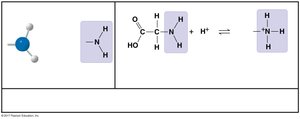
Chemical groups attached to carbon skeletons are key to the function of biological molecules. These functional groups confer specific chemical properties and reactivity.
There are seven major functional groups important in biological processes.
Functional Group | Structure | Properties | Example |
|---|---|---|---|
Hydroxyl | —OH | Polar, forms hydrogen bonds | Ethanol |
Carbonyl | C═O | Polar, found in sugars | Acetone, Propanal |
Carboxyl | —COOH | Acts as an acid | Acetic acid |
Amino | —NH2 | Acts as a base | Glycine |
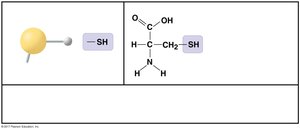
Sulfhydryl | —SH | Forms disulfide bonds | Cysteine |
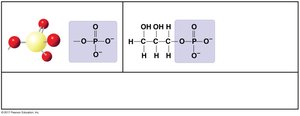
Phosphate | —OPO32− | Contributes negative charge, energy transfer | Glycerol phosphate |
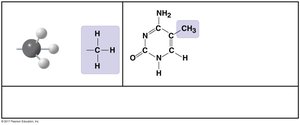
Methyl | —CH3 | Affects gene expression | 5-Methylcytosine |
ATP: The Energy Currency of the Cell
Adenosine triphosphate (ATP) is a key organic phosphate that stores and transfers energy within cells. ATP consists of adenosine attached to three phosphate groups. Hydrolysis of ATP releases energy used for cellular processes.
ATP hydrolysis:
ATP is essential for metabolism, muscle contraction, and active transport.
