 Back
Carbon and the Molecular Diversity of Life
Study Guide - Smart Notes
 Tailored notes based on your materials, expanded with key definitions, examples, and context.
Carbon: The Backbone of Life
Introduction to Carbon in Biology
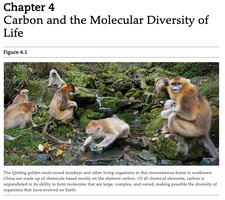
Carbon is a fundamental element in all living organisms, forming the backbone of the major biological macromolecules such as proteins, nucleic acids, carbohydrates, and lipids. Its unique chemical properties allow it to form large, complex, and diverse molecules essential for life.
Key Point 1: Living organisms are primarily composed of carbon-based compounds.
Key Point 2: Carbon's ability to form four covalent bonds enables the construction of a wide variety of molecular structures.
Example: The diversity of life on Earth is rooted in the versatility of carbon chemistry.
Organic Chemistry and the Origin of Life
Definition and Scope of Organic Chemistry
Organic chemistry is the study of compounds containing carbon. These compounds range from simple molecules like methane to complex macromolecules such as DNA. Most organic compounds also contain hydrogen atoms.
Key Point 1: Organic compounds are defined by the presence of carbon atoms, often bonded to hydrogen, oxygen, nitrogen, and other elements.
Key Point 2: The origin of organic molecules on Earth is a central question in biology, with experiments such as Stanley Miller's simulating early Earth conditions to demonstrate the abiotic synthesis of organic molecules.
Example: The Miller-Urey experiment showed that organic molecules could form under prebiotic conditions.
Mechanism vs. Vitalism
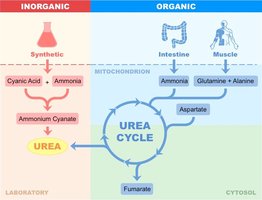
The concept of mechanism in chemistry asserts that the same physical and chemical laws apply to both living and non-living matter. This view replaced the earlier idea of vitalism, which posited that organic compounds could only be produced by living organisms.
Key Point 1: Mechanism demonstrates that organic compounds can be synthesized in the laboratory from inorganic precursors.
Example: The laboratory synthesis of urea from ammonium cyanate by Friedrich Wöhler in 1828 was a landmark in disproving vitalism.
Carbon's Bonding Properties and Molecular Diversity
Electron Configuration and Bonding
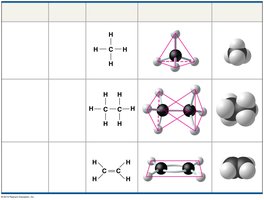
The electron configuration of carbon (1s2 2s2 2p2) allows it to form four covalent bonds with other atoms, resulting in a tetrahedral geometry. This property is the foundation for the diversity of organic molecules.
Key Point 1: Carbon can form single, double, or triple bonds, and can bond with many different elements.
Key Point 2: The versatility of carbon bonding leads to a variety of molecular shapes and sizes.
Example: Methane (CH4), ethane (C2H6), and ethene (C2H4) illustrate different bonding arrangements.
Valence and Molecular Structure
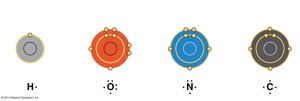
The valence of an atom is determined by the number of electrons required to fill its outer shell. For carbon, this number is four, allowing it to form stable covalent bonds with a variety of atoms, including hydrogen, oxygen, and nitrogen.
Key Point 1: The valence of carbon enables the formation of chains, branches, and rings in organic molecules.
Key Point 2: Other elements commonly found in organic molecules include hydrogen (valence = 1), oxygen (valence = 2), and nitrogen (valence = 3).
Carbon Skeletons and Molecular Diversity
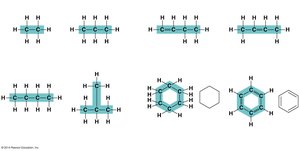
Carbon skeletons can vary in length, branching, double bond position, and the presence of rings, contributing to the diversity of organic molecules.
Key Point 1: The structure of carbon skeletons determines the properties and functions of organic molecules.
Example: Isomers are molecules with the same molecular formula but different structures, such as structural isomers, cis-trans isomers, and enantiomers.
Isomers: Structural Diversity in Organic Molecules
Types of Isomers
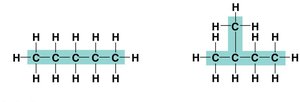
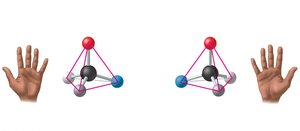
Isomers are compounds with the same molecular formula but different structures and properties. The main types are:
Structural isomers: Differ in the covalent arrangement of atoms.
Cis-trans isomers: Have the same covalent bonds but differ in spatial arrangement due to inflexible double bonds.
Enantiomers: Are mirror images of each other and cannot be superimposed.
Biological Importance of Isomers
Isomers can have dramatically different biological activities. For example, only one enantiomer of a drug may be biologically active.
Key Point 1: The biochemistry of vision involves a light-induced change from the cis to the trans isomer of retinal.
Key Point 2: Enantiomers of drugs such as ibuprofen and albuterol have different effects in the body.
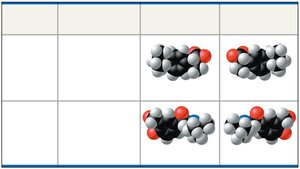
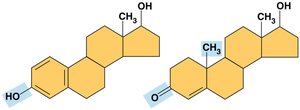
Chemical Groups and Molecular Function
Functional Groups in Organic Molecules
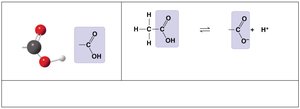
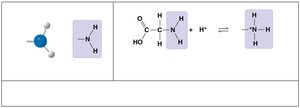
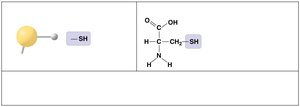
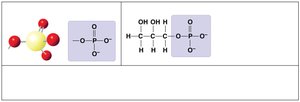
Functional groups are specific groups of atoms within molecules that are responsible for the characteristic chemical reactions of those molecules. The seven most important functional groups in biological chemistry are:
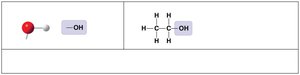
Hydroxyl group (—OH)
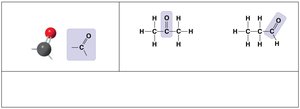
Carbonyl group (—C=O)
Carboxyl group (—COOH)
Amino group (—NH2)
Sulfhydryl group (—SH)
Phosphate group (—OPO32−)
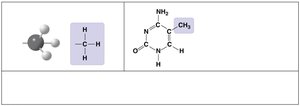
Methyl group (—CH3)
Properties and Examples of Functional Groups
Functional Group | Structure | Properties | Example |
|---|---|---|---|
Hydroxyl | —OH | Polar, forms hydrogen bonds with water | Ethanol |
Carbonyl | —C=O | Found in sugars (ketoses and aldoses) | Acetone, Propanal |
Carboxyl | —COOH | Acts as an acid | Acetic acid |
Amino | —NH2 | Acts as a base | Glycine |
Sulfhydryl | —SH | Forms disulfide bonds in proteins | Cysteine |
Phosphate | —OPO32− | Contributes negative charge, energy transfer | Glycerol phosphate |
Methyl | —CH3 | Affects gene expression | 5-Methyl cytosine |
ATP: The Energy Currency of the Cell
Structure and Function of ATP
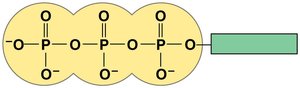
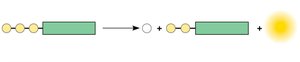
Adenosine triphosphate (ATP) is a key organic phosphate molecule that stores and transfers energy within cells. ATP consists of adenosine attached to three phosphate groups. Hydrolysis of ATP releases energy that can be used for cellular work.
Key Point 1: ATP is the primary energy carrier in biological systems.
Key Point 2: The hydrolysis of ATP to ADP and inorganic phosphate releases free energy.
Summary: The Chemical Elements of Life
The versatility of carbon enables the vast diversity of organic molecules, which underlies the complexity and diversity of life. Understanding the structure, bonding, and functional groups of carbon compounds is essential for studying biology at the molecular level.
