 Back
Carbon and the Molecular Diversity of Life: Study Notes
Study Guide - Smart Notes
 Tailored notes based on your materials, expanded with key definitions, examples, and context.
Carbon & The Molecular Diversity of Life
Carbon: The Backbone of Life
Carbon is a fundamental element in biological molecules, forming the basis for the structure and function of living organisms. Its unique chemical properties allow it to create large, complex, and diverse molecules essential for life.
Key Point 1: Living organisms are primarily composed of carbon-based compounds.
Key Point 2: Carbon's versatility enables the formation of proteins, DNA, carbohydrates, and other biomolecules.
Key Point 3: Organic chemistry is the branch of chemistry dedicated to studying carbon compounds.
Example: All major classes of biomolecules (proteins, nucleic acids, carbohydrates, lipids) are carbon-based.
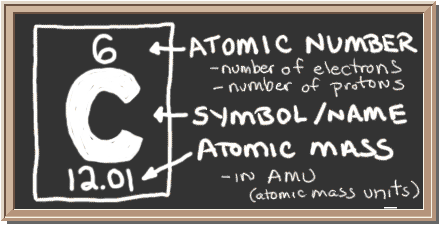
Carbon's Chemical Properties
Carbon atoms have four valence electrons, allowing them to form four covalent bonds with other atoms. This property is crucial for building complex molecular structures.
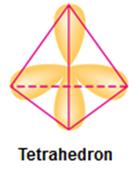
Key Point 1: Carbon forms four covalent bonds, leading to a tetrahedral geometry when bonded to four atoms.
Key Point 2: Multiple carbon atoms can bond together, creating chains and rings.
Key Point 3: The shape of a molecule, determined by its bonding, affects its reactivity and function.
Example: Methane (CH4) has a tetrahedral shape due to carbon's four bonds.
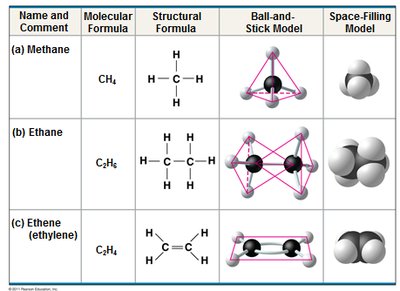
Carbon Skeletons and Hydrocarbons
Carbon chains form the skeletons of most organic molecules, varying in length, branching, and ring formation. Hydrocarbons are molecules consisting only of carbon and hydrogen, and they are important energy sources.
Key Point 1: Carbon skeletons can be straight, branched, or form rings.
Key Point 2: Hydrocarbons are nonpolar and can release energy during reactions.
Example: Fats contain hydrocarbon chains that store energy.
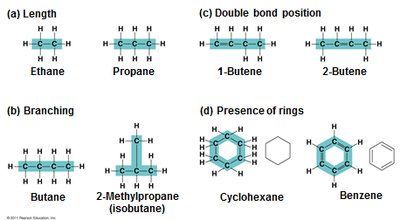
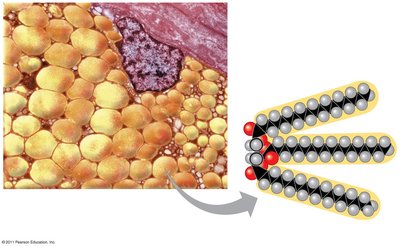
Isomers: Structural Diversity in Organic Molecules
Types of Isomers
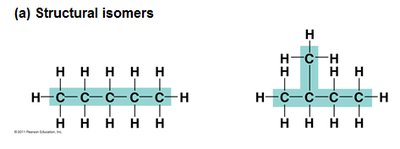
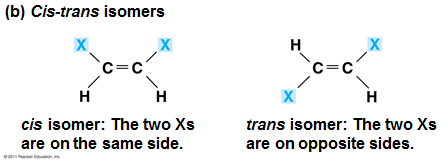
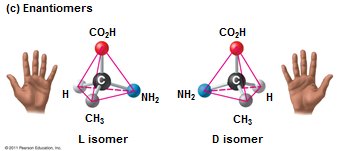
Isomers are compounds with the same molecular formula but different structures, resulting in distinct properties. There are three main types: structural isomers, cis-trans isomers, and enantiomers.
Key Point 1: Structural isomers differ in the covalent arrangement of atoms.
Key Point 2: Cis-trans isomers have the same covalent bonds but differ in spatial arrangement around a double bond.
Key Point 3: Enantiomers are mirror images of each other and can have different biological activities.
Example: Glucose and fructose are structural isomers; cis and trans forms of 2-butene are cis-trans isomers; L- and D-amino acids are enantiomers.
Biological Importance of Enantiomers
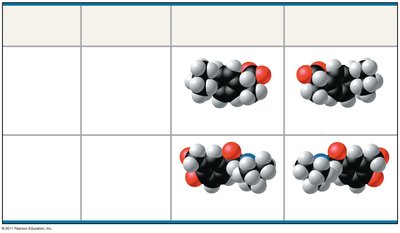
Enantiomers are especially significant in biology and medicine, as only one enantiomer of a drug may be biologically active. Organisms are sensitive to subtle molecular differences.
Key Point 1: Enantiomers can have drastically different effects in biological systems.
Key Point 2: Pharmaceutical drugs often require specific enantiomers for effectiveness.
Example: S-ibuprofen is effective for pain relief, while R-ibuprofen is not.
Functional Groups: Chemical Reactivity in Organic Molecules
Overview of Functional Groups
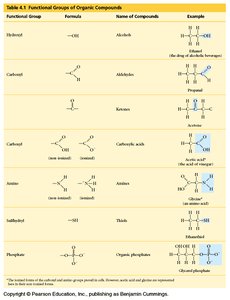
Functional groups are specific groups of atoms within molecules that are responsible for the characteristic chemical reactions of those molecules. The number and arrangement of functional groups determine the properties and reactivity of organic compounds.
Key Point 1: Functional groups replace hydrogens on carbon skeletons and confer unique properties.
Key Point 2: Common functional groups include hydroxyl, carbonyl, carboxyl, amino, sulfhydryl, phosphate, and methyl.
Example: The carboxyl group (-COOH) makes molecules acidic, while the amino group (-NH2) makes them basic.
Functional Groups and Their Properties
Each functional group has distinct structural and chemical properties that influence the behavior of organic molecules in biological systems.
Hydroxyl (-OH): Polar, forms hydrogen bonds, increases solubility in water.
Carbonyl (C=O): Found in ketones and aldehydes, contributes to reactivity and is present in sugars.
Carboxyl (-COOH): Acts as an acid, donates H+, found in amino acids and fatty acids.
Amino (-NH2): Acts as a base, accepts H+, found in amino acids.
Sulfhydryl (-SH): Forms disulfide bonds, stabilizes protein structure.
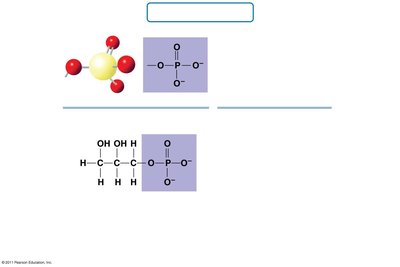
Phosphate (-PO4): Contributes negative charge, involved in energy transfer (e.g., ATP).
Methyl (-CH3): Affects gene expression and molecular shape.
ATP: The Energy Currency of the Cell
Adenosine triphosphate (ATP) is a molecule that stores and transfers energy within cells. It consists of adenosine attached to three phosphate groups, and its hydrolysis releases energy for cellular processes.
Key Point 1: ATP contains high-energy phosphate bonds.
Key Point 2: Hydrolysis of ATP releases energy used for cellular work.
Example: ATP is required for muscle contraction, active transport, and biosynthesis.

Carbon's Versatility and Biological Diversity
Final Thoughts
The versatility of carbon enables the vast diversity of organic molecules, which underlies the complexity and diversity of life. Molecular variation is the foundation of biological diversity.
Key Point 1: Carbon's ability to form diverse structures is essential for life's complexity.
Key Point 2: Understanding carbon chemistry is fundamental to biology.
