Back
Carbon and the Molecular Unity & Diversity of Life: Structure and Function of Biological Macromolecules
Study Guide - Smart Notes
 Tailored notes based on your materials, expanded with key definitions, examples, and context.
Carbon: The Foundation of Biological Molecules
Valence Electrons and Bond Formation
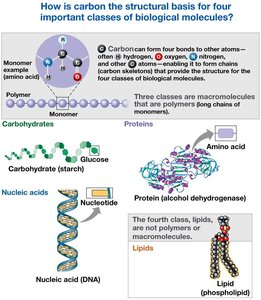
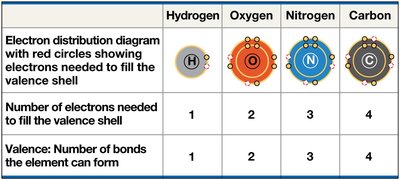
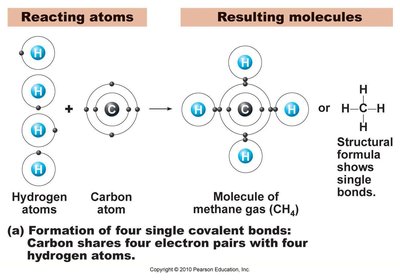
Carbon is unique in its ability to form four covalent bonds, allowing for a vast diversity of organic molecules. The versatility of carbon stems from its four valence electrons, enabling it to bond with hydrogen, oxygen, nitrogen, and other elements, forming the backbone of biological macromolecules.
Valence: Number of bonds an atom can form, determined by electrons needed to fill the valence shell.
Electron distribution: Carbon requires four electrons to fill its valence shell, forming four bonds.
Shapes of Organic Molecules
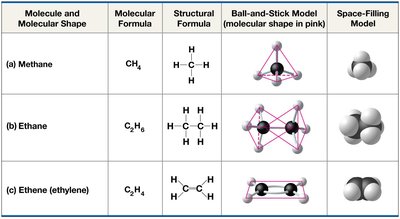
The shape of organic molecules is determined by the arrangement of carbon atoms and their bonds. This structural diversity is essential for the function of biological molecules.
Molecular shape: Methane (tetrahedral), ethane (linear), ethylene (planar).
Structural formula: Shows the arrangement of atoms and bonds.
Molecule and Molecular Shape | Molecular Formula | Structural Formula | Ball-and-Stick Model | Space-Filling Model |
|---|---|---|---|---|
Methane | CH4 | H—C—H | Tetrahedral | Compact |
Ethane | C2H6 | H—C—C—H | Linear | Elongated |
Ethylene | C2H4 | H2C=CH2 | Planar | Flat |
Organic vs. Inorganic Molecules
Bond Types and Electron Sharing
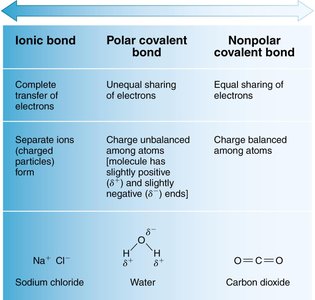
Organic molecules are characterized by covalent bonds between carbon and other elements. The type of bond (ionic, polar covalent, nonpolar covalent) affects the molecule's properties and biological function.
Ionic bonds: Complete transfer of electrons, forming charged ions (e.g., NaCl).
Polar covalent bonds: Unequal sharing of electrons, resulting in partial charges (e.g., water).
Nonpolar covalent bonds: Equal sharing of electrons, no charge separation (e.g., CO2).
Carbon Skeletons and Isomerism
Variation in Carbon Skeletons
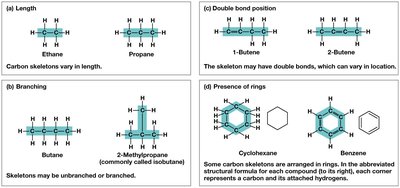
Carbon skeletons can vary in length, branching, double bond position, and ring formation, contributing to molecular diversity.
Length: Number of carbon atoms in a chain.
Branching: Chains may be unbranched or branched.
Double bond position: Location of double bonds affects structure.
Rings: Carbon atoms may form rings (e.g., benzene).
Isomers
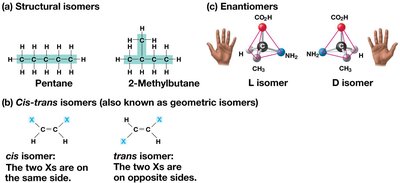
Isomers are compounds with the same molecular formula but different structures and properties. Types include structural isomers, cis-trans (geometric) isomers, and enantiomers.
Structural isomers: Differ in covalent arrangement of atoms.
Cis-trans isomers: Differ in spatial arrangement due to double bonds.
Enantiomers: Mirror images, differ in shape due to asymmetric carbon; only one isomer is usually biologically active.
Chemical/Functional Groups Important to Life
Functional Groups
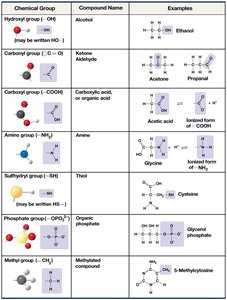
Functional groups are specific groups of atoms within molecules that determine the chemical properties and reactions of those molecules. Common functional groups include hydroxyl, carbonyl, carboxyl, amino, sulfhydryl, phosphate, and methyl.
Hydroxyl (-OH): Alcohols, increases solubility.
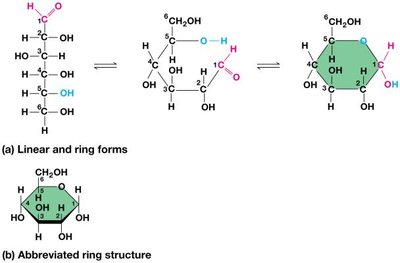
Carbonyl (C=O): Aldehydes and ketones, found in sugars.
Carboxyl (-COOH): Organic acids, acidic properties.
Amino (-NH2): Amines, acts as a base.
Sulfhydryl (-SH): Thiols, forms disulfide bonds in proteins.
Phosphate (-PO4): Organic phosphates, energy transfer (ATP).
Methyl (-CH3): Methylated compounds, affects gene expression.
Synthesis and Breakdown of Polymers
Polymer Formation and Decomposition
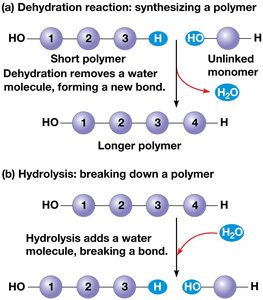
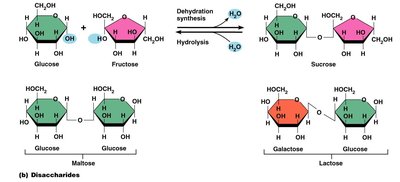
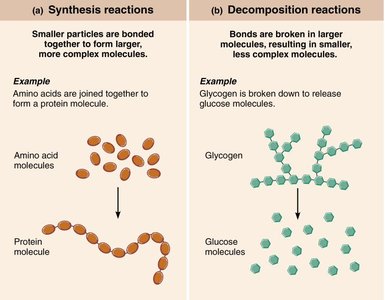
Biological macromolecules are polymers formed from monomers. Synthesis occurs via dehydration (condensation) reactions, while breakdown occurs via hydrolysis.
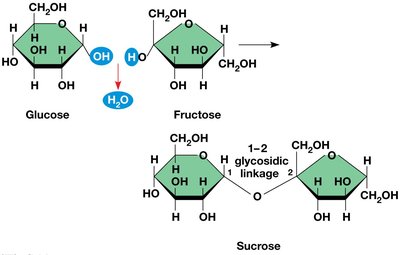
Dehydration reaction: Joins monomers by removing water.
Hydrolysis: Breaks polymers into monomers by adding water.
Carbohydrates
Monosaccharides
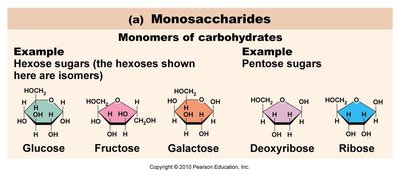
Monosaccharides are the simplest carbohydrates, classified by the number of carbons and the placement of the carbonyl group. Common examples include glucose, fructose, and galactose.
General formula:
Hexoses: Six-carbon sugars (e.g., glucose, fructose, galactose).
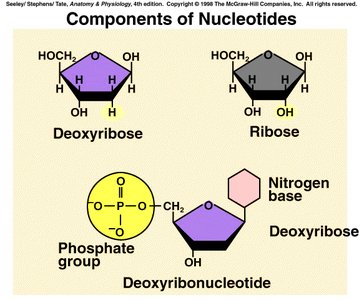
Pentoses: Five-carbon sugars (e.g., ribose, deoxyribose).
Disaccharides
Disaccharides are formed by joining two monosaccharides via a glycosidic linkage. Examples include sucrose, maltose, and lactose.
Sucrose: Glucose + fructose
Maltose: Glucose + glucose
Lactose: Galactose + glucose
Polysaccharides
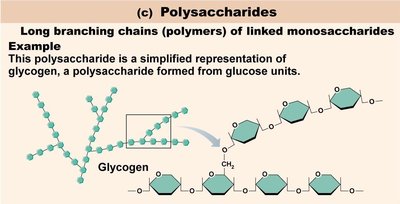
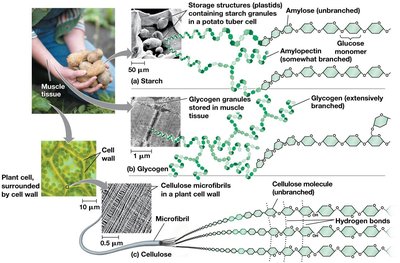
Polysaccharides are long chains of monosaccharides linked by glycosidic bonds. Their structure and function depend on the sugar monomers and linkage positions. Examples include starch, glycogen, and cellulose.
Starch: Storage polysaccharide in plants, unbranched or slightly branched.
Glycogen: Storage polysaccharide in animals, highly branched.
Cellulose: Structural polysaccharide in plant cell walls, unbranched, forms microfibrils.
Lipids
Structure and Types
Lipids are hydrophobic molecules, including fats, phospholipids, steroids, waxes, and eicosanoids. Fats are assembled from glycerol and fatty acids.
Fats: Glycerol + fatty acids, energy storage.
Phospholipids: Amphipathic, form cell membranes.
Steroids: Four fused rings, hormones (e.g., cholesterol).
Saturated vs. Unsaturated Fatty Acids
Saturated fatty acids have no double bonds, are solid at room temperature, and are less healthy. Unsaturated fatty acids have one or more double bonds, are liquid at room temperature, and are essential for cell membrane structure and health.
Saturated: No double bonds, straight chains.
Unsaturated: Double bonds, kinked chains.
Trans fats: Artificially hydrogenated, unhealthy.
Nucleic Acids
Structure and Function
Nucleic acids (DNA and RNA) are polymers of nucleotides. Each nucleotide consists of a nitrogenous base, a pentose sugar, and a phosphate group.
DNA: Double-stranded, stores genetic information.
RNA: Single-stranded, involved in protein synthesis.
Nitrogenous bases: Purines (adenine, guanine), pyrimidines (cytosine, thymine, uracil).
Proteins
Structure and Function
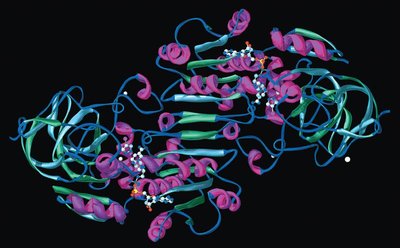
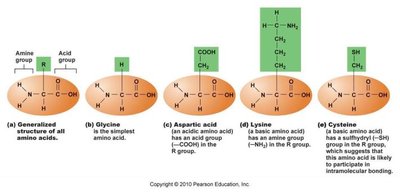
Proteins are polymers of amino acids, performing diverse functions such as defense, storage, transport, communication, movement, and structural support. The sequence of amino acids determines the protein's structure and function.
Amino acids: 20 types, each with a unique R group.
Peptide bonds: Link amino acids to form polypeptides.
Levels of structure: Primary (sequence), secondary (folding), tertiary (3D shape), quaternary (multiple polypeptides).
Enzymes and Protein Function
Enzymes are protein catalysts that lower the activation energy required for biochemical reactions. Protein function depends on its three-dimensional structure, which can be altered by denaturation.
Enzyme models: Lock and key, induced fit.
Denaturation: Loss of structure and function due to environmental changes.
Summary Table: Classes of Biological Molecules
Class | Monomer | Polymer | Function |
|---|---|---|---|
Carbohydrates | Monosaccharide | Polysaccharide | Energy storage, structure |
Lipids | Glycerol + fatty acids | Triglyceride, phospholipid | Energy storage, membranes, hormones |
Proteins | Amino acid | Polypeptide | Catalysis, structure, transport |
Nucleic acids | Nucleotide | DNA, RNA | Genetic information, protein synthesis |