 Back
Carbon: The Backbone of Life – Structure and Function of Organic Molecules
Study Guide - Smart Notes
 Tailored notes based on your materials, expanded with key definitions, examples, and context.
Carbon: The Backbone of Life
Importance of Carbon in Biological Molecules
Carbon is the fundamental element in the chemistry of life, forming the backbone of proteins, DNA, carbohydrates, and other molecules essential to living organisms. Its unique ability to form large, complex, and varied molecules underlies the diversity of life.
Key Point 1: Living organisms are primarily composed of carbon-based compounds.
Key Point 2: Carbon's versatility allows for the formation of a vast array of organic molecules.
Example: Proteins and nucleic acids are built from carbon skeletons.

Organic Chemistry: The Study of Carbon Compounds
Definition and Scope
Organic chemistry is the branch of science that studies compounds containing carbon, regardless of their origin. These compounds range from simple molecules to complex macromolecules.
Key Point 1: Organic compounds include both naturally occurring and synthetic molecules.
Key Point 2: The study of organic chemistry is central to understanding biological processes.
Example: Stanley Miller's experiment demonstrated the abiotic synthesis of organic compounds, supporting theories about the origin of life.
Concept 4.2: Carbon Atoms and Molecular Diversity
Bonding Properties of Carbon
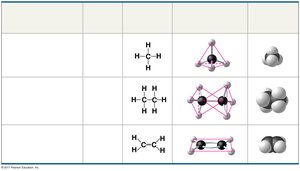
Carbon's electron configuration enables it to form four covalent bonds, allowing for the creation of large and complex molecules. The number of unpaired electrons in the valence shell determines the valence, or bonding capacity, of an atom.
Key Point 1: Carbon can bond with a variety of atoms, including hydrogen, oxygen, and nitrogen.
Key Point 2: The tetrahedral shape of carbon-containing molecules is a result of its four bonds.
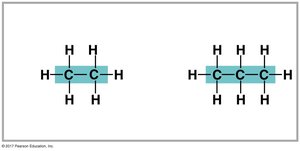
Example: Methane (CH4), ethane (C2H6), and ethene (C2H4) illustrate different bonding arrangements.
Valence and Electron Configuration
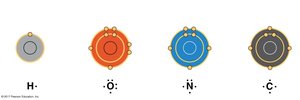
The valence of carbon and its frequent partners (hydrogen, oxygen, nitrogen) forms the building code for living molecules. The electron configuration determines the types and numbers of bonds formed.
Key Point 1: Hydrogen (valence = 1), Oxygen (valence = 2), Nitrogen (valence = 3), Carbon (valence = 4).
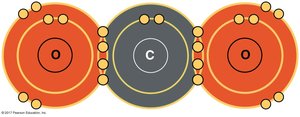
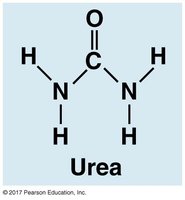
Example: The structure of carbon dioxide (CO2) and urea (CO(NH2)2).
Molecular Diversity from Carbon Skeletons
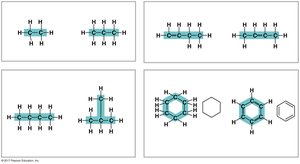
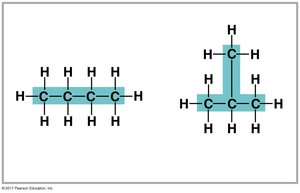
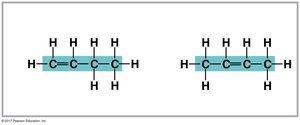
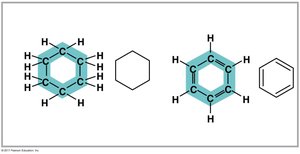
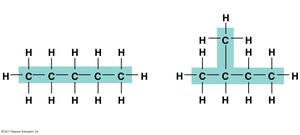
Carbon chains form the skeletons of most organic molecules, varying in length, branching, double bond position, and presence of rings. This variation contributes to the diversity of organic compounds.
Key Point 1: Carbon skeletons can be straight, branched, or arranged in rings.
Key Point 2: The position of double bonds and branching affects molecular properties.
Example: Ethane, propane, butane, isobutane, cyclohexane, and benzene represent different skeleton types.
Hydrocarbons
Structure and Properties
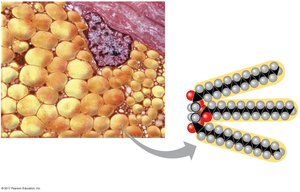
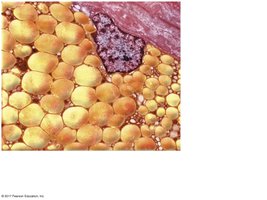
Hydrocarbons are organic molecules composed only of carbon and hydrogen. They are found in many biological molecules, such as fats, and can undergo reactions that release significant energy.
Key Point 1: Hydrocarbons are nonpolar and hydrophobic.
Key Point 2: Their energy-rich bonds are important in metabolism.
Example: Fat molecules contain hydrocarbon chains.
Isomers
Types and Biological Significance
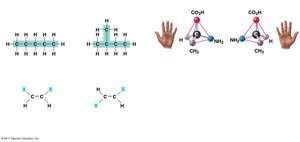
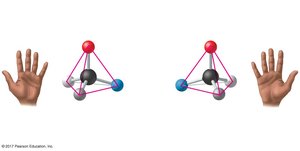
Isomers are compounds with the same molecular formula but different structures and properties. Structural isomers differ in covalent arrangement, cis-trans isomers differ in spatial arrangement, and enantiomers are mirror images.
Key Point 1: Isomerism increases molecular diversity.
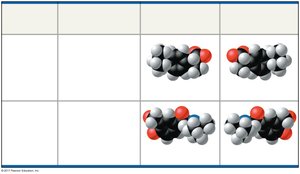
Key Point 2: Enantiomers can have different biological effects; often only one isomer is biologically active.
Example: Ibuprofen and albuterol have enantiomers with distinct effects.
Concept 4.3: Functional Groups and Molecular Function
Functional Groups in Organic Molecules
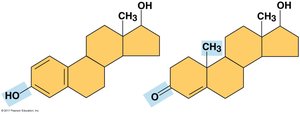
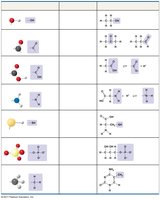
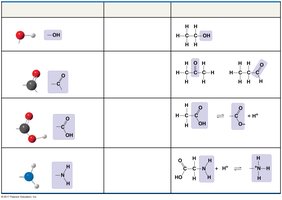
Functional groups are specific groups of atoms within molecules that are responsible for characteristic chemical reactions. The seven most important functional groups in biological chemistry are hydroxyl, carbonyl, carboxyl, amino, sulfhydryl, phosphate, and methyl.
Key Point 1: Functional groups confer unique properties to molecules.
Key Point 2: The arrangement and number of functional groups determine molecular function.
Example: Estradiol and testosterone differ only in their functional groups.
Functional Groups: Structure and Properties
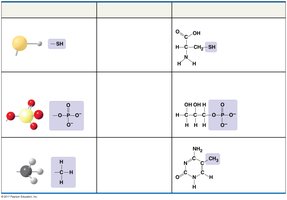
The following table summarizes the seven key functional groups, their properties, and examples:
Functional Group | Properties | Example |
|---|---|---|
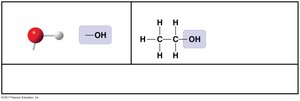
Hydroxyl (—OH) | Polar, forms hydrogen bonds | Ethanol |
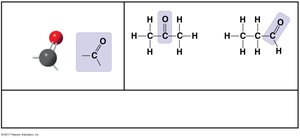
Carbonyl (C═O) | Ketone or aldehyde, found in sugars | Acetone, propanal |
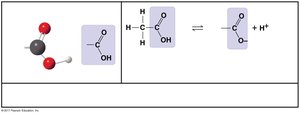
Carboxyl (—COOH) | Acts as an acid | Acetic acid |
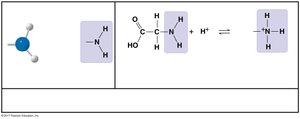
Amino (—NH2) | Acts as a base | Glycine |
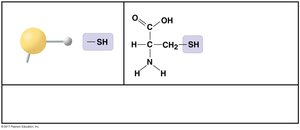
Sulfhydryl (—SH) | Forms cross-links in proteins | Cysteine |
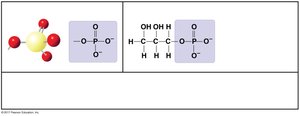
Phosphate (—OPO32−) | Contributes negative charge, energy transfer | Glycerol phosphate |
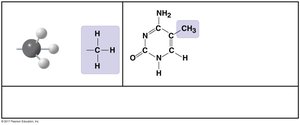
Methyl (—CH3) | Affects gene expression | 5-Methylcytosine |
ATP: An Important Source of Energy
Structure and Function of ATP
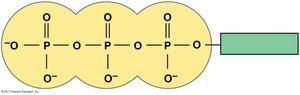
Adenosine triphosphate (ATP) is a key organic phosphate that stores energy for cellular processes. ATP consists of adenosine attached to three phosphate groups and releases energy upon reaction with water.
Key Point 1: ATP is the primary energy currency of the cell.
Key Point 2: Hydrolysis of ATP releases energy for cellular work.
Example: ATP hydrolysis:

The Chemical Elements of Life: A Review
Summary of Carbon's Role
The versatility of carbon enables the diversity of organic molecules, which forms the foundation of biological diversity. Variation at the molecular level is essential for the complexity and adaptability of life.
Key Point 1: Carbon's bonding properties are central to life's molecular architecture.
Key Point 2: Understanding carbon chemistry is fundamental to biology.
