 Back
Carbon: The Backbone of Life – Structure and Function in Organic Molecules
Study Guide - Smart Notes
 Tailored notes based on your materials, expanded with key definitions, examples, and context.
Carbon: The Backbone of Life
Importance of Carbon in Living Organisms
Carbon is the fundamental element in the chemistry of life, forming the backbone of proteins, DNA, carbohydrates, and other molecules that distinguish living matter. Organic chemistry is the study of compounds containing carbon, most of which also include hydrogen.
Organic compounds are molecules containing carbon, often with hydrogen, oxygen, and nitrogen.
Living organisms are primarily composed of carbon-based molecules.
Organic chemistry explores the structure, properties, and reactions of these compounds.
Historical Perspective: Urea Synthesis and the Origin of Life
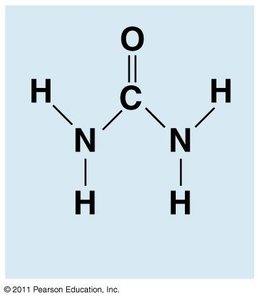
The first chemically synthesized biological organic molecule was urea, which overturned the concept of vitalism in 1828. This demonstrated that organic molecules could be synthesized from inorganic precursors.
Vitalism was the belief that organic compounds could only be produced by living organisms.
Urea synthesis showed that organic molecules could be created in the laboratory.
Abiotic Synthesis of Organic Molecules
The Miller-Urey experiment demonstrated that organic compounds could be synthesized abiotically, supporting the idea that such processes may have contributed to the origin of life on Earth.
Reactants: H2, NH3, CH4, and H2O.
Products: Amino acids, hydrocarbons, formaldehyde.
Abiotic synthesis is the formation of organic molecules without biological intervention.
Organic Molecules in Meteorites
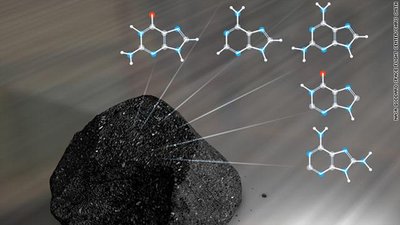
Recent discoveries have shown that nucleic acid bases can be found in meteorites, suggesting that organic molecules may have extraterrestrial origins and could have contributed to the emergence of life on Earth.
Structure and Bonding of Carbon
Bond Formation and Molecular Geometry
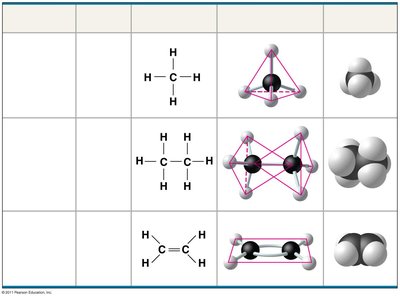
Carbon has four valence electrons, allowing it to form four covalent bonds. This leads to diverse molecular geometries, including tetrahedral and planar structures.
Tetrahedral geometry occurs when carbon forms four single bonds (e.g., methane).
Planar geometry occurs in molecules with double bonds (e.g., ethene).
Name and Comment | Molecular Formula | Ball-and-Stick Model | Space-Filling Model |
|---|---|---|---|
Methane | CH4 |
|
|
Ethane | C2H6 |
|
|
Ethene (ethylene) | C2H4 |
|
|
Valence and the Building Code of Life
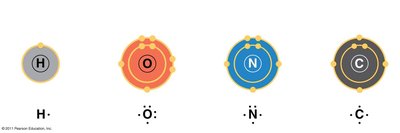
The valences of carbon and its frequent partners (hydrogen, oxygen, nitrogen) determine the structure of organic molecules.
Hydrogen: Valence = 1
Oxygen: Valence = 2
Nitrogen: Valence = 3
Carbon: Valence = 4
Variation in Carbon Skeletons
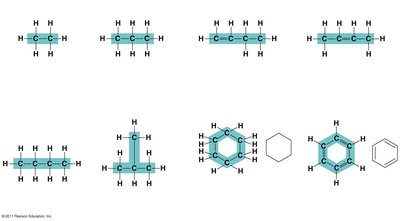
Carbon skeletons can vary in length, branching, double bond position, and presence of rings, contributing to the diversity of organic molecules.
Length: Number of carbon atoms in the chain.
Branching: Presence of side chains.
Double bond position: Location of double bonds.
Rings: Formation of cyclic structures.
Hydrocarbons
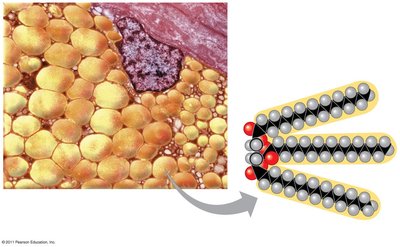
Hydrocarbons are organic molecules consisting only of carbon and hydrogen. They are components of many biological molecules, such as fats, and can release large amounts of energy during reactions.
Hydrocarbons are nonpolar and hydrophobic.
They serve as energy storage molecules in living organisms.
Isomers: Structural Diversity in Organic Molecules
Types of Isomers
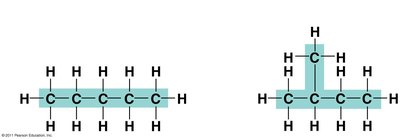
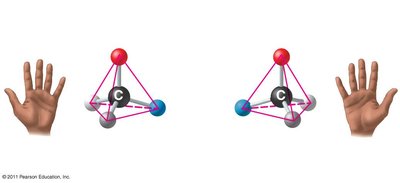
Isomers are compounds with the same molecular formula but different structures and properties. The main types are structural isomers, cis-trans isomers, and enantiomers.
Structural isomers: Different covalent arrangements of atoms.
Cis-trans isomers: Same covalent bonds, different spatial arrangement.
Enantiomers: Mirror images of each other, often with different biological activity.
Biological Significance of Enantiomers
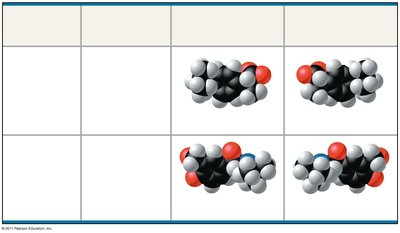
Enantiomers can have dramatically different effects in biological systems. Usually, only one enantiomer is biologically active, highlighting the sensitivity of organisms to molecular structure.
Drug | Condition | Effective Enantiomer | Ineffective Enantiomer |
|---|---|---|---|
Ibuprofen | Pain; inflammation | S-Ibuprofen | R-Ibuprofen |
Albuterol | Asthma | R-Albuterol | S-Albuterol |
Functional Groups: Chemical Reactivity in Organic Molecules
Overview of Functional Groups
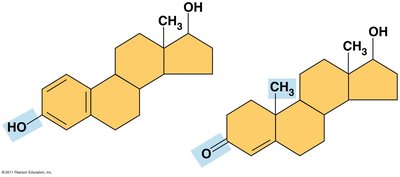
Functional groups are specific groups of atoms attached to the carbon backbone, replacing hydrogens. They are the components of organic molecules involved in chemical reactions and determine the unique properties of each molecule.
The number and arrangement of functional groups define molecular properties.
Functional groups are essential for biological activity.
The Seven Most Important Functional Groups
Hydroxyl (–OH): Found in alcohols; polar, forms hydrogen bonds, helps dissolve organic compounds.
Carbonyl (C=O): Found in ketones and aldehydes; gives rise to ketoses and aldoses (types of sugars).
Carboxyl (–COOH): Found in carboxylic acids; acts as an acid, often ionized in cells.
Amino (–NH2): Found in amines; acts as a base, often ionized in cells.
Sulfhydryl (–SH): Found in thiols; forms covalent bonds, stabilizes protein structure.
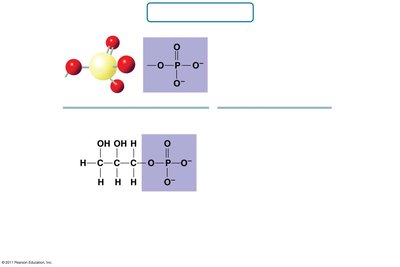
Phosphate (–OPO32–): Found in organic phosphates; contributes negative charge, often in high-energy molecules.
Methyl (–CH3): Found in methylated compounds; affects gene expression and hormone function.
ATP: The Energy Currency of the Cell
Structure and Function of ATP
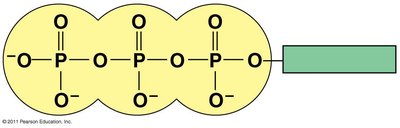
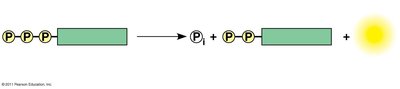
Adenosine triphosphate (ATP) is the primary energy-transferring molecule in cells. It consists of an organic molecule called adenosine attached to three phosphate groups.
ATP stores energy in its phosphate bonds.
Hydrolysis of ATP releases energy for cellular processes.
ATP Hydrolysis
ATP reacts with water to produce adenosine diphosphate (ADP), inorganic phosphate, and energy.
ATP + H2O → ADP + Pi + energy
Equation:
Additional info: The notes above expand on the original content by providing definitions, examples, and context for each topic, ensuring completeness and academic quality for General Biology students.
