 Back
Carbon: The Basis of Molecular Diversity (General Biology Study Notes)
Study Guide - Smart Notes
 Tailored notes based on your materials, expanded with key definitions, examples, and context.
Carbon: The Basis of Molecular Diversity
Introduction to Organic Chemistry
Organic chemistry is the study of compounds containing carbon, which forms the foundation of molecular diversity in living organisms. Organic compounds range from simple molecules to complex macromolecules, and their study is essential for understanding biological processes.
Organic compounds are defined by the presence of carbon atoms.
Carbon's versatility allows for the formation of a vast array of molecules, contributing to the diversity of life.
The major elements of life—carbon (C), hydrogen (H), oxygen (O), nitrogen (N), sulfur (S), and phosphorus (P)—are consistently found in living organisms.
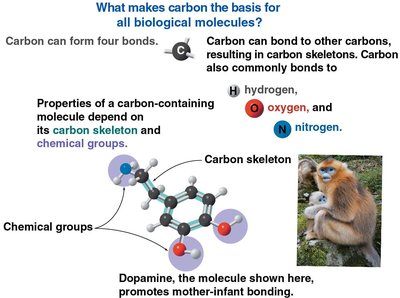
Electron Configuration and Bonding
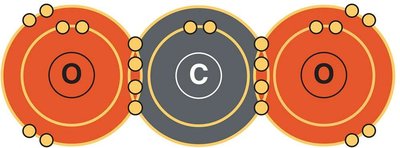
The electron configuration of carbon is central to its chemical properties and ability to form diverse molecules. Carbon has four valence electrons, enabling it to form four covalent bonds with other atoms.
Electron configuration determines the types and number of bonds an atom can form.
Carbon's four valence electrons allow it to bond with hydrogen, oxygen, nitrogen, and other carbons.
In molecules with multiple carbons, each carbon bonded to four other atoms adopts a tetrahedral shape.
When two carbon atoms are joined by a double bond, the atoms attached to them lie in the same plane.
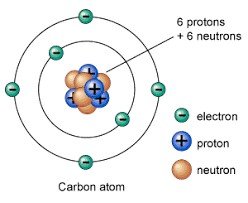
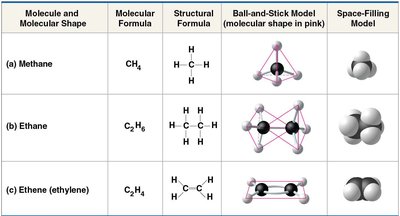
Valence and Bonding Partners
The number of unpaired electrons in the valence shell of an atom determines its valence, or the number of covalent bonds it can form. Carbon's covalent compatibility with many elements is a key feature in organic chemistry.
Carbon's most frequent bonding partners are hydrogen, oxygen, and nitrogen.
Valence is crucial for understanding molecular structure and reactivity.
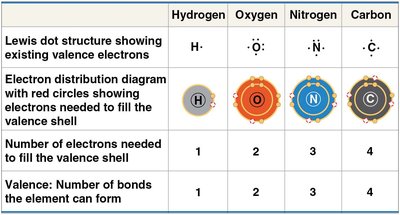
Examples of Carbon Compounds
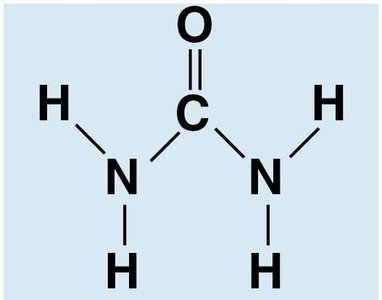
Carbon forms a variety of compounds, including carbon dioxide (CO2) and urea (CO(NH2)2), which illustrate its bonding versatility.
Carbon atoms can be linked into chains, forming the backbone of organic molecules.
These chains vary in length and shape, contributing to molecular diversity.
Carbon Skeletons and Hydrocarbons
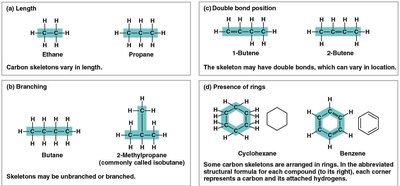
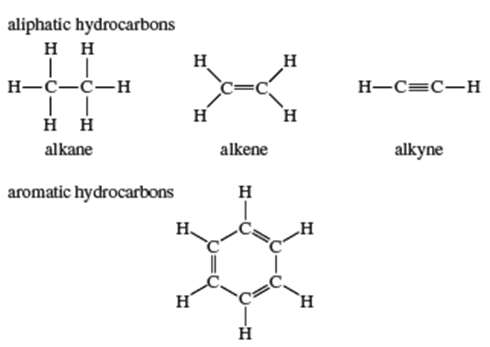
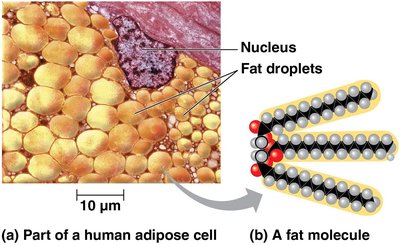
Carbon chains, or skeletons, form the structural framework of most organic molecules. Hydrocarbons are molecules consisting only of carbon and hydrogen, and they play a significant role in biological systems.
Carbon skeletons can vary in length, branching, double bond position, and presence of rings.
Hydrocarbons are important energy sources and structural components in fats.
Isomers: Structural Diversity
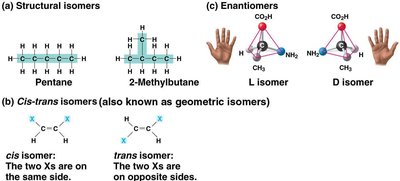
Isomers are compounds with the same molecular formula but different structures and properties. The three main types of isomers are structural isomers, cis-trans (geometric) isomers, and enantiomers.
Structural isomers differ in the covalent arrangement of atoms.
Cis-trans isomers differ in spatial arrangement around a double bond.
Enantiomers are mirror images of each other and can have different biological activities.
Biological Importance of Enantiomers
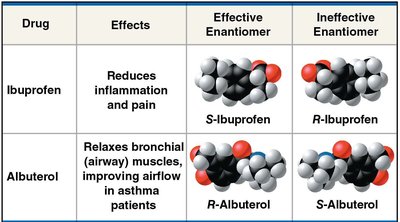
Enantiomers are especially important in the pharmaceutical industry, as different enantiomers of a drug can have distinct effects in the body. Often, only one enantiomer is biologically active.
Organisms are sensitive to subtle variations in molecular structure.
Examples include ibuprofen and albuterol, where only one enantiomer is effective.
Functional Groups and Molecular Properties
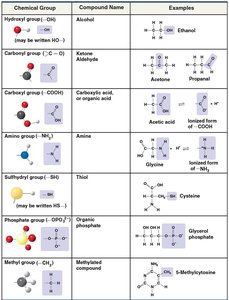
The distinctive properties of organic molecules depend on their carbon skeleton and the chemical groups attached to them. Functional groups are the components most commonly involved in chemical reactions.
The number and arrangement of functional groups determine molecular properties and reactivity.
Common functional groups include hydroxyl, carbonyl, carboxyl, amino, sulfhydryl, phosphate, and methyl groups.
ATP: An Important Source of Energy
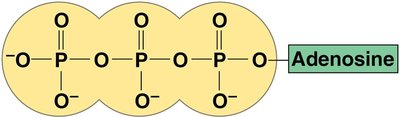
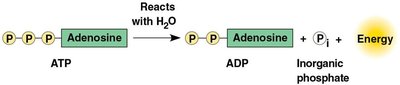
Adenosine triphosphate (ATP) is a key organic phosphate that stores energy for cellular processes. ATP consists of adenosine attached to three phosphate groups, and its hydrolysis releases energy used by cells.
ATP is the primary energy currency in biological systems.
The reaction: ATP + H2O → ADP + inorganic phosphate + energy
Additional info: The notes above expand on the lecture slides by providing definitions, examples, and context for each concept, ensuring a comprehensive and self-contained study guide for General Biology students.
