 Back
Cell Communication and Signal Transduction
Study Guide - Smart Notes
 Tailored notes based on your materials, expanded with key definitions, examples, and context.
Cell Communication
Introduction to Cell Communication
Cell communication is essential for the coordination and regulation of cellular activities in multicellular organisms. Cells "talk" to each other using signaling molecules, allowing them to respond to changes in their environment and maintain homeostasis.
Signaling molecules are chemicals that transmit information from one cell to another.
Communication can occur through direct contact or by the release of signaling molecules that affect nearby or distant cells.
Types of Cell Signaling
Cells use several mechanisms to communicate, classified by the distance over which the signal acts and the nature of the signaling molecule.
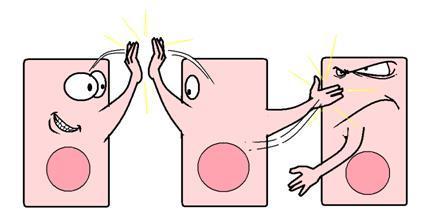
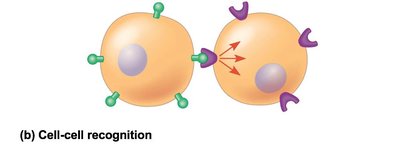
Direct Contact (Cell-Cell Recognition): Cells communicate by physically touching each other, often through membrane-bound cell-surface molecules.
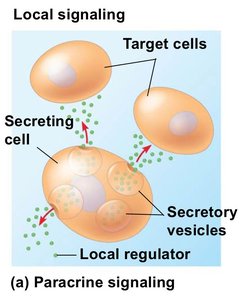
Paracrine Signaling: Cells secrete local regulators that affect nearby target cells. Example: Growth factors stimulate nearby cells to grow and divide.
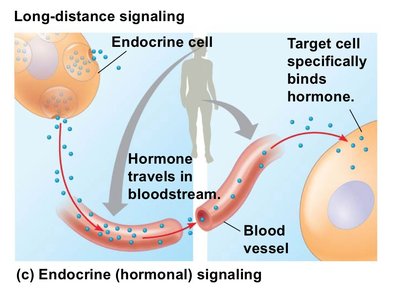
Endocrine (Hormonal) Signaling: Hormones are released into the bloodstream and can affect distant target cells throughout the body. Example: Adrenaline triggers responses in multiple organs during stress.
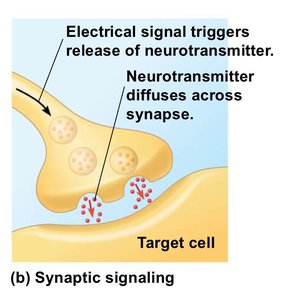
Synaptic (Nervous) Signaling: Neurotransmitters are released from neurons and diffuse across synapses to target cells, such as other neurons or muscle cells.
Steps of Cell Signaling
Overview of Signal Transduction Pathway
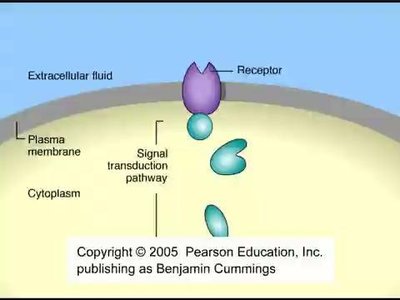
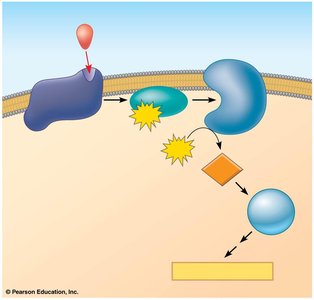
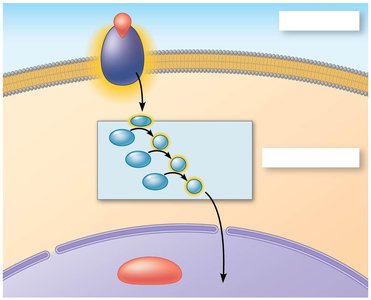
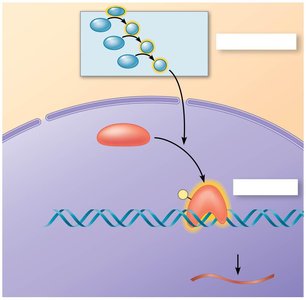
Cell signaling typically involves three main steps: reception, transduction, and response. These steps ensure that external signals are converted into specific cellular responses.
Reception: The target cell detects a signaling molecule (ligand) when it binds to a receptor protein on the cell surface or inside the cell.
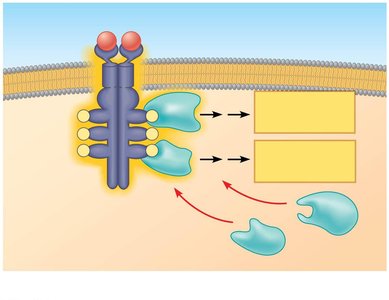
Transduction: The binding of the ligand changes the receptor in some way, initiating a cascade of molecular events (signal transduction pathway).
Response: The transduced signal triggers a specific cellular activity, such as gene expression or enzyme activation.
Reception: Cell Surface and Intracellular Receptors
Cell Surface Receptors
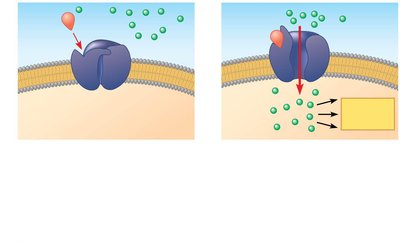
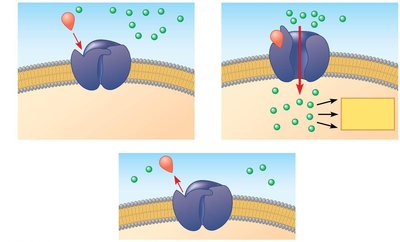
Most signaling molecules are too large or polar to cross the plasma membrane, so they bind to cell surface receptors. There are three main types:
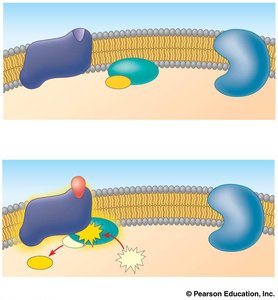
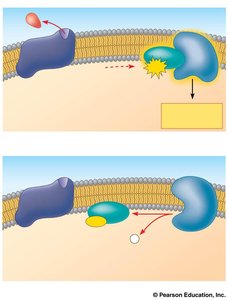
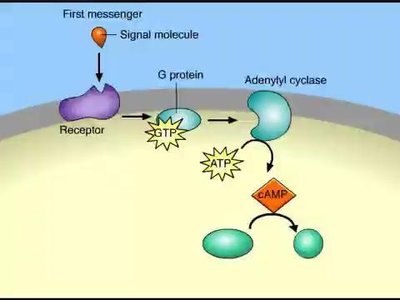
G-Protein Coupled Receptors (GPCRs): These receptors activate G proteins, which then trigger various intracellular signaling pathways.
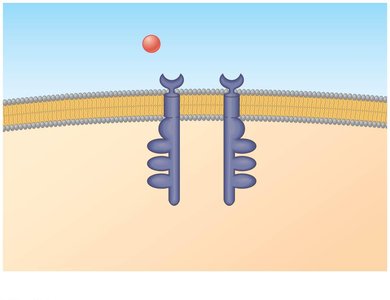
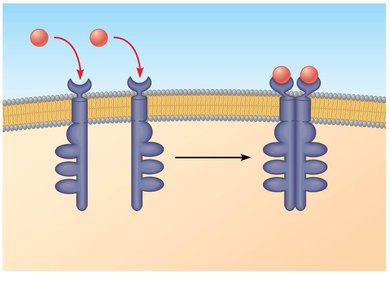
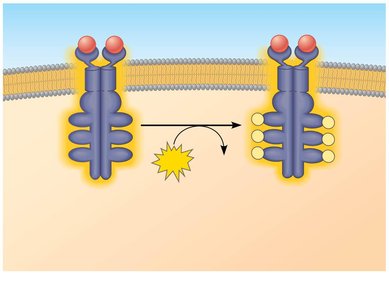
Receptor Tyrosine Kinases (RTKs): These receptors dimerize and autophosphorylate upon ligand binding, activating multiple signaling pathways.
Ligand-Gated Ion Channels: These channels open or close in response to ligand binding, allowing ions to flow across the membrane and change the cell's electrical state.
Intracellular Receptors
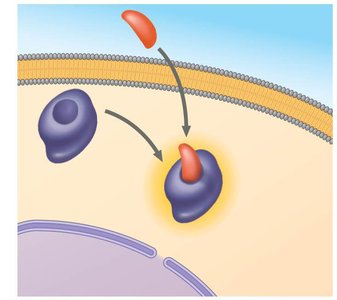
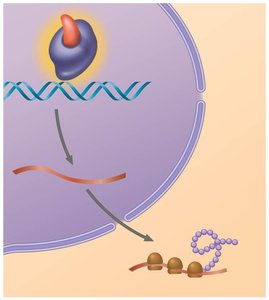
Some signaling molecules, such as steroid hormones, are small and hydrophobic, allowing them to cross the plasma membrane and bind to intracellular receptors in the cytoplasm or nucleus. The hormone-receptor complex can directly regulate gene expression.
Transduction: Signal Amplification and Second Messengers
Phosphorylation Cascades
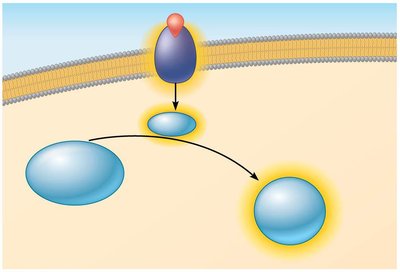
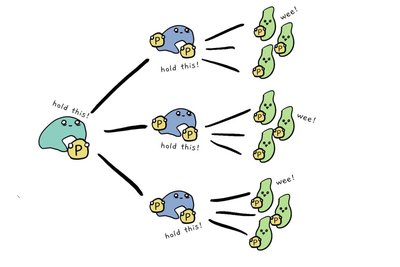
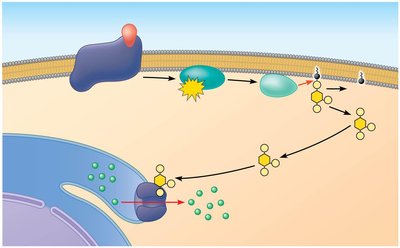
Signal transduction often involves a series of protein phosphorylations, known as a phosphorylation cascade. Protein kinases transfer phosphate groups from ATP to proteins, while protein phosphatases remove them. This amplifies the signal and allows for fine regulation.
Second Messengers
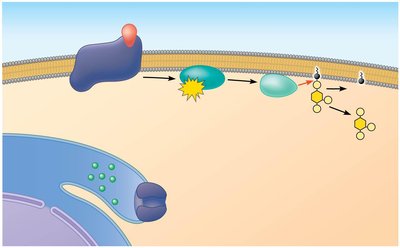
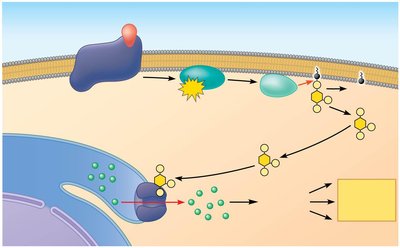
Second messengers are small, non-protein, water-soluble molecules or ions that spread rapidly by diffusion. Common examples include cyclic AMP (cAMP), inositol triphosphate (IP3), and calcium ions (Ca2+).
cAMP: Generated from ATP by adenylyl cyclase, often in response to G-protein coupled receptor activation.
IP3 and Ca2+: IP3 triggers the release of Ca2+ from the endoplasmic reticulum, which then acts as a second messenger in various pathways.
Response: Cellular Outcomes of Signal Transduction
Regulation of Cellular Activities
The final step in cell signaling is the cellular response, which can involve changes in gene expression, enzyme activity, or other cellular functions. Many pathways ultimately activate transcription factors, which regulate the transcription of specific genes.
Transcription factors are proteins that bind to DNA and control the rate of gene transcription.
Cell signaling can also regulate cytoplasmic activities, such as metabolism, cell movement, or apoptosis.
Summary Table: Types of Cell Signaling
Type | Distance | Signaling Molecule | Example |
|---|---|---|---|
Direct Contact | Adjacent cells | Membrane-bound proteins | Immune cell recognition |
Paracrine | Local | Local regulators | Growth factors |
Endocrine | Long-distance | Hormones | Adrenaline |
Synaptic | Short-distance (synapse) | Neurotransmitters | Acetylcholine |
Additional info: This guide covers the core concepts of cell communication, including the types of signaling, the steps of signal transduction, and the molecular mechanisms underlying cellular responses. Understanding these processes is fundamental for topics such as development, immunity, and disease in biology.
