Back
Cell Communication and Signal Transduction Pathways
Study Guide - Smart Notes
 Tailored notes based on your materials, expanded with key definitions, examples, and context.
Cell Communication and Signal Transduction
Introduction to Cell Signaling
Cell signaling is the process by which cells detect and respond to external signals, allowing them to coordinate activities and maintain homeostasis. This process is fundamental to the functioning of all living organisms, from single-celled bacteria to complex multicellular animals and plants.
Evolution and Importance of Cell Signaling
Evolution of Cell Signaling
Cell signaling likely evolved in prokaryotes and single-celled eukaryotes and was adapted for use in multicellular organisms.
Bacteria use signaling to sense population density, a process called quorum sensing.
Quorum sensing enables behaviors such as biofilm formation and toxin secretion.
Disrupting quorum sensing is a potential alternative to antibiotics.
Example: The yeast Saccharomyces cerevisiae uses signaling to coordinate mating between two types (a and α) via secreted factors, initiating a signal transduction pathway.
Types of Cell Signaling
Local and Long-Distance Signaling
Cells communicate through direct contact or by releasing signaling molecules. The mode of communication depends on the distance between cells.
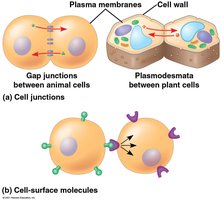
Local signaling: Includes direct contact (cell junctions or cell-surface molecules) and paracrine signaling (local regulators like growth factors).
Synaptic signaling: Specialized local signaling in the nervous system using neurotransmitters.
Long-distance signaling: Involves hormones traveling through the circulatory system to reach target cells.
The Three Stages of Cell Signaling
Overview of the Three Stages
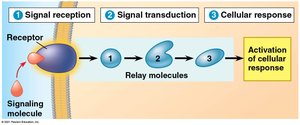
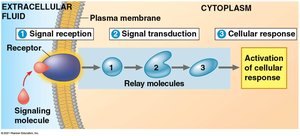
Cell signaling typically involves three main stages:
Reception: Detection of a signaling molecule by a receptor protein.
Transduction: Conversion of the signal into a form that can bring about a specific cellular response, often through a series of steps.
Response: The specific cellular activity triggered by the transduced signal.
Reception: Signal Detection by Receptors
Receptor Proteins
Receptors are highly specific proteins that bind signaling molecules (ligands), causing a conformational change that initiates signal transduction.
Most receptors are located in the plasma membrane.
Some receptors are intracellular, responding to small or hydrophobic molecules.
Types of Membrane Receptors
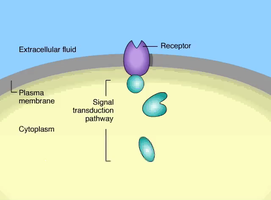
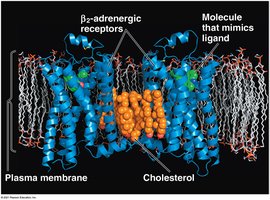
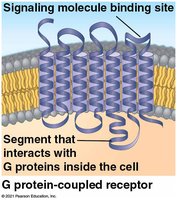
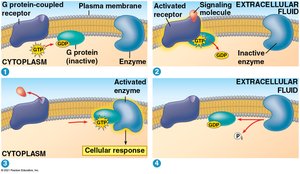
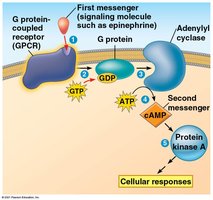
G protein-coupled receptors (GPCRs): Largest family of cell-surface receptors; interact with G proteins that bind GTP.
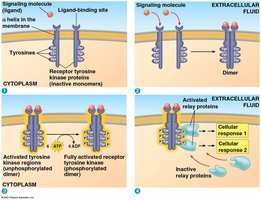
Receptor tyrosine kinases (RTKs): Enzymatic receptors that phosphorylate tyrosine residues, triggering multiple pathways.
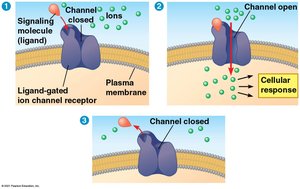
Ion channel receptors: Ligand-gated channels that open or close in response to signaling molecules, allowing ion flow.
Intracellular Receptors
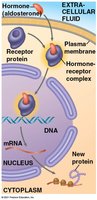
Located in the cytoplasm or nucleus, these receptors bind small or hydrophobic ligands (e.g., steroid hormones) and often act as transcription factors to regulate gene expression.
Transduction: Signal Relay and Amplification
Signal Transduction Pathways
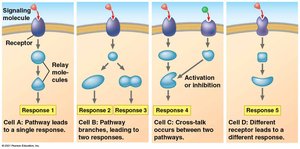
Signal transduction involves a cascade of molecular interactions, often amplifying the signal and providing opportunities for regulation.
Each step typically involves a change in protein shape or activity.
Protein Phosphorylation and Dephosphorylation
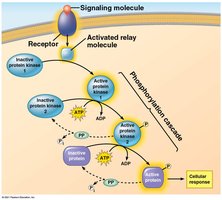
Protein kinases: Enzymes that transfer phosphate groups from ATP to proteins (phosphorylation).
Protein phosphatases: Enzymes that remove phosphate groups (dephosphorylation).
Phosphorylation cascades act as molecular switches, regulating protein activity.
Second Messengers
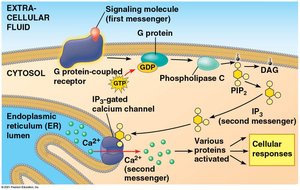
Small, nonprotein, water-soluble molecules or ions that rapidly spread within the cell to relay signals. Common examples include cyclic AMP (cAMP) and calcium ions (Ca2+).
Cyclic AMP (cAMP)
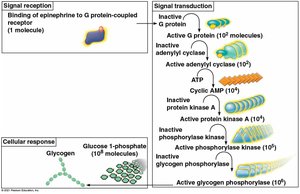
Produced from ATP by adenylyl cyclase in response to extracellular signals.
Activates protein kinase A, which phosphorylates target proteins.
Regulated by G protein-coupled receptors and can be inhibited by G-protein systems.

Calcium Ions and IP3
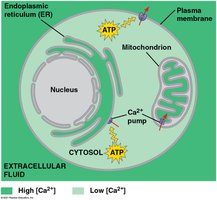
Ca2+ concentration is tightly regulated; small changes can have large effects.
IP3 and DAG are second messengers produced by cleavage of membrane phospholipids, leading to Ca2+ release from the endoplasmic reticulum.
Response: Cellular Outcomes of Signaling
Nuclear and Cytoplasmic Responses
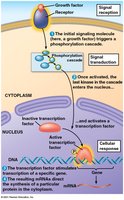
The final outcome of a signaling pathway can be regulation of gene expression (nuclear response) or modification of enzyme activity or other cellular processes (cytoplasmic response).
Transcription factors activated by signaling pathways can turn genes on or off.
Other responses include changes in metabolism, ion channel activity, or cell division.
Regulation of the Response
Cell signaling is tightly regulated to ensure appropriate responses:
Amplification: Enzyme cascades increase the magnitude of the response.
Specificity: Different cells respond differently to the same signal due to unique protein sets.
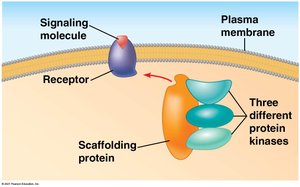
Efficiency: Scaffolding proteins organize components for faster, more efficient signaling.
Termination: Inactivation mechanisms ensure signals are not perpetuated unnecessarily.
Apoptosis: Programmed Cell Death
Mechanisms and Importance of Apoptosis
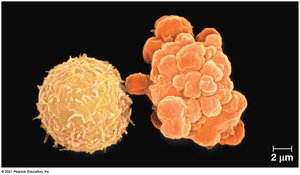
Apoptosis is a form of programmed cell death essential for development, maintenance, and defense. It involves a cascade of molecular events leading to the orderly dismantling of cellular components.
Triggered by internal or external signals, activating proteases (caspases) and nucleases.
Prevents damage to neighboring cells by containing cellular contents.
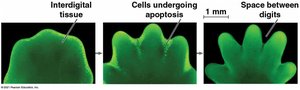
Essential for processes such as development of fingers and toes, and removal of damaged or dangerous cells.
Apoptosis in Caenorhabditis elegans
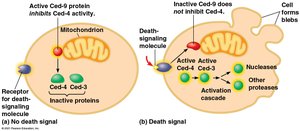
Ced-9 protein acts as a brake on apoptosis in the absence of death signals.
Death signals inactivate Ced-9, allowing activation of Ced-3 and Ced-4, which execute apoptosis.
Apoptosis in Mammals
Multiple pathways and caspases can trigger apoptosis.
Critical for normal development and prevention of diseases such as cancer and neurodegeneration.
Example: Apoptosis sculpts digits during limb development by removing interdigital tissue.
Summary Table: Three-Stage Cell-Signaling Pathway
Stage | Description |
|---|---|
Reception | Signal molecule binds to receptor protein |
Transduction | Relay molecules transmit and amplify the signal |
Response | Activation of cellular response (e.g., gene expression, enzyme activity) |