 Back
Cell Communication and Signal Transduction: Study Guide
Study Guide - Smart Notes
 Tailored notes based on your materials, expanded with key definitions, examples, and context.
Cell Communication
Overview and Importance
Cell communication is essential for coordinating activities in multicellular organisms, regulating hormone actions, enabling cell recognition, finding mates (such as in yeast cells), turning pathways on or off, and initiating programmed cell death (apoptosis).
Coordination: Cells must communicate to synchronize functions across tissues and organs.
Hormone Actions: Hormones act as chemical messengers to regulate physiological processes.
Cell Recognition: Cells identify each other for immune responses and tissue formation.
Pathway Regulation: Communication turns cellular pathways on or off as needed.
Apoptosis: Programmed cell death is triggered by specific signals.
Types of Cell Communication
Cells communicate through direct contact or by sending chemical signals over short or long distances.
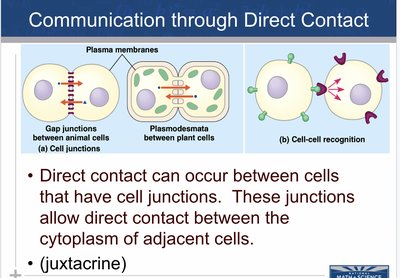
Direct Contact: Occurs at cell junctions such as gap junctions (animal cells) and plasmodesmata (plant cells), allowing cytoplasmic exchange.
Juxtacrine Signaling: Direct cell-to-cell signaling via junctions.
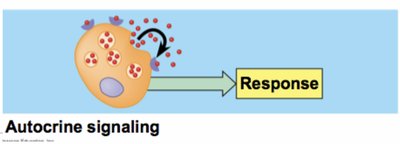
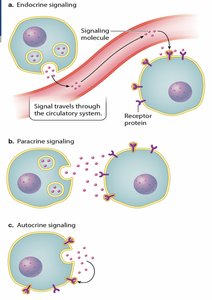
Autocrine Signaling: Cells release signals that affect themselves.
Paracrine Signaling: Signals affect nearby cells.
Endocrine Signaling: Hormones travel through the circulatory system to distant cells.
Signal Transduction Pathways
Stages of Signal Transduction
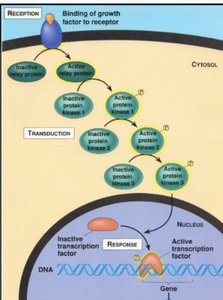
Signal transduction pathways link signal reception to cellular responses. The three main stages are:
Reception: Detection of a signal by a receptor protein.
Transduction: Relay and amplification of the signal, often involving protein modification and phosphorylation cascades.
Response: Change in cell activity, such as enzyme activation or gene expression.
Membrane and Intracellular Receptors
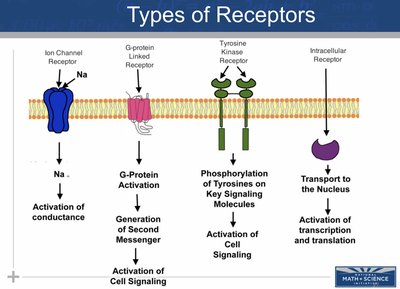
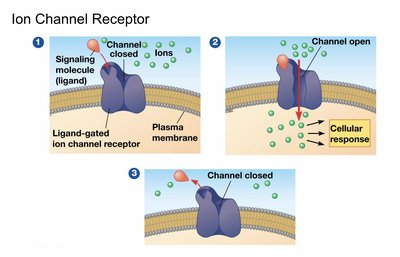
Membrane Receptors: Detect signals that cannot cross the lipid bilayer (e.g., G protein-coupled receptors, tyrosine kinase receptors, ligand-gated ion channels).
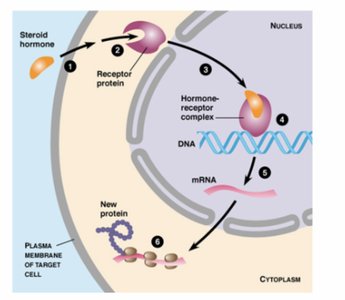
Intracellular Receptors: Detect signals (e.g., steroid hormones) that can cross the membrane and bind inside the cell.
G Protein-Coupled Receptor (GPCR) Pathway
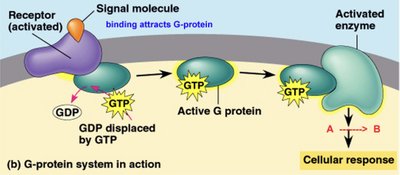
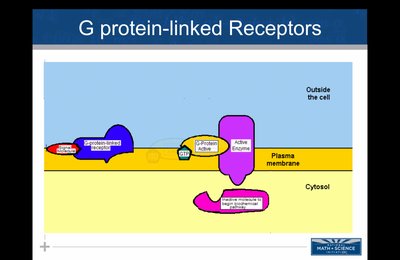
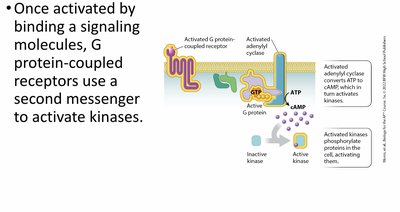
GPCRs are a major class of membrane receptors. Upon ligand binding, they activate G proteins, which trigger intracellular signaling cascades.
Activation: Ligand binding causes the receptor to change shape and activate a G protein by exchanging GDP for GTP.
Signal Amplification: Activated G proteins stimulate effector enzymes, leading to production of second messengers (e.g., cAMP).
Protein Kinases: Second messengers activate kinases, which phosphorylate proteins to propagate the signal.
Cellular Responses to Signals
Types of Cellular Responses
Signal transduction pathways influence cellular responses, which may include enzyme activation, protein synthesis, changes in gene expression, or apoptosis.
Cytoplasmic Response: Rapid changes in enzyme activity.
Nuclear Response: Activation of genes, leading to new protein synthesis.
Apoptosis: Programmed cell death triggered by specific signals.
Changes in Signal Transduction Pathways
Mutations and Chemical Interference
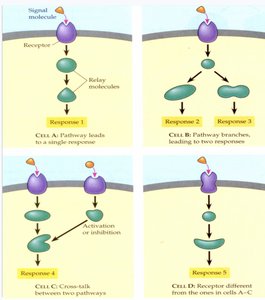
Mutations or chemicals can alter signal transduction pathways, affecting cellular responses.
Mutations: Changes in receptor or signaling proteins can prevent normal signal detection or transmission.
Agonists: Chemicals that stimulate a response by activating the pathway.
Antagonists: Chemicals that inhibit the pathway, preventing a response.
Example: Defects in leptin or its receptor can lead to increased appetite and obesity.
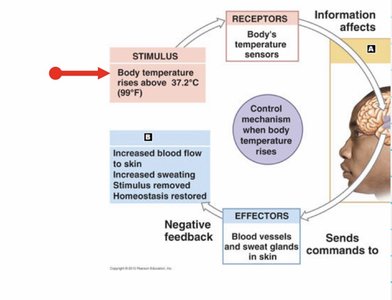
Feedback Mechanisms
Negative and Positive Feedback
Organisms use feedback mechanisms to maintain homeostasis and respond to changes.
Negative Feedback: Counteracts changes to return a system to its set point (e.g., temperature regulation, blood glucose control).
Positive Feedback: Amplifies changes, moving the system further from its set point (e.g., blood clotting, childbirth).
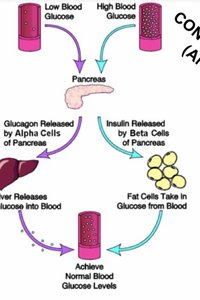
Summary Table: Types of Cell Signaling
Type | Distance | Example | Mechanism |
|---|---|---|---|
Direct Contact (Juxtacrine) | Adjacent cells | Gap junctions, plasmodesmata | Physical contact |
Autocrine | Same cell | Immune cell self-stimulation | Cell releases and responds to its own signal |
Paracrine | Nearby cells | Growth factors | Local diffusion |
Endocrine | Distant cells | Hormones | Transport via circulatory system |
