 Back
Cell Communication and Signaling: Chapter 11 Study Notes
Study Guide - Smart Notes
 Tailored notes based on your materials, expanded with key definitions, examples, and context.
Cell Communication
Introduction to Cell Signaling
Cell communication is essential for the coordination of activities in multicellular organisms and is also observed in microorganisms. Cells send, receive, and respond to signals, which can influence processes such as growth, division, and programmed cell death. Understanding cell signaling provides insight into how cancer cells communicate and how their signaling can be targeted therapeutically.
Evolution of Cell Signaling
Signaling in Yeast and Bacteria
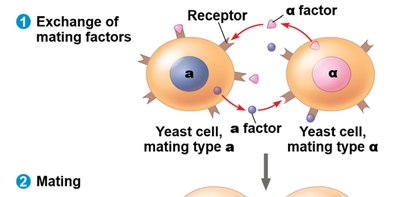
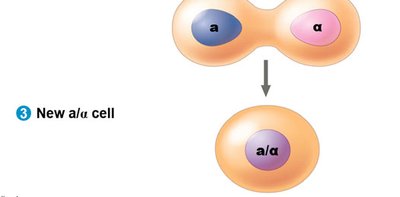
Cell signaling mechanisms are evolutionarily conserved. The yeast Saccharomyces cerevisiae has two mating types, a and α, which locate each other via secreted factors. The binding of these factors initiates a signal transduction pathway, a series of steps leading to a cellular response. Similar mechanisms are found in mammals, suggesting ancestral signaling molecules evolved in prokaryotes and single-celled eukaryotes.
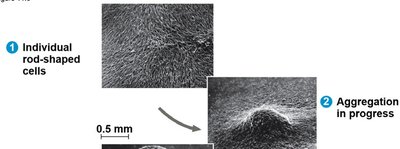
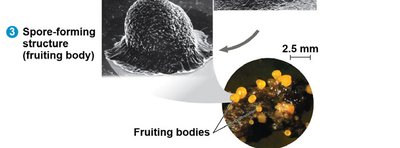
Quorum Sensing: Bacteria sense local population density by detecting concentrations of signaling molecules. This process can lead to biofilm formation or toxin secretion.
Biofilm: An aggregation of bacterial cells adhered to a surface, often regulated by quorum sensing.
Medical Importance: Interfering with quorum sensing may offer alternatives to antibiotics.
Local and Long-Distance Signaling
Types of Cell Communication
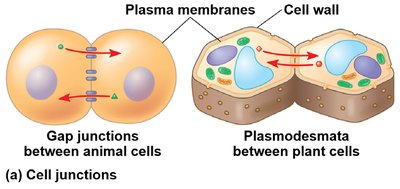
Cells communicate via signaling molecules, which can act locally or over long distances. Animal and plant cells have cell junctions that directly connect the cytoplasm of adjacent cells, allowing signaling substances to pass freely.
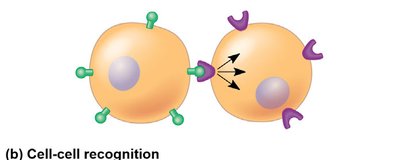
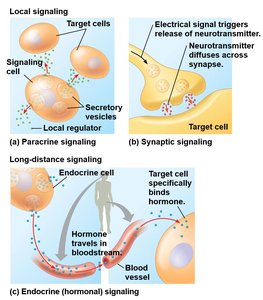
Local Signaling: Includes direct contact (cell junctions, cell-cell recognition), paracrine signaling (growth factors), and synaptic signaling (neurotransmitters).
Long-Distance Signaling: Hormones are released by specialized cells and travel via the circulatory system to target cells (endocrine signaling).
The Three Stages of Cell Signaling
Reception, Transduction, and Response
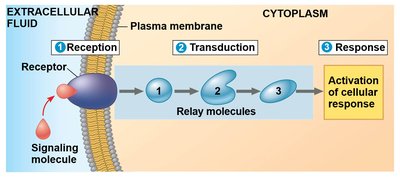
Earl W. Sutherland discovered that cells receiving signals undergo three processes: reception, transduction, and response. These stages are fundamental to understanding how cells interpret external signals.
Reception: The target cell detects a signaling molecule that binds to a receptor protein on the cell surface.
Transduction: The binding alters the receptor and initiates a signal transduction pathway, often involving multiple steps.
Response: The transduced signal triggers a specific cellular response.
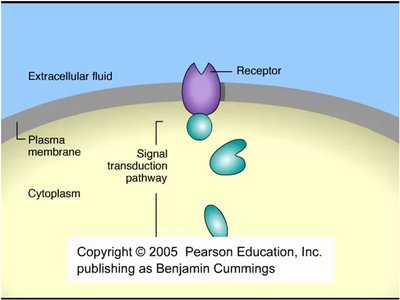
Reception: Signal Molecule Binding
Receptors in the Plasma Membrane
The binding between a signal molecule (ligand) and receptor is highly specific. Most signal receptors are plasma membrane proteins. There are three main types of membrane receptors:
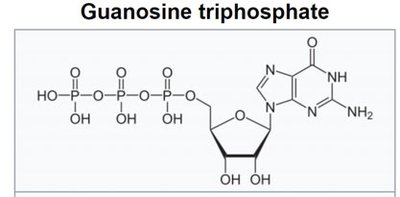
G protein-coupled receptors (GPCRs): Largest family of cell-surface receptors, work with G proteins that bind GTP.
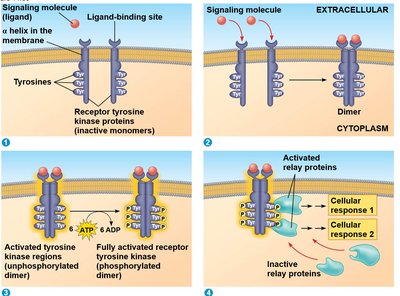
Receptor tyrosine kinases (RTKs): Transfer phosphate groups from ATP to other proteins, can trigger multiple pathways.
Ion channel receptors: Act as gates for ions such as Na+ or Ca2+.
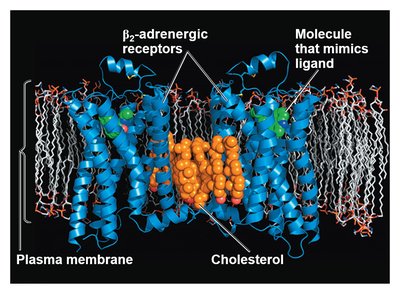
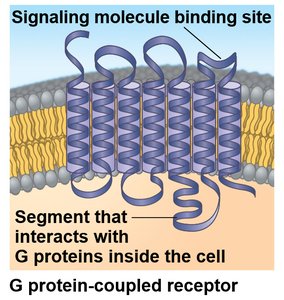
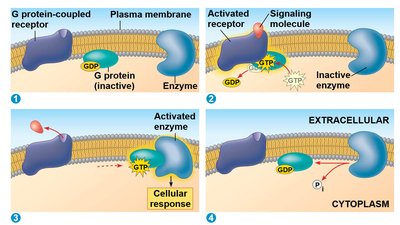
Intracellular Receptors
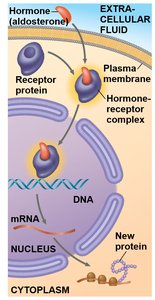
Intracellular receptor proteins are found in the cytoplasm or nucleus. Small or hydrophobic messengers, such as steroid and thyroid hormones, can cross the membrane and activate these receptors. The activated hormone-receptor complex can act as a transcription factor, regulating gene expression.
Transduction: Signal Relay and Amplification
Signal Transduction Pathways
Cell signaling is usually a multistep process, allowing amplification and regulation. The binding of a signaling molecule triggers a chain of molecular interactions, with each step often involving a shape change in a protein.
Protein Phosphorylation and Dephosphorylation
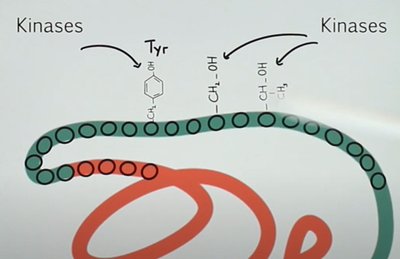
Phosphorylation (by protein kinases) and dephosphorylation (by protein phosphatases) regulate protein activity. Many relay molecules are protein kinases, creating a phosphorylation cascade.
Phosphorylation: Transfer of phosphate from ATP to protein.
Dephosphorylation: Removal of phosphate by phosphatases.
Molecular Switch: This system turns activities on/off or up/down as needed.
Second Messengers
Second messengers are small, nonprotein, water-soluble molecules or ions that spread throughout the cell by diffusion. Common examples include cyclic AMP (cAMP) and calcium ions (Ca2+).
cAMP: Produced by adenylyl cyclase from ATP in response to extracellular signals. Activates protein kinase A.
Ca2+ and IP3: Calcium ions are widely used as second messengers. IP3 and DAG are produced by cleavage of a phospholipid and help release Ca2+ from intracellular stores.
Response: Regulation of Cellular Activities
Nuclear and Cytoplasmic Responses
The cell’s response to an extracellular signal is called the output response. This may involve regulation of gene expression (transcription) or cytoplasmic activities such as enzyme function or ion channel opening.
Transcription Regulation: Many pathways regulate synthesis of proteins by turning genes on or off.
Enzyme Regulation: Some pathways regulate enzyme activity directly.
Regulation of the Response
Cell signaling responses are not simply "on" or "off". Four aspects of regulation include amplification, specificity, efficiency (scaffolding proteins), and termination.
Amplification: Enzyme cascades amplify the response.
Specificity: Different cells respond differently to the same signal due to unique protein collections.
Efficiency: Scaffolding proteins group relay proteins for efficient signaling.
Termination: Inactivation mechanisms ensure signals are not perpetuated unnecessarily.
Apoptosis: Programmed Cell Death
Mechanisms and Importance
Apoptosis is a form of programmed cell death, essential for development and maintenance. It prevents damage to neighboring cells by packaging cellular components into vesicles for digestion. Apoptosis is triggered by signals that activate a cascade of "suicide" proteins (caspases).
Triggers: Can be internal (DNA damage, protein misfolding) or external.
Role in Development: Essential for normal development (e.g., formation of fingers and toes).
Disease Association: Dysregulation may contribute to diseases such as cancer, Parkinson’s, and Alzheimer’s.
Type of Receptor | Function | Example |
|---|---|---|
GPCR | Activates G protein, triggers signaling cascade | Adrenaline receptor |
RTK | Phosphorylates proteins, triggers multiple pathways | Insulin receptor |
Ion Channel | Allows ions to pass, changes cell activity | Neurotransmitter receptor |
Intracellular | Regulates gene expression | Steroid hormone receptor |
Key Terms: Ligand, receptor, signal transduction, second messenger, kinase, phosphatase, apoptosis, caspase, transcription factor.
