Back
Cell Communication and Signaling: Structure, Function, and Regulation
Study Guide - Smart Notes
 Tailored notes based on your materials, expanded with key definitions, examples, and context.
Cell Communication and Signaling
Evolution and Importance of Cell Signaling
Cell signaling is a fundamental process that allows cells to detect and respond to external and internal signals. It evolved in prokaryotes and single-celled eukaryotes and is critical for multicellular organisms. Signaling enables coordination of cellular activities, population density sensing (quorum sensing), and formation of structures such as biofilms.
Quorum Sensing: Bacteria use signaling molecules to sense population density, leading to coordinated behaviors like biofilm formation and toxin secretion.
Medical Relevance: Disrupting quorum sensing pathways is a potential alternative to antibiotics.
Signal Transduction Pathways: Both yeast and mammals use similar molecular mechanisms for signal transduction.
Local and Long-Distance Signaling
Cells communicate through direct contact or by releasing signaling molecules. Local signaling is crucial for development, immune responses, and stem cell maintenance, while long-distance signaling involves hormones.
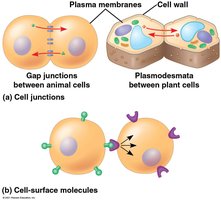
Direct Contact: Animal cells use gap junctions; plant cells use plasmodesmata. Cell-surface molecules can also mediate communication.
Paracrine Signaling: Local regulators like growth factors stimulate nearby cells.
Synaptic Signaling: Neurotransmitters are released in response to electrical signals in the nervous system.
Hormonal Signaling: Hormones travel via the circulatory system to distant target cells.
The Three Stages of Cell Signaling
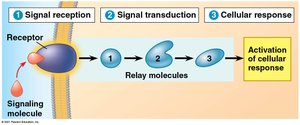
Cell signaling involves three main stages: reception, transduction, and response. These stages ensure that cells can detect signals, relay them internally, and produce appropriate responses.
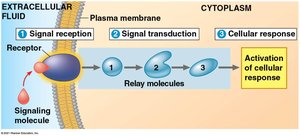
Reception: Detection of a signaling molecule by a receptor protein.
Transduction: Conversion of the signal into a form that can bring about a cellular response, often through a series of steps.
Response: Activation of a specific cellular activity.
Reception: Signal Detection
Receptors in the Plasma Membrane
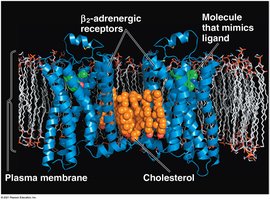
Signal molecules (ligands) bind to highly specific receptor proteins, often causing a shape change that initiates signal transduction. Most receptors are located in the plasma membrane.
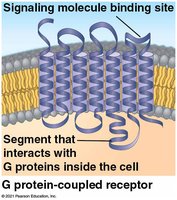
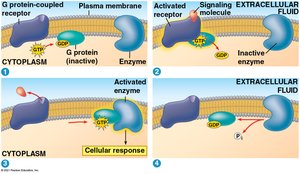
G Protein-Coupled Receptors (GPCRs): Largest family of cell-surface receptors; interact with G proteins that bind GTP.
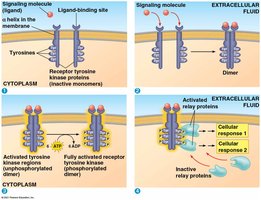
Receptor Tyrosine Kinases (RTKs): Attach phosphates to tyrosines; can trigger multiple pathways simultaneously.
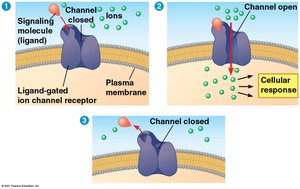
Ion Channel Receptors: Act as gates for ions when a ligand binds.
Intracellular Receptors
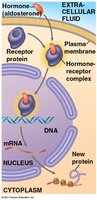
Some receptors are located inside the cell, in the cytoplasm or nucleus. Small or hydrophobic molecules, such as steroid and thyroid hormones, can cross the membrane and activate these receptors.
Hormone-Receptor Complex: Acts as a transcription factor, turning on specific genes.
Transduction: Signal Relay and Amplification
Signal Transduction Pathways
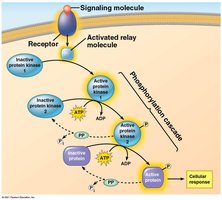
Signal transduction involves a cascade of molecular interactions, often resulting in amplification and regulation of the signal. Each step typically involves a change in protein shape or activity.
Protein Kinases: Transfer phosphates from ATP to proteins (phosphorylation).
Protein Phosphatases: Remove phosphates (dephosphorylation).
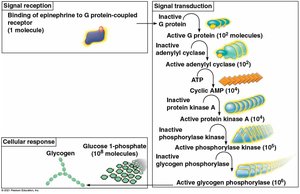
Phosphorylation Cascade: Series of kinases activating each other, amplifying the signal.
Second Messengers
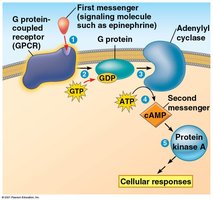
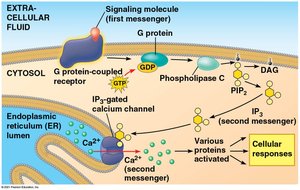
Second messengers are small, nonprotein molecules or ions that spread through the cell by diffusion. They participate in pathways initiated by GPCRs and RTKs.
Cyclic AMP (cAMP): Formed from ATP by adenylyl cyclase; activates protein kinase A.
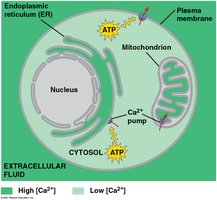
Calcium Ions (Ca2+): Used widely as a second messenger; concentration is tightly regulated.
Inositol Triphosphate (IP3) and Diacylglycerol (DAG): Produced by cleavage of phospholipids; trigger release of Ca2+.

Response: Cellular Outcomes
Nuclear and Cytoplasmic Responses
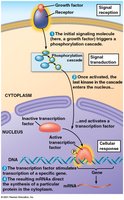
The final outcome of cell signaling can be regulation of gene expression or modification of enzyme activity. The response may occur in the nucleus (transcriptional regulation) or in the cytoplasm (enzyme activity, ion channel opening).
Transcription Factors: Proteins that regulate gene expression in response to signaling.
Enzyme Regulation: Signaling can activate or inhibit enzymes, affecting metabolism or other cellular functions.
Regulation of the Response
Cell signaling is regulated to ensure appropriate responses. Four aspects are considered: amplification, specificity, efficiency, and termination.
Amplification: Enzyme cascades increase the number of activated molecules.
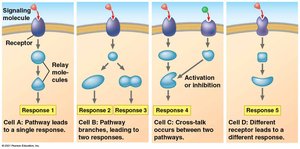
Specificity: Different cells respond differently to the same signal due to unique protein collections.
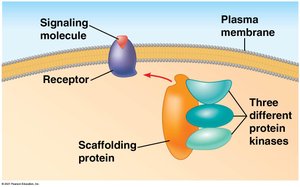
Efficiency: Scaffolding proteins group relay proteins, increasing efficiency.
Termination: Inactivation mechanisms ensure signals are not perpetuated unnecessarily.
Apoptosis: Programmed Cell Death
Mechanisms and Regulation of Apoptosis
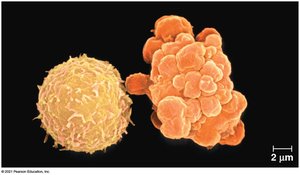
Apoptosis is a controlled process of cell death, essential for development and maintenance. It prevents damage to neighboring cells by packaging cellular components into vesicles for digestion.
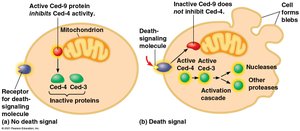
Triggers: Signals from inside or outside the cell can initiate apoptosis.
Caspases: Proteases that execute apoptosis; Ced-3 is a key caspase in C. elegans.
Regulation: Proteins like Ced-9 act as brakes; inactivation leads to activation of apoptotic pathways.
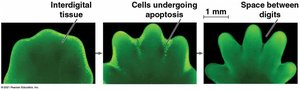
Developmental Role: Apoptosis shapes structures such as fingers and toes by removing interdigital tissue.
Summary of Key Concepts
Cell signaling involves three main stages: reception, transduction, and response. These processes are highly regulated and essential for proper cellular function, development, and maintenance.