 Back
Cell Communication: Mechanisms and Pathways
Study Guide - Smart Notes
 Tailored notes based on your materials, expanded with key definitions, examples, and context.
Cell Communication
Introduction to Cell Communication
Cell communication is essential for the coordination of cellular activities and the maintenance of homeostasis in multicellular organisms. Cells use signaling molecules to transmit information, allowing them to respond to changes in their environment and interact with other cells.
Signal transduction refers to the process by which a cell converts an external signal into a functional response.
Signaling can occur between cells of the same organism or between different organisms (e.g., microorganisms).
Evolution of Cell Signaling
Shared Signaling Pathways and Evolutionary Origins
Cell signaling mechanisms are highly conserved across evolution, indicating their ancient origin and fundamental importance.
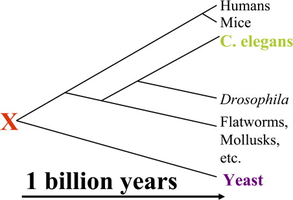
Many signaling pathways are shared among diverse organisms, from yeast to humans.
These pathways likely evolved in a common ancestor over a billion years ago.
Communication among Microorganisms
Yeast Mating Types and Signal Transduction
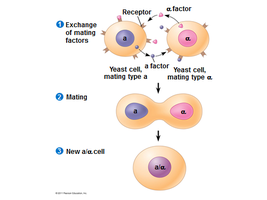
Yeast cells communicate using chemical signals to coordinate mating between two types: a and α.
Each type secretes a specific factor recognized by receptors on the opposite type.
Binding of the factor to its receptor initiates a signal transduction pathway, leading to cell fusion and the formation of a new diploid cell.
Bacterial Communication: Quorum Sensing and Biofilms
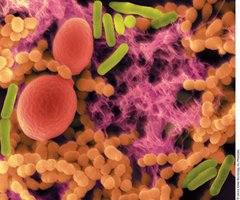
Bacteria use quorum sensing to detect cell density and coordinate group behaviors such as biofilm formation.
Quorum sensing involves the production, release, and detection of signaling molecules called autoinducers.
When a threshold concentration is reached, bacteria alter gene expression to synchronize activities like biofilm formation.
Local and Long Distance Signaling
Local Signaling: Direct Contact and Paracrine Signaling
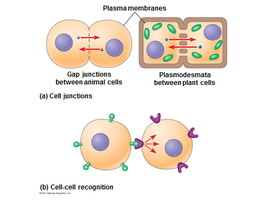
Cells can communicate through direct contact or by releasing local regulators that affect nearby cells.
Direct contact involves cell junctions (gap junctions in animals, plasmodesmata in plants) or cell-cell recognition via membrane-bound molecules.
Paracrine signaling involves the release of local regulators (e.g., growth factors) that diffuse to nearby target cells.
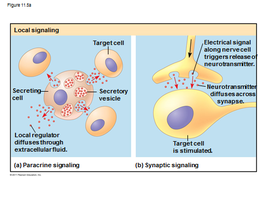
Local Signaling: Synaptic Signaling
Synaptic signaling is a specialized form of local signaling in the nervous system.
An electrical signal triggers the release of neurotransmitters, which cross the synaptic gap and bind to receptors on the target cell.
This process allows rapid and specific communication between neurons and other cells.
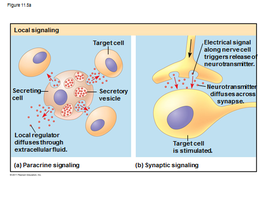
3 Stages of Cell Signaling
Reception, Transduction, and Response
Cell signaling typically involves three main stages:
Reception: A signaling molecule (ligand) binds to a receptor protein on the cell surface or inside the cell.
Transduction: The receptor activates a signal transduction pathway, often involving multiple relay molecules.
Response: The transduced signal triggers a specific cellular response, such as gene expression or metabolic changes.
Cell Signals and Receptors
Ligands and Receptor Activation
A ligand is a molecule that specifically binds to a receptor, usually causing a conformational change that activates the receptor.
Only cells with the appropriate receptor can respond to a given signal.
Types of Receptors in the Plasma Membrane
G Protein-Coupled Receptors (GPCRs): Largest family of cell-surface receptors; activate G proteins that relay signals inside the cell.
Receptor Tyrosine Kinases (RTKs): Enzymes that transfer phosphate groups to tyrosine residues on target proteins, triggering multiple signaling pathways.
Ion Channel Receptors: Ligand-gated channels that open or close in response to signaling molecules, allowing specific ions to cross the membrane.
Intracellular Receptors
Some receptors are located inside the cell, typically in the cytoplasm or nucleus.
Activated by small or hydrophobic signaling molecules (e.g., steroid hormones) that can cross the plasma membrane.
The hormone-receptor complex often acts as a transcription factor to regulate gene expression.
Signal Transduction Pathways
Relay Molecules and Protein Phosphorylation
Signal transduction pathways often involve a series of protein activations, where each protein activates the next in the pathway.
Protein kinases add phosphate groups to proteins (phosphorylation), while protein phosphatases remove them (dephosphorylation).
A phosphorylation cascade amplifies the signal and allows for regulation at multiple steps.
Second Messengers
Second messengers are small, non-protein molecules that relay signals inside the cell.
Common second messengers include cyclic AMP (cAMP) and calcium ions (Ca2+).
cAMP is produced from ATP by adenylyl cyclase and is degraded by phosphodiesterase.
Ca2+ is stored in the endoplasmic reticulum and released in response to signals, triggering various cellular responses.
Cellular Responses to Signals
Regulation of Gene Expression and Cellular Activity
The final outcome of cell signaling is a specific cellular response, which may involve changes in gene expression, enzyme activity, or cell behavior.
Transcription factors can be activated to turn genes on or off.
Responses can be amplified, highly specific, and regulated by scaffolding proteins and signal termination mechanisms.
Apoptosis: Programmed Cell Death
Mechanisms and Biological Importance
Apoptosis is a controlled process of cell death that is essential for development and homeostasis.
It is regulated by signaling pathways involving proteins such as Ced-9, Ced-4, and Ced-3 in C. elegans, and similar proteins in humans.
Apoptosis removes unnecessary or damaged cells and is involved in development, immune function, and disease prevention.
Signaling Mechanism | Key Features | Example |
|---|---|---|
Direct Contact | Cell junctions, cell-cell recognition | Gap junctions in animal cells |
Paracrine Signaling | Local regulators, short distance | Growth factors |
Synaptic Signaling | Neurotransmitters, nervous system | Acetylcholine release at synapse |
Endocrine Signaling | Hormones, long distance via blood | Insulin |
Key Terms and Concepts
Ligand: A molecule that binds specifically to a receptor.
Receptor: A protein that detects a signal molecule and initiates a response.
Second Messenger: Small molecules that relay signals inside the cell (e.g., cAMP, Ca2+).
Protein Kinase: Enzyme that adds phosphate groups to proteins.
Protein Phosphatase: Enzyme that removes phosphate groups from proteins.
Apoptosis: Programmed cell death.
