 Back
BackBIO 102 Chapter 11 Modules 1-2
Study Guide - Smart Notes
 Tailored notes based on your materials, expanded with key definitions, examples, and context.
BIO 102 Chapter 11
Introduction to Cell Communication
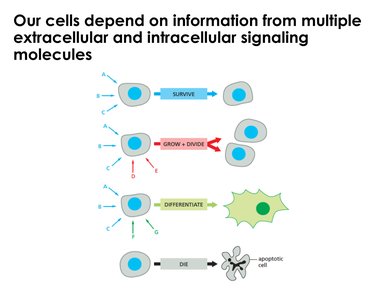
Cell communication is a fundamental process that allows cells to detect and respond to signals from their environment and other cells. This process is essential for coordinating activities in multicellular organisms and is critical for survival, growth, differentiation, and programmed cell death (apoptosis).
Extracellular signaling molecules are released by cells to influence the behavior of other cells.
Intracellular signaling molecules mediate responses within the cell after signal detection.
Cell communication underlies physiological processes such as development, immune responses, and homeostasis.
Concept 11.1: External Signals Are Converted to Cellular Responses
Overview of Signal Transduction
Cells convert external signals into specific cellular responses through a process called signal transduction. This involves the detection of a signal, its relay through intracellular pathways, and the execution of a response.
Communication among microorganisms, such as bacteria and yeast, provides insight into the basic mechanisms of cell signaling.
Examples of Cell Communication in Microorganisms
Communication in Bacteria
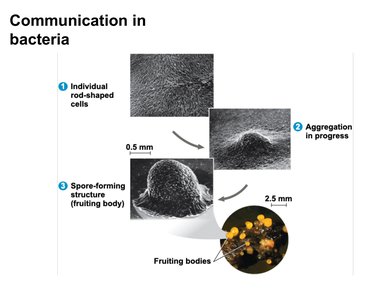
Bacteria use chemical signals to coordinate behaviors such as aggregation and spore formation. This process, known as quorum sensing, allows bacteria to sense population density and respond collectively.
When food is scarce, bacteria secrete signaling molecules that stimulate aggregation and the formation of fruiting bodies, which produce spores capable of surviving harsh conditions.
Communication in Yeast Cells
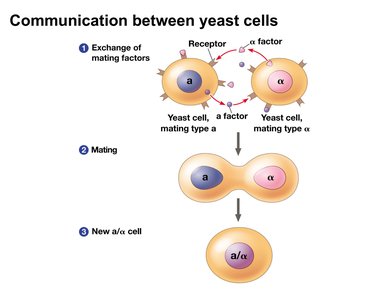
Yeast cells of different mating types communicate by releasing specific peptide factors. These factors bind to receptors on cells of the opposite mating type, triggering mating and the formation of a diploid cell.
Specificity between signaling molecules and receptors ensures that only compatible cells respond and mate.
Types of Cell Signaling
Direct Cell Communication
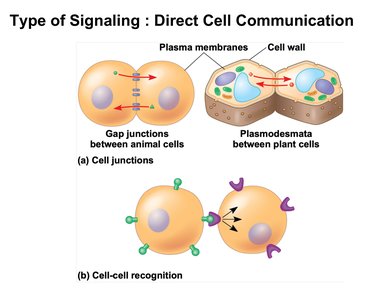
Direct communication occurs through physical contact between cells. This can involve specialized structures or direct recognition of cell surface molecules.
Gap junctions (animal cells) and plasmodesmata (plant cells) allow cytoplasmic continuity for the exchange of ions and small molecules.
Cell-cell recognition involves membrane-bound molecules on adjacent cells interacting to trigger a response.
Local Signaling
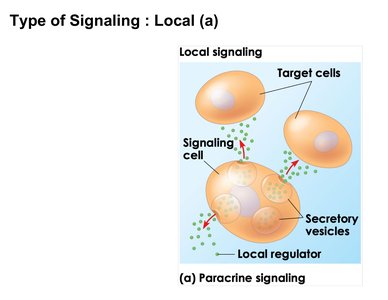
Local signaling involves the release of signaling molecules that affect nearby cells.
Paracrine signaling: Signaling molecules (local regulators) are released by a cell and diffuse to nearby target cells, eliciting a response.
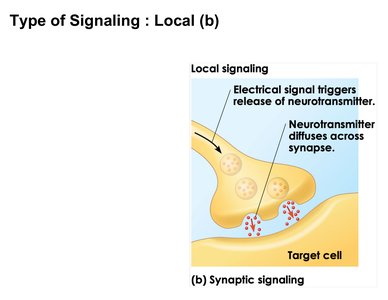
Synaptic signaling: Specialized form of local signaling in the nervous system where neurotransmitters are released from a neuron and diffuse across a synapse to a target cell.
Long-Distance Signaling
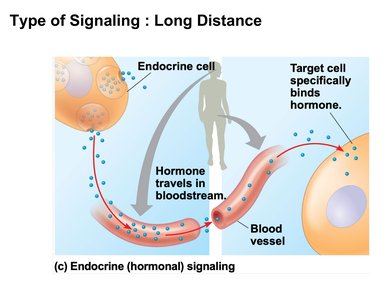
Long-distance signaling is mediated by hormones, which are released into the bloodstream and travel to distant target cells.
Endocrine signaling: Hormones are secreted by endocrine cells, enter the circulatory system, and affect target cells throughout the body.
The Three Stages of Cell Signaling
Stages of Cell Signaling
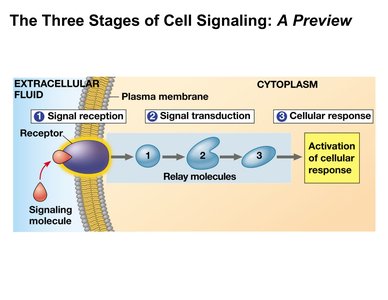
Cell signaling generally occurs in three stages:
Reception: A signaling molecule binds to a receptor protein, causing it to change shape and become activated.
Transduction: The activated receptor initiates a cascade of intracellular events, often involving multiple relay molecules.
Response: The signal transduction pathway triggers a specific cellular response, such as enzyme activation, gene expression, or cytoskeletal changes.
Example: Fight or Flight Response
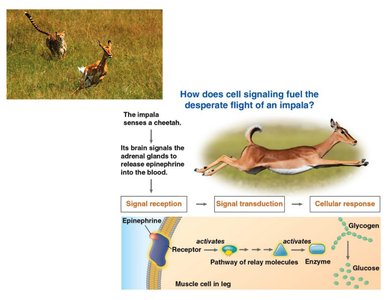
The fight or flight response in animals is a classic example of cell signaling. When an impala senses a predator, its adrenal glands release epinephrine, which binds to receptors on muscle cells, triggering a cascade that results in the breakdown of glycogen to glucose for rapid energy.
Epinephrine acts as the signaling molecule.
Signal transduction activates enzymes that hydrolyze glycogen, providing glucose for muscle activity.
Concept 11.2: Reception – Types of Receptor Proteins
Overview of Receptor Types
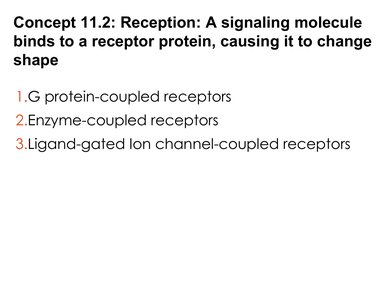
Reception involves the binding of a signaling molecule (ligand) to a receptor protein, which then changes shape and initiates a cellular response. There are three major classes of receptor proteins:
G protein-coupled receptors (GPCRs)
Enzyme-coupled receptors (e.g., receptor tyrosine kinases)
Ligand-gated ion channel-coupled receptors
G Protein-Coupled Receptors (GPCRs)
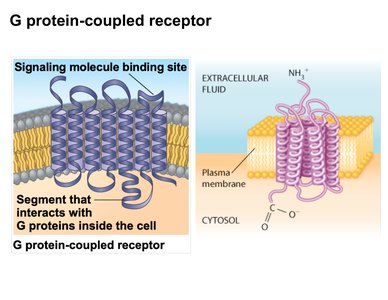
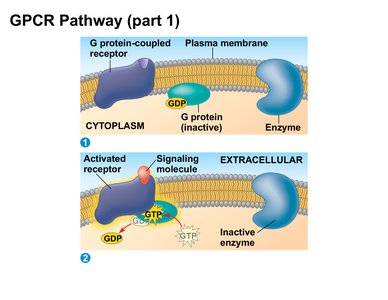
GPCRs are the largest family of cell surface receptors in animals. They are characterized by a seven-pass transmembrane structure and interact with G proteins to transmit signals inside the cell.
The N-terminus faces the extracellular fluid, and the C-terminus faces the cytosol.
GPCRs are involved in diverse processes, including sensory perception (taste, smell).
GPCR Pathway
The GPCR pathway involves several steps:
Inactive G protein (bound to GDP) is associated with the plasma membrane.
Ligand binding activates the GPCR, which then activates the G protein by exchanging GDP for GTP.
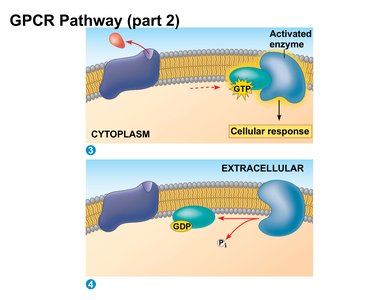
The activated G protein (GTP-bound) dissociates and activates an enzyme, leading to a cellular response.
GTP is hydrolyzed to GDP, inactivating the G protein and resetting the pathway.
Enzyme-Coupled Receptors: Receptor Tyrosine Kinases (RTKs)
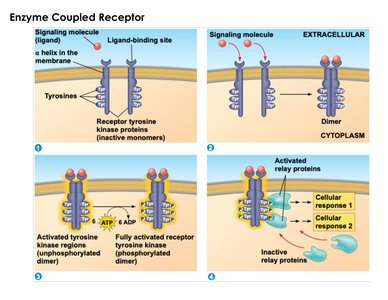
RTKs are single-pass transmembrane proteins that function as enzymes. Ligand binding induces dimerization and cross-phosphorylation of tyrosine residues, fully activating the receptor and triggering multiple signal transduction pathways.
RTKs are often involved in cell proliferation and differentiation.
Abnormal RTK activity is associated with certain cancers.
Ligand-Gated Ion Channel-Coupled Receptors
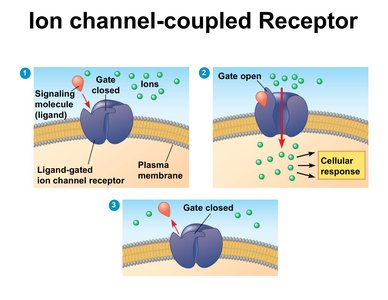
Ligand-gated ion channels open or close in response to ligand binding, allowing specific ions to flow across the membrane down their concentration gradient. This rapid signaling mechanism is important in nerve and muscle function.
Channels are specific for particular ions and are activated by various stimuli (chemical, electrical, sensory).
Intracellular Receptors
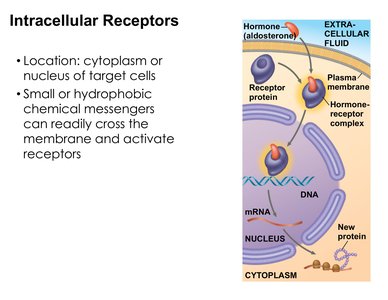
Intracellular receptors are located in the cytoplasm or nucleus. Their ligands are typically small or hydrophobic molecules (e.g., steroid hormones) that can cross the plasma membrane. Upon binding, the receptor-ligand complex often acts as a transcription factor, regulating gene expression.
Example: Aldosterone binds to its receptor, which then enters the nucleus and activates transcription of specific genes.
Additional info: Abnormalities in cell signaling pathways are implicated in many diseases, including cancer, diabetes, and neurological disorders. Understanding these pathways is essential for developing targeted therapies.
