 Back
BackCell Communication: Mechanisms and Regulation
Study Guide - Smart Notes
 Tailored notes based on your materials, expanded with key definitions, examples, and context.
Cell Communication
Introduction to Cell Signaling
Cell communication is essential for the coordination of cellular activities in multicellular organisms and for the survival of single-celled organisms. Cells detect and respond to signals in their environment, leading to a variety of cellular responses.
Cell signaling involves the transmission of signals from the cell exterior to the interior, resulting in a specific response.
Both unicellular and multicellular organisms utilize signaling pathways for communication.
Disruption of signaling pathways can have medical applications, such as alternative antibiotic strategies.
Example: Yeast Mating and Signal Transduction
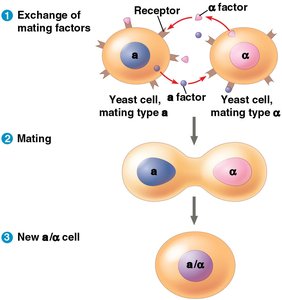
The yeast Saccharomyces cerevisiae uses signaling to coordinate mating between two types, a and α.
Cells secrete specific factors to locate and recognize each other.
Binding of these factors initiates a signal transduction pathway leading to mating.
Signal transduction mechanisms are conserved across species.
Types of Cell Signaling
Local Signaling
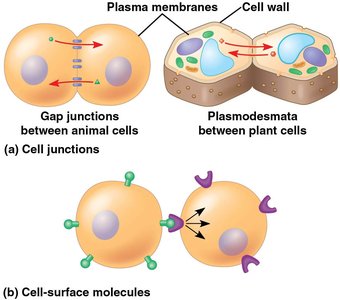
Cells can communicate over short distances through direct contact or by releasing signaling molecules.
Direct contact involves cell junctions (gap junctions in animals, plasmodesmata in plants) or cell-surface molecules.
Important in embryonic development, immune responses, and stem cell maintenance.
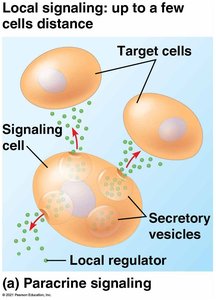
Paracrine signaling involves the release of local regulators that affect nearby target cells. Growth factors are common paracrine signals.
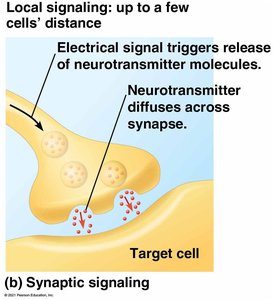
Synaptic signaling is specific to the nervous system, where neurotransmitters are released in response to electrical signals and diffuse across synapses to target cells.
Long-Distance Signaling
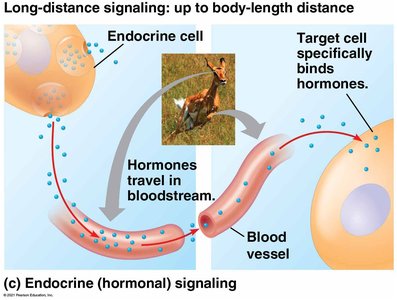
Hormonal (endocrine) signaling involves hormones released by specialized cells that travel through the bloodstream to reach distant target cells.
Only cells with specific receptors respond to the hormone signal.
Stages of Cell Signaling
Overview of the Three Stages
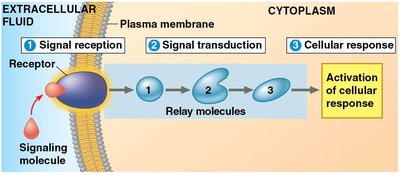
Cell signaling typically occurs in three main stages:
Reception: Detection of a signaling molecule by a receptor protein.
Transduction: Relay and amplification of the signal through a series of molecular events.
Response: Activation of a specific cellular activity.
Stage 1: Signal Reception
Reception occurs when a signaling molecule (ligand) binds to a specific receptor protein, often causing a conformational change.
Most receptors are located on the plasma membrane, but some are intracellular.
Types of Membrane Receptors
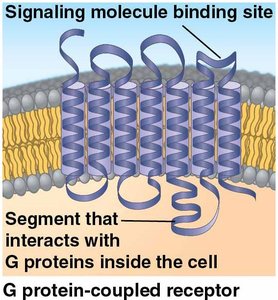
G protein-coupled receptors (GPCRs): Largest group of cell-surface receptors; interact with G proteins to transmit signals.
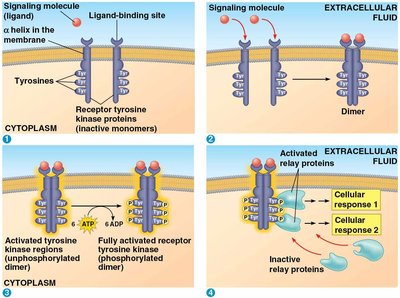
Receptor tyrosine kinases (RTKs): Enzyme-linked receptors that phosphorylate tyrosine residues on themselves and other proteins, triggering multiple pathways.
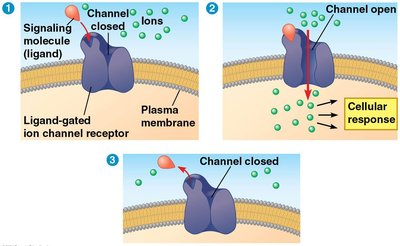
Ligand-gated ion channels: Receptors that open or close ion channels in response to ligand binding, allowing specific ions to pass through the membrane.
Intracellular Receptors
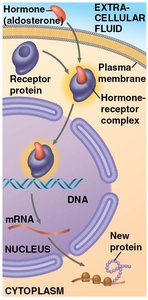
Located in the cytoplasm or nucleus; activated by small or hydrophobic molecules (e.g., steroid hormones).
The hormone-receptor complex can act as a transcription factor, regulating gene expression.
Stage 2: Signal Transduction
Signal transduction is usually a multi-step process that amplifies the signal and allows for regulation and integration of multiple signals.
Each step often involves a change in protein shape or activity.
Second messengers (e.g., cAMP, Ca2+) are small molecules that help propagate the signal inside the cell.
Cyclic AMP (cAMP) as a Second Messenger
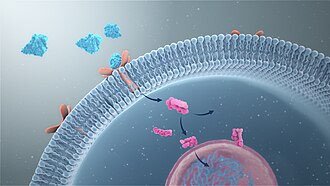
cAMP is synthesized from ATP by adenylyl cyclase in response to extracellular signals.
cAMP activates protein kinase A, which phosphorylates target proteins.

Calcium Ions (Ca2+) as Second Messengers
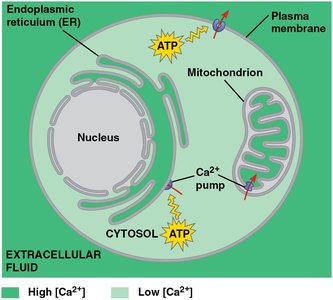
Ca2+ concentration is tightly regulated; small changes can have large effects.
Ca2+ is involved in many signaling pathways, often released from intracellular stores.
Protein Kinases and Phosphorylation Cascades
Protein kinases transfer phosphate groups from ATP to proteins (phosphorylation), activating or deactivating them.
Phosphorylation cascades amplify the signal and allow for fine regulation.
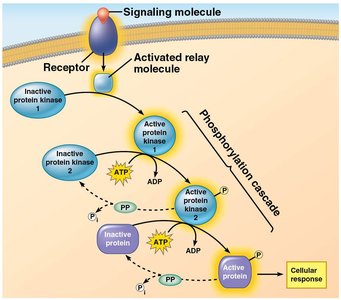
Protein phosphatases remove phosphate groups (dephosphorylation), turning off the signal.
Stage 3: Cellular Response
The final stage is the cellular response, which can involve changes in gene expression, enzyme activity, or cell behavior.
Responses include opening/closing ion channels, activating metabolic pathways, or initiating cell division.
Regulation of the Cellular Response
Signal Amplification
Enzyme cascades allow a small number of signaling molecules to produce a large cellular response.
Specificity of Response
Different cell types have different proteins and pathways, allowing the same signal to produce different responses.
Pathway branching and cross-talk enable integration of multiple signals.
Efficiency of Response
Scaffolding proteins organize groups of signaling proteins, increasing efficiency and specificity.
Termination of the Signal
Inactivation mechanisms ensure that signals are transient and reversible.
Unbound receptors revert to an inactive state when the signal is removed.
Apoptosis: Programmed Cell Death
Mechanism and Importance
Apoptosis is a controlled process of cell death that prevents damage to neighboring cells.
Cell components are packaged into vesicles and digested by scavenger cells.
Apoptosis is essential for development, maintenance, and disease prevention (e.g., removing damaged cells).
Examples and Disease Relevance
Normal development of hands and feet involves apoptosis.
Dysregulation of apoptosis is implicated in diseases such as cancer, Parkinson’s, and Alzheimer’s.
Additional info: Apoptosis can be triggered by both internal signals (e.g., DNA damage, protein misfolding) and external signals (e.g., death ligands).
