 Back
Cell Communication: Signal Transduction Pathways and Receptors
Study Guide - Smart Notes
 Tailored notes based on your materials, expanded with key definitions, examples, and context.
Cell Communication
Introduction to Cellular Signaling
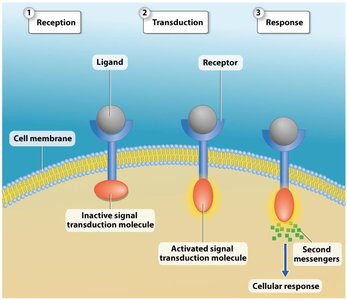
Cell communication is essential for multicellular organisms to coordinate activities and respond to environmental cues. Cells use signaling molecules called ligands to transmit information, which can act locally or at a distance. The process involves three main stages: reception, transduction, and response.
Ligand: A signaling molecule that binds to a receptor to initiate cellular communication.
Receptor: A protein that recognizes and binds the ligand, triggering a cellular response.
Signal Transduction: The process by which a signal is relayed inside the cell, often involving a cascade of molecular events.
Types of Cellular Signaling
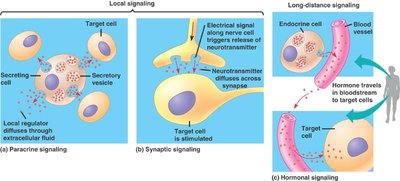
Cells communicate through various mechanisms depending on the distance and type of target cell.
Paracrine Signaling: Ligands act on nearby cells.
Autocrine Signaling: The cell releases a ligand that acts on itself.
Synaptic Signaling: Neurotransmitters cross synapses to stimulate target cells.
Endocrine/Hormonal Signaling: Hormones travel through the bloodstream to distant target cells.
Stages of Signal Transduction
Stage 1: Reception
Reception occurs when a ligand binds to its specific receptor. Only cells with the appropriate receptor can respond to a given ligand. Receptors are classified as membrane-bound or intracellular, depending on the ligand's properties.
Membrane Receptors: Used for water-soluble ligands that cannot cross the cell membrane.
Intracellular Receptors: Used for hydrophobic ligands (e.g., steroid hormones) that diffuse into the cell.
Types of Membrane Receptors
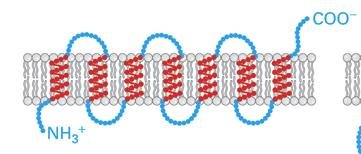
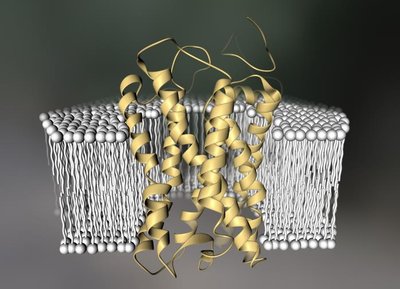
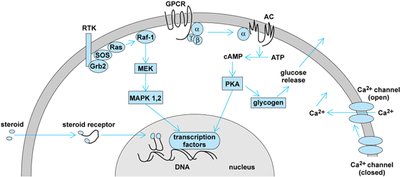
G-protein Coupled Receptors (GPCR): Span the membrane seven times and activate G-proteins upon ligand binding. GPCRs are involved in senses and many physiological responses.
Receptor Tyrosine Kinases (RTK): Function as dimers and phosphorylate proteins upon activation. They are important in growth factor signaling.
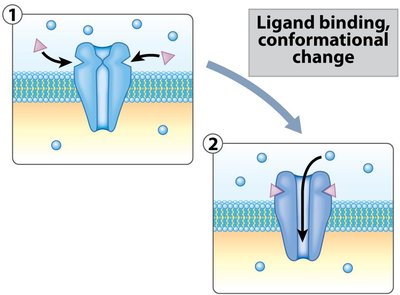
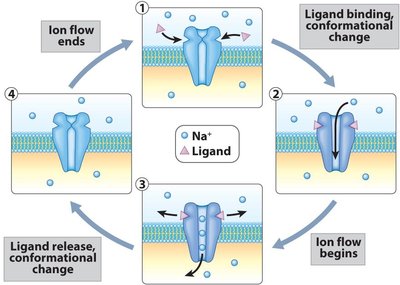
Ligand-Gated Ion Channels: Open or close in response to ligand binding, allowing ions to flow across the membrane.
Intracellular Receptors
Bind hydrophobic ligands (e.g., steroid hormones).
Move to the nucleus upon activation and act as transcription factors.
No need for a transduction pathway; direct gene regulation.
Stage 2: Transduction
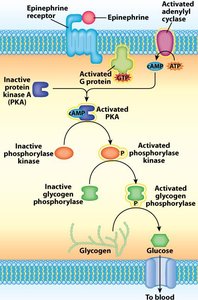
Transduction is the process by which the signal from the receptor is relayed and amplified inside the cell, often through a series of protein phosphorylation events or the production of second messengers.
Protein Kinases: Enzymes that add phosphate groups to proteins, activating them.
Phosphatases: Enzymes that remove phosphate groups, deactivating proteins.
Second Messengers: Small, non-protein molecules (e.g., cAMP, Ca2+, IP3) that propagate the signal.
Key Second Messengers
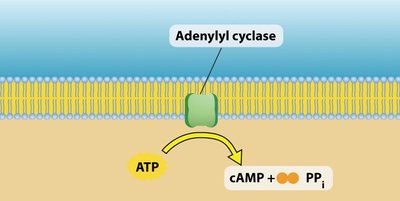
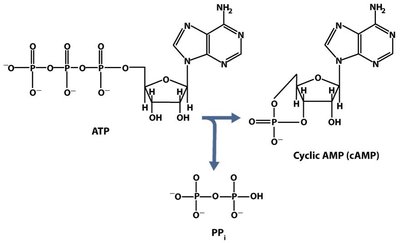
cAMP (cyclic AMP): Produced from ATP by adenylyl cyclase; activates protein kinase A (PKA).
IP3 (inositol triphosphate): Produced by phospholipase C; triggers Ca2+ release from the ER.
Ca2+ (calcium ions): Released from intracellular stores; activates proteins like calmodulin.
Signal Amplification and Regulation
Transduction pathways amplify signals, allowing one ligand to produce many cellular responses.
Multiple levels of regulation enable specificity and cross-talk between pathways.
Stage 3: Response
The final stage of cell signaling is the cellular response, which can involve enzyme activation, gene expression, or changes in ion channel activity. The response is determined by the type of receptor and the downstream signaling pathway.
Enzyme Activation: Phosphorylation activates enzymes for metabolic processes.
Gene Expression: Transcription factors regulate the expression of specific genes.
Ion Channel Regulation: Second messengers open or close ion channels, altering membrane potential.
Comparing Receptor Types
Membrane vs. Intracellular Receptors
Receptors differ in their location, ligand specificity, and signaling mechanisms. The following table summarizes key differences:
Feature | Intracellular Receptor | Membrane Receptor |
|---|---|---|
Type of ligand | Nonpolar | Polar |
Conformational change upon ligand binding | Yes | Yes |
Receptor changes cellular location | Yes | No |
Need for transduction pathway | No | Yes |
Transcriptional changes as response | Yes | Yes (can be) |
Can receptor bind to DNA? | Yes | No |
Membrane Receptor Types Comparison
The following table compares G-protein coupled receptors, tyrosine kinase receptors, and ligand-gated ion channels:
Feature | G-protein coupled receptor | Tyrosine kinase receptor | Ligand gated channel |
|---|---|---|---|
Ligand is water soluble | X | X | X |
Ligand enters the cell | |||
Ligand binding causes a change in receptor's conformation | X | X | X |
Can result in the activation of adenylyl cyclase | X | ||
Receptor spans the membrane seven times | X | ||
Receptor dimerization is required for signal transduction | X | ||
Activation results in ions entering the cell | X | ||
When receptor is activated, it can act as an enzyme | X | ||
The receptor becomes phosphorylated | X | ||
Receptor changes its location |
Key Terms and Concepts
Kinase: An enzyme that adds phosphate groups to proteins.
Phosphatase: An enzyme that removes phosphate groups from proteins.
Transcription Factor: A protein that binds DNA and regulates gene expression.
Second Messenger: A small molecule that relays signals inside the cell.
Practice Questions
What type of ligand could have an intracellular receptor?
What is another word for long-distance signaling?
What are the three stages of Signal Transduction?
What are the three types of membrane (cell surface) receptors?
Name three second messengers.
What happens to an intracellular receptor when it gets activated by a ligand?
What does the enzyme adenylyl cyclase make?
What is a phosphorylation cascade?
What is the OPPOSITE of a kinase?
What are some things that happen when proteins interact?
Summary
Cell communication is a fundamental process involving the detection of signals, their transduction through complex pathways, and the execution of specific cellular responses. Understanding the types of receptors, second messengers, and the mechanisms of signal amplification is crucial for comprehending how cells interact and adapt to their environment.
