 Back
Cell Cycle and Cell Division: Structure, Regulation, and Cancer
Study Guide - Smart Notes
 Tailored notes based on your materials, expanded with key definitions, examples, and context.
Cell Division and the Cell Cycle
Overview of Cell Division
Cell division is a fundamental process that enables organisms to grow, develop, repair tissues, and reproduce. Most cell division results in genetically identical daughter cells, ensuring the continuity of life.
Cell division produces new cells for growth, development, and repair.
In unicellular organisms, division creates new organisms; in multicellular organisms, it supports tissue maintenance.
Cell division is remarkably accurate, maintaining genetic integrity.
Genome and Chromosomes
The genome is the complete collection of an organism’s genetic material, typically organized into chromosomes.
Genome: All genetic material in a cell.
Chromosomes: DNA molecules packaged for cell division; different species have different chromosome numbers.
Chromatin: Unpacked DNA, accessible for transcription.
Histones: Proteins that package DNA into nucleosomes.
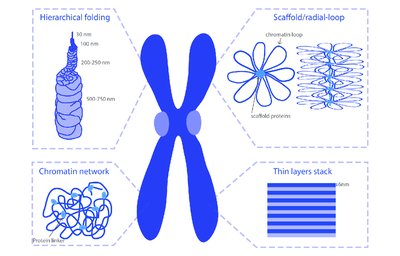
Chromosome Structure and Terminology
Chromosomes undergo condensation during cell division, transforming from loose chromatin to compact structures.
Centromere: Constricted region linking sister chromatids; attachment site for spindle fibers.
Sister chromatids: Identical copies of a chromosome joined at the centromere.
Chromosome condensation: Process of compacting chromatin for division.
Phases of the Cell Cycle
Cell Cycle Stages
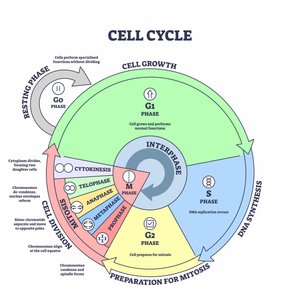
The cell cycle consists of interphase (G1, S, G2) and the mitotic phase (M phase: mitosis and cytokinesis).
Interphase: Cell grows, replicates DNA, and prepares for division.
G1 phase: Growth after division; normal cell function.
S phase: DNA synthesis; chromosomes are replicated.
G2 phase: Further growth; organelles and proteins are duplicated.
M phase: Includes mitosis (nuclear division) and cytokinesis (cytoplasmic division).
Checkpoints in the Cell Cycle
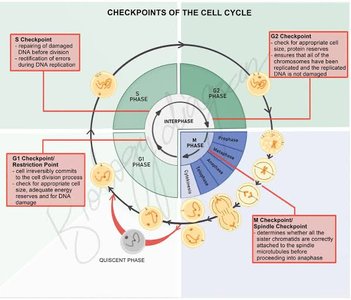
Cell cycle checkpoints are regulatory mechanisms that ensure proper division and prevent errors.
G1 checkpoint: Ensures cell is ready for DNA synthesis.
S checkpoint: Monitors DNA replication for errors.
G2 checkpoint: Verifies DNA replication and cell readiness for mitosis.
M checkpoint: Ensures chromosomes are properly attached to spindle before anaphase.
Mitosis and Cytokinesis
Stages of Mitosis
Mitosis is the process by which somatic cells divide, producing genetically identical daughter cells.
Prophase: Chromatin condenses, nucleoli disappear, spindle forms.
Prometaphase: Nuclear envelope fragments, spindle attaches to kinetochores.
Metaphase: Chromosomes align at metaphase plate.
Anaphase: Cohesin proteins are cleaved, sister chromatids separate.
Telophase: Nuclear envelope reforms, chromosomes decondense.
Cytokinesis: Animal vs. Plant Cells
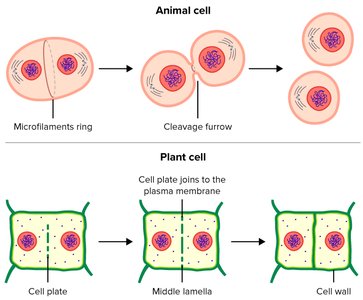
Cytokinesis is the division of the cytoplasm, differing between animal and plant cells.
Animal cells: Formation of a cleavage furrow by a contractile ring of actin and myosin.
Plant cells: Formation of a cell plate from Golgi-derived vesicles, which fuses to become the new cell wall.
Regulation and Errors in the Cell Cycle
Cancer and Cell Cycle Regulation
Cancer arises from the loss of normal cell cycle controls, often due to mutations in regulatory genes.
Oncogenes: Genes that promote cell growth; hyperactivity leads to cancer.
Proto-oncogenes: Normal genes that can become oncogenes through mutation.
Tumor-suppressor genes: Inhibit cell growth; loss of function leads to uncontrolled division.
P53: Key tumor suppressor; arrests cell cycle for repair or triggers apoptosis if damage is irreparable.
Benign tumors: Remain localized.
Malignant tumors: Invade other tissues (metastasis).
Carcinogens and Cancer Treatment
Carcinogens: Substances that cause cancer (e.g., UV light, cigarette smoke, fat, hormones).
Radiation therapy: Damages DNA of cancer cells.
Chemotherapy: Uses drugs to destroy rapidly dividing cells.
Chromosome Number and Structure
Chromosome Number in Cell Cycle
Chromosome number changes during the cell cycle, especially after DNA replication.
Each chromosome consists of two sister chromatids after replication.
Example: A human cell in prophase contains 46 chromosomes and 92 chromatids.
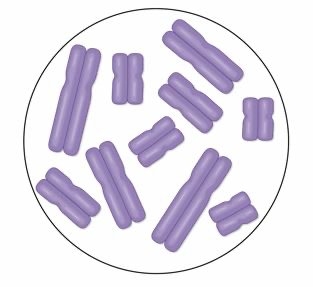
Chromosome Composition During Cell Cycle
Chromosomal composition varies by cell cycle stage.
G2 phase: Chromosomes are replicated, each consisting of two sister chromatids.
Metaphase: Chromosomes align at the metaphase plate.
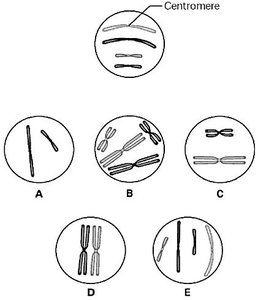
Binary Fission in Prokaryotes
Binary Fission Process
Binary fission is the method by which prokaryotic cells divide.
Single chromosome replicates from the origin of replication.
Origins move to opposite ends as cell elongates.
Plasma membrane pinches inward, dividing the cell.
Summary Table: Cell Cycle Phases and Events
Phase | Main Event | Key Structure |
|---|---|---|
G1 | Cell growth, normal function | Nucleoli present |
S | DNA replication | Chromosomes duplicated |
G2 | Preparation for mitosis | Centrosome replicated |
Mitosis | Nuclear division | Mitotic spindle, chromosomes |
Cytokinesis | Cytoplasmic division | Cleavage furrow (animal), cell plate (plant) |
Key Terms and Definitions
Centrosome: Microtubule organizing center in animal cells.
Mitotic spindle: Structure that segregates chromosomes during mitosis.
Kinetochores: Protein complexes at centromeres; attachment sites for spindle fibers.
Metaphase plate: Imaginary line where chromosomes align during metaphase.
Cohesin proteins: Hold sister chromatids together until anaphase.
Cleavage furrow: Indentation in animal cell membrane during cytokinesis.
Contractile ring: Actin and myosin structure driving cytokinesis in animal cells.
Cell plate: Structure forming new cell wall in plant cytokinesis.
Additional info:
Cell cycle regulation is crucial for preventing uncontrolled cell division and cancer.
Different cell types divide at different rates, influenced by growth factors and density signals.
HeLa cells are immortal cancer cells used in research.
Telomerase activity is associated with cell immortality in cancer.
