 Back
Cell Cycle and Mitosis: Structure, Function, and Regulation
Study Guide - Smart Notes
 Tailored notes based on your materials, expanded with key definitions, examples, and context.
Cell Cycle and Mitosis
Overview of the Cell Cycle
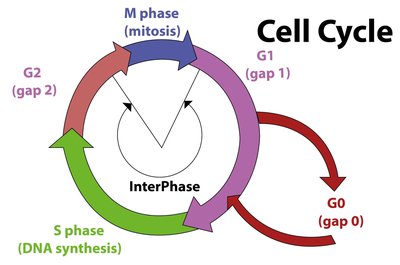
The cell cycle is the series of events that cells go through as they grow and divide. It consists of interphase (G1, S, G2 phases) and the mitotic phase (M phase), which includes mitosis and cytokinesis. The cell cycle ensures that genetic material is accurately replicated and distributed to daughter cells.
Interphase: Period of cell growth and DNA replication; includes G1, S, and G2 phases.
M phase: Includes mitosis (nuclear division) and cytokinesis (cytoplasmic division).
G0 phase: Non-dividing state where cells exit the cycle, often to differentiate or perform specialized functions.
Key Terms and Structures
Genome: The complete set of an organism's genetic material.
Chromosome: A single, long DNA molecule packaged with proteins; carries many genes.
Chromatin: The complex of DNA and proteins that forms chromosomes; less condensed during interphase.
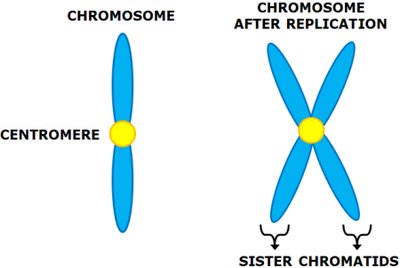
Sister Chromatids: Two identical copies of a duplicated chromosome, attached at the centromere.
Centromere: The region where sister chromatids are most closely attached and where the kinetochore forms.
Homologous Chromosomes: Pairs of chromosomes (one from each parent) with the same genes but possibly different alleles.
Somatic Cells vs. Gametes
Somatic cells are all body cells except reproductive cells and are diploid (2n), containing two sets of chromosomes (46 in humans). Gametes (sperm and egg cells) are haploid (n), containing one set of chromosomes (23 in humans). Somatic cells are produced by mitosis, while gametes are produced by meiosis.
Diploid (2n): Two sets of chromosomes (one from each parent).
Haploid (n): One set of chromosomes.
Phases of the Cell Cycle and DNA Content
Each phase of the cell cycle is characterized by specific events and changes in DNA content:
G1 phase: Cell grows and performs normal functions; DNA is unreplicated (2n, 2C).
S phase: DNA is replicated, forming sister chromatids (2n, 4C).
G2 phase: Cell prepares for division; DNA remains duplicated (2n, 4C).
M phase: Mitosis and cytokinesis occur; sister chromatids separate, and two identical daughter cells are formed (each 2n, 2C).
Mitosis: Phases and Major Events
Mitosis is the process by which a eukaryotic cell separates its duplicated chromosomes into two identical sets. It consists of several phases:
Prophase
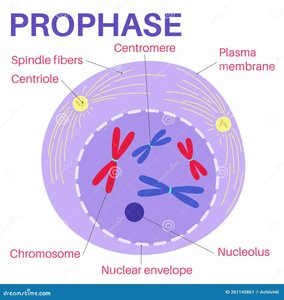
Chromatin condenses into visible chromosomes, each with two sister chromatids. The mitotic spindle begins to form, and the nucleolus disappears. Centrosomes move apart.
Prometaphase
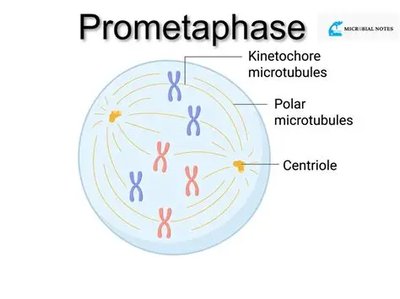
The nuclear envelope fragments, allowing spindle microtubules to attach to kinetochores on chromosomes. Chromosomes begin moving toward the metaphase plate.
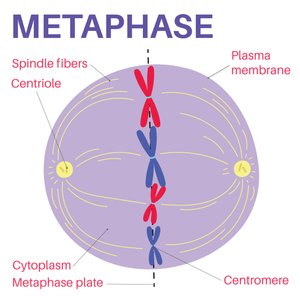
Metaphase
Chromosomes align at the metaphase plate, an imaginary plane equidistant from the spindle poles. Each sister chromatid is attached to spindle fibers from opposite poles.
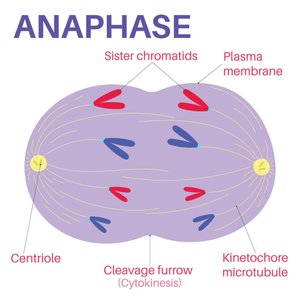
Anaphase
Cohesin proteins are cleaved, allowing sister chromatids to separate and move toward opposite poles. Each chromatid is now considered an individual chromosome.
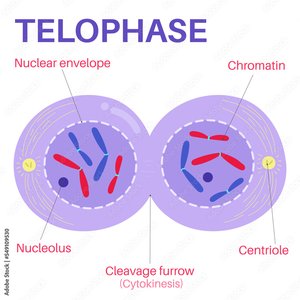
Telophase and Cytokinesis
Chromosomes arrive at the poles and begin to decondense. Nuclear envelopes reform around each set of chromosomes. Cytokinesis divides the cytoplasm, resulting in two genetically identical daughter cells.
Mitotic Spindle and Chromosome Movement
Mitotic spindle: Structure made of microtubules and proteins that segregates chromosomes during mitosis.
Centrosome: Organelle that organizes microtubules; duplicates during interphase and moves to opposite poles during mitosis.
Kinetochore: Protein structure on the centromere where spindle fibers attach.
Metaphase plate: Imaginary plane where chromosomes align during metaphase.
Cytokinesis: Animal vs. Plant Cells
Animal cells: Cytokinesis occurs by cleavage, forming a cleavage furrow that pinches the cell in two.
Plant cells: Cytokinesis occurs by formation of a cell plate, which develops into a new cell wall.
Regulation of the Cell Cycle
The cell cycle is regulated by a set of molecular signals that ensure proper timing and fidelity of cell division. Key regulatory proteins include cyclins and cyclin-dependent kinases (Cdks). Checkpoints (G1, G2, M) monitor and control progression through the cycle.
Density-dependent inhibition: Cells stop dividing when crowded.
Anchorage dependence: Cells must be attached to a substrate to divide.
Transformation: Process by which normal cells become cancerous and divide uncontrollably.
Apoptosis: Programmed cell death; prevents proliferation of damaged cells.
Bacterial Cell Division: Binary Fission
Binary fission is the method by which prokaryotic cells (such as bacteria) divide. The process involves replication of the single, circular chromosome, segregation of the DNA, and division of the cell into two genetically identical daughter cells. Unlike eukaryotic mitosis, binary fission does not involve a mitotic spindle.
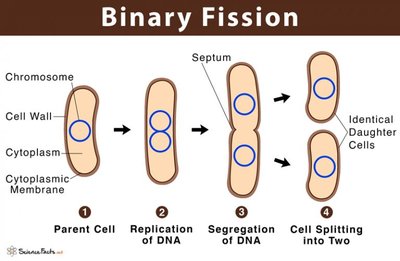
Origin of replication: Specific site where DNA replication begins.
Septum formation: New cell wall forms to divide the cell.
Comparison: Binary Fission vs. Mitosis
Similarities: Both replicate DNA, segregate genetic material, and divide the cytoplasm.
Differences: Binary fission is simpler, involves one chromosome, and lacks a spindle apparatus; mitosis is more complex, involves multiple chromosomes, and uses a spindle for segregation.
Summary Table: Key Terms and Concepts
Term | Definition |
|---|---|
Genome | All genetic material in an organism |
Chromosome | DNA molecule with associated proteins |
Chromatin | DNA-protein complex forming chromosomes |
Sister Chromatids | Identical copies of a duplicated chromosome |
Centromere | Region joining sister chromatids |
Homologous Chromosomes | Chromosome pairs with same genes, different alleles |
Binary Fission | Asexual division in prokaryotes |
Mitosis | Nuclear division in eukaryotes |
Equations and Notation
Ploidy notation: (diploid), (haploid)
DNA content: represents the amount of DNA per cell
Example: During G1, a human somatic cell is ; after S phase, it is
