 Back
BackCell Cycle and Mitosis: Structure, Function, and Regulation
Study Guide - Smart Notes
 Tailored notes based on your materials, expanded with key definitions, examples, and context.
The Cell Cycle and Cell Division
Overview of Cell Division
Cell division is a fundamental process in biology, responsible for growth, reproduction, and tissue renewal in all living organisms. It ensures genetic continuity by producing genetically identical daughter cells, maintaining stability of genetic information across generations.
Key Roles: Growth, reproduction, and tissue repair.
Continuity of Life: Cell division is essential for the perpetuation of life.
Types of Cell Division: Asexual reproduction, growth and development, tissue renewal.
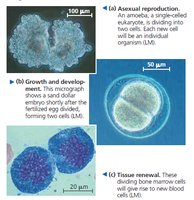
Cell Division in Different Organisms
Cell division varies across prokaryotes and eukaryotes:
Prokaryotes: Cell division is synonymous with reproduction.
Unicellular Eukaryotes: Division produces new organisms.
Multicellular Eukaryotes: Enables growth, development, and repair.
Genetic Continuity and Chromosome Structure
Genetic Material Organization
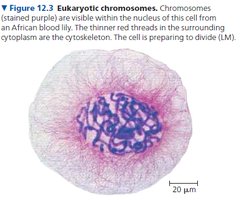
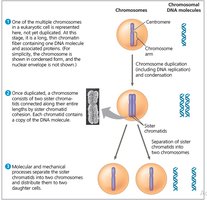
The cell's genetic information, or genome, consists of DNA molecules carrying hereditary information. In prokaryotes, the genome is typically a single DNA molecule, while eukaryotes have multiple DNA molecules organized into chromosomes.
Chromosomes: DNA is packaged into chromosomes, making it manageable during cell division.
Chromatin: DNA and associated proteins form chromatin, which condenses during cell division.
Chromosome Structure and Duplication
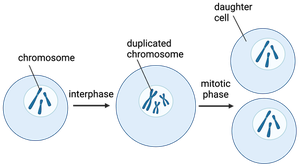
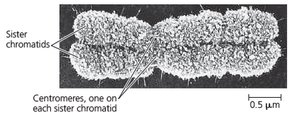
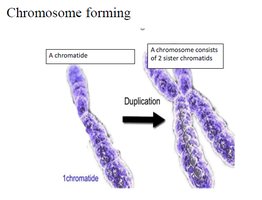
Each chromosome consists of one long DNA molecule and associated proteins. Genes are the units of heredity found on chromosomes. Before cell division, DNA is replicated and packaged into chromosomes, ensuring each daughter cell receives a complete genome.
Sister Chromatids: After DNA replication, each chromosome consists of two identical sister chromatids held together by cohesin proteins.
Centromere: Sister chromatids are joined at the centromere, which contains repetitive DNA sequences and serves as a binding site for proteins.
The Cell Cycle: Phases and Regulation
Main Phases of the Cell Cycle
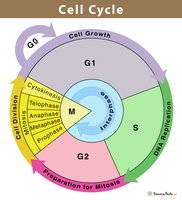
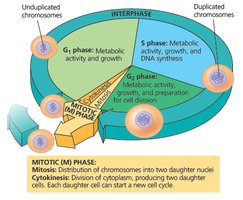
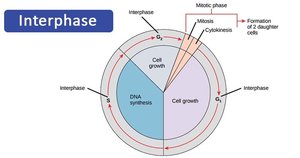
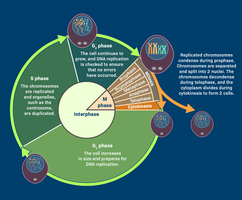
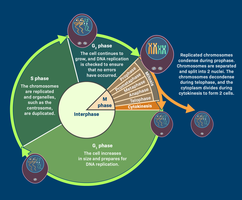
The cell cycle consists of two major phases: Interphase and the Mitotic (M) Phase. Interphase is the longest stage, during which the cell grows, replicates DNA, and prepares for division. The M phase includes mitosis (nuclear division) and cytokinesis (cytoplasmic division).
Interphase: Growth, DNA replication, and chromosome duplication.
M Phase: Division of nucleus and cytoplasm.
Interphase Subphases
Interphase is divided into three subphases:
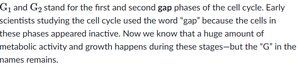
G1 Phase (Gap 1): Cell growth, nutrient uptake, protein synthesis, and organelle production.
S Phase (Synthesis): DNA replication, chromosome duplication, continued cell growth.
G2 Phase (Gap 2): Further growth, synthesis of proteins and organelles, preparation for mitosis.
G0 Phase
Some cells exit the cell cycle after G2 and enter a resting state called the G0 phase, where they are metabolically active but no longer divide. Examples include nerve and muscle cells.
Mitosis: Stages and Mechanisms
Stages of Mitosis
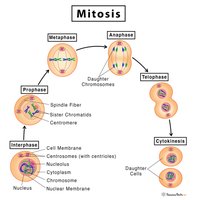
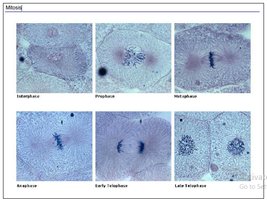
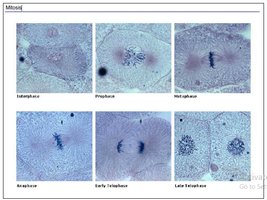
Mitosis is the process by which the cell's nucleus divides, ensuring each daughter cell receives an identical set of chromosomes. It occurs in four main stages:
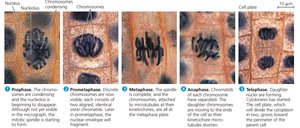
Prophase: Chromatin condenses into visible chromosomes, spindle fibers begin forming, nuclear envelope starts to break down.
Metaphase: Chromosomes align at the metaphase plate, spindle fibers attach to kinetochores.
Anaphase: Sister chromatids are pulled apart to opposite poles, now considered individual chromosomes.
Telophase: Chromosomes arrive at poles, nuclear envelopes reform, cell elongates.
Mitotic Spindle and Chromosome Movement
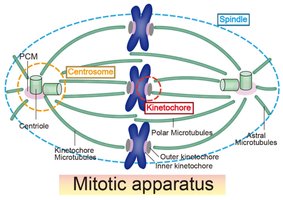
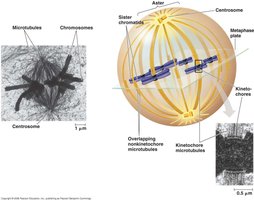
The mitotic spindle, composed of microtubules, is essential for accurate chromosome distribution. Centrosomes organize spindle microtubules, which attach to chromosomes via kinetochores. The spindle ensures even chromosome separation during anaphase.
Kinetochore Microtubules: Attach to kinetochores on sister chromatids.
Nonkinetochore Microtubules: Interact with microtubules from the opposite pole, helping elongate the cell.
Asters: Anchor the spindle to the cell cortex.
Transition from Interphase to Mitosis
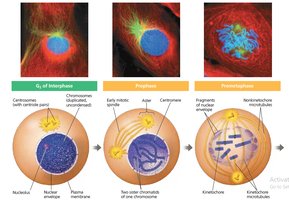
During the G2 phase, the cell prepares for division. Chromatin begins to condense into chromosomes as the cell enters prophase.
Cytokinesis
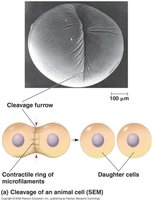
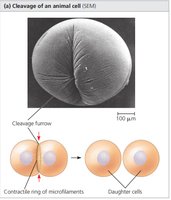
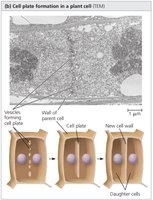
Cytokinesis is the division of the cytoplasm, physically separating the parent cell into two daughter cells. In animal cells, cytokinesis occurs via a cleavage furrow, driven by a contractile ring of actin and myosin. In plant cells, cytokinesis involves the formation of a cell plate.
Animal Cells: Pinch inward via cleavage furrow.
Plant Cells: Build outward via cell plate formation.
Key Components of Mitosis
Centrosomes, Spindle Microtubules, Metaphase Plate, and Asters
These structures are critical for the organization and movement of chromosomes during mitosis.
Centrosomes: Organize spindle microtubules at opposite poles.
Spindle Microtubules: Kinetochore and nonkinetochore types.
Metaphase Plate: Imaginary plane where chromosomes align.
Asters: Stabilize spindle structure.
Chromosome Movement in Anaphase
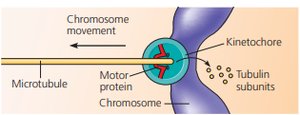
Chromosomes are moved toward poles by the shortening of kinetochore microtubules, not by pulling from the spindle pole. Motor proteins and depolymerization of tubulin subunits at the kinetochore end drive this movement.

Mitosis in Plant Cells
Onion Root Tip as a Model
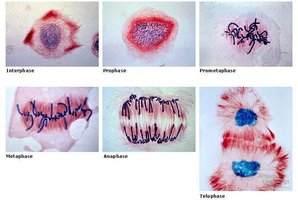
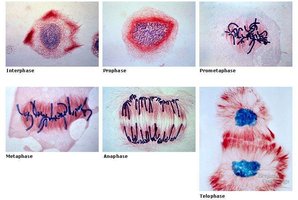
The onion root tip is a classic model for studying mitosis due to rapid cell division and easy staining of chromosomes. Key stages include interphase, mitosis, and cytokinesis.
Binary Fission in Prokaryotes
Binary Fission Process
Binary fission is the method of cell division in prokaryotes, such as bacteria and archaea. It is a simple, rapid, asexual reproduction process involving DNA replication, cell growth, and division without mitosis.
Bacterial Chromosome: Single circular DNA molecule located in the nucleoid region.
Division Mechanism: Actin-like and tubulin-like proteins help DNA movement and membrane division.
Evolution of Mitosis
From Binary Fission to Mitosis
Mitosis likely evolved from binary fission as cells became more complex. Eukaryotic cells required a more organized division system due to the presence of a nucleus, multiple chromosomes, and a larger genome.
Key Changes: Development of spindle apparatus, linear chromosomes, and nuclear envelope.
Intermediate Mechanisms: Some unicellular eukaryotes show division with an intact nuclear envelope, suggesting evolutionary intermediates.
Cell Cycle Regulation and Checkpoints
Cell Cycle Control System
The cell cycle is regulated by a set of molecules that trigger and coordinate events. Checkpoints act as stop/go signals to ensure the cell is ready to proceed, preventing errors such as DNA damage or improper chromosome separation.
Main Checkpoints: G1, G2, and M.
Cyclins and Cdks: Cyclin-dependent kinases (Cdks) are enzymes controlled by cyclins, which rise and fall cyclically. The cyclin-Cdk complex provides timing and go-ahead signals at checkpoints.
Internal and External Signals
Checkpoints respond to internal signals (cell size, DNA integrity) and external signals (growth factors like PDGF). Normal cells exhibit anchorage and density-dependent inhibition, stopping division when conditions are not appropriate. Cancer cells ignore these signals, leading to uncontrolled growth.
Cancer and Cell Cycle Regulation
Cancer Cell Characteristics
Cancer cells bypass normal regulatory mechanisms, divide indefinitely, and can invade other tissues (metastasis). They often have abnormal chromosome numbers, altered metabolism, and loss of anchorage dependence.
Tumor Types: Benign (localized) and malignant (invasive, metastatic).
Detection: Microscopic examination and imaging techniques.
Treatments: Radiation, chemotherapy, and targeted therapies exploit cancer cell division abnormalities.
Summary Table: Binary Fission vs Mitosis
Feature | Binary Fission | Mitosis |
|---|---|---|
Organism Type | Prokaryotes | Eukaryotes |
Chromosome Structure | Single, circular | Multiple, linear |
Spindle Apparatus | Absent | Present |
Division Process | Simple, rapid | Complex, regulated |
Phases | No distinct phases | Prophase, Metaphase, Anaphase, Telophase |
Summary Table: Mitosis in Animal vs Plant Cells
Feature | Animal Cells | Plant Cells |
|---|---|---|
Cytokinesis Mechanism | Cleavage furrow | Cell plate formation |
Spindle Formation | Centrosomes with centrioles | No centrioles |
Cell Wall | Absent | Present |
Key Terms and Concepts
Genome: Complete set of genetic material in a cell.
Chromatin: DNA and protein complex forming chromosomes.
Chromosome: DNA molecule packaged for cell division.
Sister Chromatids: Identical copies of a chromosome after DNA replication.
Centromere: Region joining sister chromatids.
Mitotic Spindle: Structure that separates chromosomes during mitosis.
Cytokinesis: Division of cytoplasm to form two cells.
Checkpoints: Regulatory points in the cell cycle.
Cyclins/Cdks: Proteins and enzymes regulating cell cycle progression.
Key Equations and Formulas
DNA Replication:
Cell Cycle Timing (Human Cells):
Additional info: Academic context was added to clarify the structure and function of cell cycle phases, chromosome organization, and regulatory mechanisms, as well as to provide comparative tables for binary fission and mitosis, and animal vs plant cell mitosis.
