 Back
Cell Cycle, Mitosis, and Cancer: Study Notes for General Biology
Study Guide - Smart Notes
 Tailored notes based on your materials, expanded with key definitions, examples, and context.
Cell Division and Its Importance
Roles of Cell Division in Organisms
Cell division is a fundamental process required for the reproduction, growth, and maintenance of all living organisms. It ensures continuity of life by producing new cells from preexisting ones.
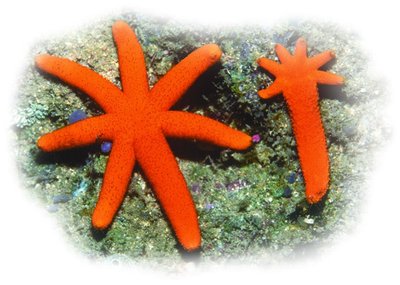
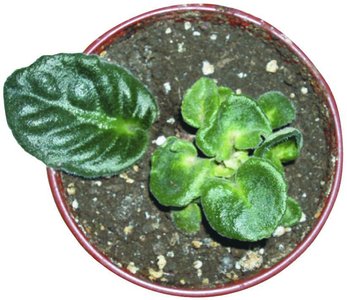
Asexual reproduction: Produces offspring genetically identical to the parent (clones).
Sexual reproduction: Generates genetic diversity through recombination.
Prokaryotes: Reproduce only asexually.
Eukaryotes: Can reproduce both asexually and sexually.
Functions in multicellular organisms: Growth, tissue repair, and maintenance.
Functions in unicellular organisms: Reproduction.

Prokaryotic Cell Division: Binary Fission
Binary Fission Process
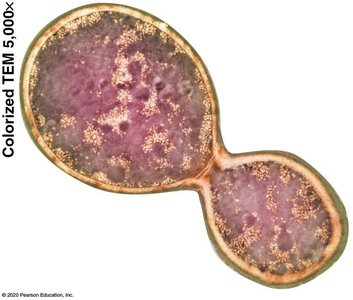
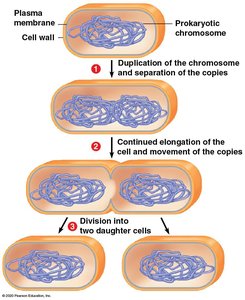
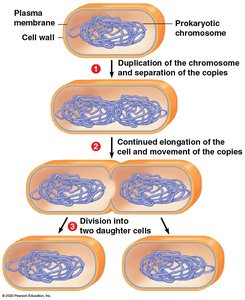
Prokaryotic cells divide by binary fission, a simple and efficient process of asexual reproduction.
Chromosome: Most prokaryotes have a single, circular DNA molecule.
Steps of binary fission:
Replication of the chromosome.
Separation of chromosome copies.
Elongation of the cell and movement of copies.
Plasma membrane pinches inward.
Cell wall forms, dividing the cell into two daughter cells.
Binary fission is classified as asexual reproduction because offspring are genetically identical to the parent.


Eukaryotic Chromosomes and Cell Cycle
Structure and Duplication of Eukaryotic Chromosomes
Eukaryotic cells contain multiple, linear chromosomes housed in the nucleus. Each chromosome consists of a long DNA molecule and associated proteins.
Chromatin: Loosely packed DNA-protein complex, visible only during cell division.
Chromosome duplication: Before division, chromosomes duplicate to form sister chromatids (identical DNA copies joined together).
Cell division: Separation of sister chromatids produces two daughter cells with identical chromosomes.
The Cell Cycle: Phases and Regulation
The cell cycle is an ordered sequence of events from cell formation to division. It consists of two main phases: interphase and the mitotic phase.
Interphase:
G1 phase: Cell growth and preparation for DNA synthesis.
S phase: DNA replication.
G2 phase: Further growth and preparation for division.
Mitotic phase:
Mitosis: Division of the nucleus.
Cytokinesis: Division of the cytoplasm and rest of the cell.
Mitosis vs. Meiosis
Eukaryotic cells can undergo two types of nuclear division:
Mitosis: Maintains chromosome number; important for growth, healing, and asexual reproduction.
Meiosis: Reduces chromosome number by half; essential for sexual reproduction.
Mitosis: Phases and Mechanisms
Phases of Mitosis
Mitosis is a dynamic process that distributes duplicated chromosomes into two daughter nuclei. It is divided into distinct phases:
Prophase: Chromosomes condense, spindle forms.
Metaphase: Chromosomes align at the cell's equator.
Anaphase: Sister chromatids separate and move to opposite poles.
Telophase: Nuclear envelopes reform, chromosomes decondense.
Cytokinesis: Differences in Animal and Plant Cells
Mechanisms of Cytokinesis
Cytokinesis is the process by which the cytoplasm divides, resulting in two daughter cells. The mechanism differs between animal and plant cells:
Animal cells: Cytokinesis occurs via constriction, forming a cleavage furrow.
Plant cells: Cytokinesis occurs via formation of a cell plate, which eventually becomes the cell wall.
Regulation of the Cell Cycle
Growth Factors and Cell Cycle Control
The rate of cell division is regulated by environmental factors and internal proteins. Growth factors stimulate cells to divide, while checkpoints ensure proper progression through the cell cycle.
Growth factors: External signals that promote cell division.
Checkpoints: Critical control points in the cell cycle regulated by proteins.
Proto-oncogenes: Genes that promote cell division (analogous to a gas pedal).
Tumor-suppressor genes: Genes that slow cell division (analogous to brakes).
Cancer: Genetic Basis and Development
How Cancer Arises
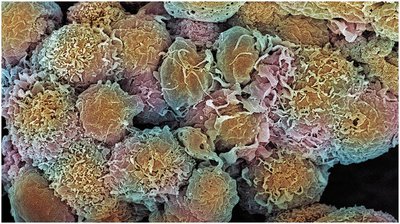
Cancer results from mutations in genes that control the cell cycle. These mutations disrupt normal regulation, leading to uncontrolled cell division.
Proto-oncogenes: Mutations can convert them to oncogenes, causing excessive division.
Tumor-suppressor genes: Mutations can inactivate them, removing cell cycle brakes.
Multiple mutations: Cancer typically develops gradually, requiring accumulation of several genetic changes.
Carcinogens: Environmental agents that cause DNA mutations leading to cancer.

Stepwise Development of Cancer
Cancer progression is a multistep process, often illustrated by colon cancer:
Initial mutation in a single cell.
Accumulation of further mutations.
Formation of a malignant tumor capable of invading other tissues.

Reducing Cancer Risk
Lifestyle choices can significantly reduce the risk of cancer. Avoiding exposure to carcinogens and maintaining healthy habits are key preventive measures.
Carcinogens: Substances that cause mutations (e.g., tobacco smoke, UV radiation).
Screening: Early detection of cancer increases survival rates.
Healthy lifestyle: Diet, exercise, and avoiding harmful substances.
Summary Table: Comparison of Cell Division Mechanisms
Feature | Prokaryotic Binary Fission | Eukaryotic Mitosis |
|---|---|---|
Chromosome Structure | Single, circular DNA | Multiple, linear DNA |
Process | Replication, separation, division | Prophase, metaphase, anaphase, telophase, cytokinesis |
Function | Asexual reproduction | Growth, repair, asexual reproduction |
Genetic Variation | None (clones) | None (clones) |
Key Equations and Concepts
Chromosome duplication:
Cell cycle phases:
Additional info: These notes expand on textbook slides and learning objectives, providing definitions, examples, and comparisons for exam preparation.
