 Back
BackCell Cycle Regulation and Cancer: Control Mechanisms and Loss of Regulation
Study Guide - Smart Notes
 Tailored notes based on your materials, expanded with key definitions, examples, and context.
The Cell Cycle and Its Regulation
Overview of the Cell Cycle
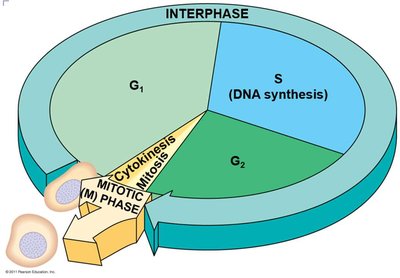
The cell cycle is a series of events that eukaryotic cells undergo to grow and divide. It is essential for development, tissue renewal, and repair in multicellular organisms. The cell cycle is tightly regulated to ensure accurate DNA replication and division.
Interphase: Includes G1 (cell growth), S (DNA synthesis), and G2 (preparation for mitosis).
Mitotic (M) phase: Includes mitosis (nuclear division) and cytokinesis (cytoplasmic division).
Cell Cycle Control System
The cell cycle control system is a set of regulatory molecules that trigger and coordinate key events in the cell cycle. The timing and rate of cell division are crucial for normal growth and maintenance. The frequency of cell division varies with cell type and is regulated by internal and external signals.
Checkpoints are control points where stop and go-ahead signals regulate the cycle.
Three major checkpoints: G1, G2, and M phase.
Checkpoints in the Cell Cycle
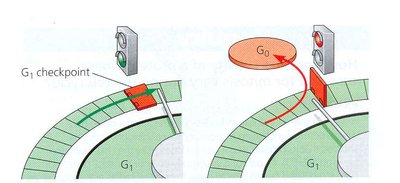
Checkpoints ensure that crucial cellular processes have occurred correctly before the cell proceeds to the next phase. If requirements are not met, the cell cycle is halted until conditions improve or the cell exits the cycle.
G1 checkpoint (restriction point): Determines if the cell will divide. If the cell does not receive a go-ahead signal, it enters a non-dividing state called G0.
G2 checkpoint: Ensures DNA replication is complete and undamaged before mitosis.
M checkpoint: Ensures all chromosomes are properly attached to the spindle before anaphase.
Regulatory Molecules: Cyclins and Cyclin-Dependent Kinases (Cdks)
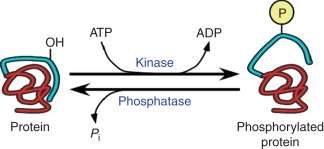
Protein kinases and cyclins are key molecules in cell cycle regulation. Protein kinases activate or inactivate other proteins by phosphorylation. Many kinases involved in the cell cycle are only active when bound to a cyclin, forming cyclin-dependent kinases (Cdks).
The concentration of cyclins fluctuates during the cell cycle, while Cdks are present at constant levels.
Phosphorylation and dephosphorylation regulate protein activity.
MPF: Maturation-Promoting Factor
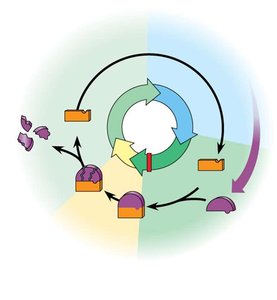
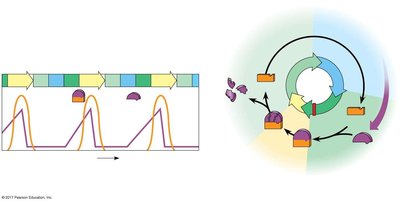
MPF (M-phase promoting factor) is a cyclin-Cdk complex that triggers the cell's passage past the G2 checkpoint into mitosis. MPF promotes mitosis by phosphorylating various proteins, including those involved in nuclear envelope breakdown and chromosome condensation.
MPF activity rises as cyclin accumulates during G2 and falls as cyclin is degraded during mitosis.
MPF switches itself off by initiating cyclin degradation in anaphase.
Internal and External Signals
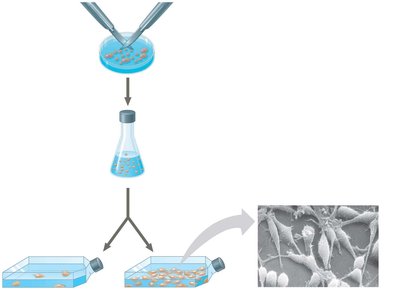
Cell cycle progression is regulated by both internal and external signals. Internal signals ensure proper chromosome attachment before anaphase, while external signals include nutrients, growth factors, anchorage dependence, and density-dependent inhibition.
Growth factors: Proteins that stimulate cell division.
Anchorage dependence: Most cells must be attached to a substrate to divide.
Density-dependent inhibition: Cells stop dividing when they reach a certain density.

Loss of Cell Cycle Control and Cancer
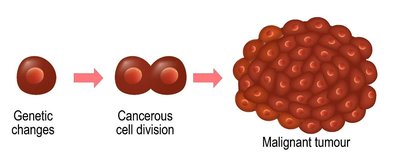
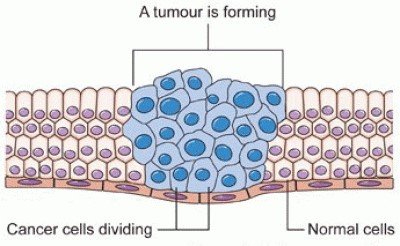
Cancer cells do not respond to normal cell cycle controls. They may divide indefinitely, forming tumors. Cancer arises from genetic changes that affect the cell cycle control system. Tumors can be benign (localized) or malignant (invasive and capable of metastasis).
Transformation: Process by which a normal cell becomes cancerous.
Metastasis: Spread of cancer cells to distant sites in the body.
Cancer cells often lose anchorage dependence and density-dependent inhibition.
Treatment of Cancer
Treatment strategies depend on whether the tumor is localized or metastatic. Common treatments include:
Surgical removal of the tumor.
Radiation therapy: Damages DNA in cancer cells more than in normal cells.
Chemotherapy: Drugs that target rapidly dividing cells by interfering with specific stages of the cell cycle.
Targeted therapy and immunotherapy: Specifically attack cancer cells or enhance the immune response.
Summary Table: Cell Cycle Checkpoints and Their Functions
Checkpoint | Location | Main Function | Outcome if Not Passed |
|---|---|---|---|
G1 checkpoint | End of G1 phase | Checks for cell size, nutrients, growth factors, DNA damage | Cell enters G0 (non-dividing state) |
G2 checkpoint | End of G2 phase | Checks for DNA replication completion and damage | Cell cycle is halted for repair |
M checkpoint | Metaphase of mitosis | Checks for chromosome attachment to spindle | Anaphase is delayed until all chromosomes are attached |
Key Terms and Concepts
Cell cycle: Ordered sequence of events in the life of a cell.
Checkpoint: Control point where stop and go-ahead signals regulate the cycle.
Cyclin: Regulatory protein whose concentration fluctuates during the cell cycle.
Cyclin-dependent kinase (Cdk): Enzyme that is active only when attached to a cyclin.
MPF: Cyclin-Cdk complex that triggers mitosis.
Growth factor: Protein that stimulates cell division.
Anchorage dependence: Requirement that cells must be attached to a substrate to divide.
Density-dependent inhibition: Phenomenon where crowded cells stop dividing.
Transformation: Conversion of a normal cell to a cancer cell.
Metastasis: Spread of cancer cells to distant body sites.
Key Equations
Protein phosphorylation:
