 Back
BackCell Cycle Regulation, DNA Damage, and Cancer: Foundations of Cellular Biology
Study Guide - Smart Notes
 Tailored notes based on your materials, expanded with key definitions, examples, and context.
The Cell Cycle
Overview of Cell Cycle Phases
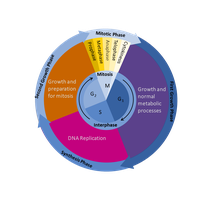
The cell cycle is a series of events that cells undergo to grow and divide. It consists of interphase (G1, S, G2) and the mitotic phase (M), each with distinct functions and regulatory mechanisms.
G1 Phase: Cell growth and normal metabolic processes.
S Phase: DNA replication occurs, preparing the cell for division.
G2 Phase: Further growth and preparation for mitosis.
M Phase: Mitosis and cytokinesis, resulting in two daughter cells.
Interphase encompasses G1, S, and G2 phases, where the cell prepares for division. The mitotic phase includes mitosis and cytokinesis.
Cell Cycle Checkpoints
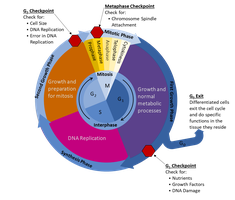
Checkpoints are control mechanisms that ensure the cell is ready to proceed to the next phase. They prevent errors and maintain genomic integrity.
G1 Checkpoint: Checks cell size, nutrients, social signals, and DNA integrity.
G2 Checkpoint: Ensures DNA replication is complete and undamaged, and MPF is activated.
Metaphase Checkpoint: Verifies spindle attachment and chromosome segregation.
Regulation of Cell Cycle Progression
Importance of Regulation
Cell division is tightly regulated to ensure proper growth, resource allocation, and prevention of mutations that could lead to cancer. Regulation involves checkpoints, signaling pathways, and protein complexes.
Ensures sufficient resources for new cells.
Prevents propagation of mutations by halting division if DNA is damaged.
Cell Signaling and Growth Factors
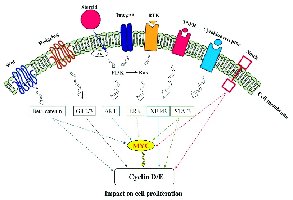
Growth factors are extracellular signals that promote cell division. They activate intracellular pathways leading to the production of cyclins, which are essential for cell cycle progression.
Cyclins: Regulatory proteins whose levels fluctuate during the cell cycle.
CDKs (Cyclin-dependent kinases): Enzymes that are activated by cyclins to drive cell cycle transitions.
Cyclin-CDK Complexes
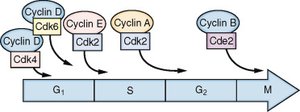
CDKs are always present in the cell but require cyclins to become active. Different cyclin-CDK complexes regulate different phases of the cell cycle.
Cyclin D/CDK4,6: G1 phase
Cyclin E/CDK2: G1 to S transition
Cyclin A/CDK2: S phase
Cyclin B/Cdc2: G2 to M transition
DNA Damage and Cell Cycle Checkpoints
DNA Damage Response
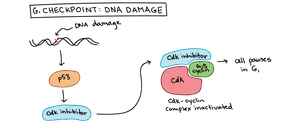
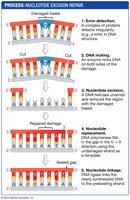
Cells have mechanisms to detect and repair DNA damage. If damage is detected at checkpoints, cell division is halted, and repair pathways are activated. If repair fails, the cell may undergo senescence or apoptosis.
p53 protein: Key regulator that signals cell cycle arrest or cell death in response to DNA damage.
Nucleotide Excision Repair: Removes damaged DNA segments and replaces them with correct nucleotides.
Mutagens and DNA Damage
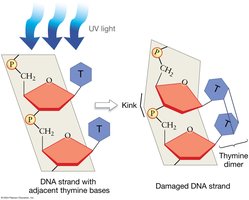
Mutagens such as chemicals, UV radiation, and X-rays can cause DNA mutations. These mutations may disrupt normal cell cycle regulation and lead to cancer if not repaired.
UV light: Causes thymine dimers, which distort DNA structure.
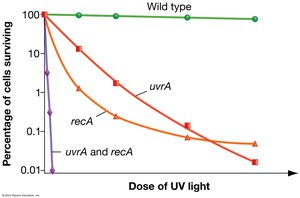
Repair proteins: uvrA and recA are essential for DNA repair in bacteria.
Telomeres and Cell Cycle Regulation
Telomere Function and Replication
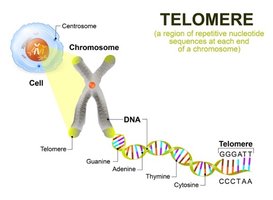
Telomeres are repetitive DNA sequences at chromosome ends that protect protein-coding regions from degradation during replication. Each cell division shortens telomeres, eventually leading to senescence.
Telomere sequence: TTAGGGn
Hayflick limit: Maximum number of divisions before a cell becomes senescent.
Telomerase: Enzyme that restores telomere length in certain cells.
Problems with DNA Replication at Chromosome Ends
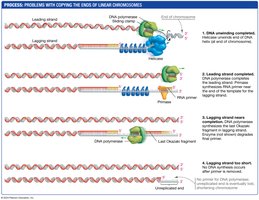
DNA polymerase cannot replicate the very ends of linear chromosomes due to the lack of a free 3'-OH group, resulting in telomere shortening.
~70-200 nucleotides are lost from each end per replication cycle.
Once telomeres are depleted, essential genes may be lost, halting cell division.
Cancer: A Disease of the Cell Cycle
Characteristics of Cancer Cells
Cancer arises when cell cycle regulation fails, allowing cells to proliferate uncontrollably. Cancer cells often re-express telomerase, accumulate mutations, evade cell death, and induce angiogenesis.
Genome instability: Mutations accumulate, increasing cancer risk.
BRCA1 gene: Repairs DNA damage; mutations increase cancer susceptibility.
Multiple mutations: Required for a cell to become cancerous.
Cell Cycle Checkpoints and Cancer Prevention
Checkpoints prevent the propagation of damaged DNA. Loss of checkpoint function, such as p53 mutations, increases cancer risk.
p53: Tumor suppressor; loss leads to unchecked cell division.
Inherited mutations: Increase predisposition to cancer (e.g., Li-Fraumeni syndrome).
Cancer Treatments Targeting Cell Cycle
Some cancer therapies disrupt DNA synthesis or cell division to halt tumor growth.
Quinolones: Inhibit topoisomerase, preventing DNA replication.
Taxol: Destabilizes microtubules, blocking mitosis.
Summary Table: Cell Cycle Checkpoints
Checkpoint | Main Criteria | Key Proteins |
|---|---|---|
G1 | Cell size, nutrients, social signals, DNA integrity | Cyclin D/E, CDK, p53 |
G2 | DNA replication complete, DNA undamaged, MPF activated | Cyclin A/B, CDK, MPF |
Metaphase | Spindle attachment, chromosome segregation, MPF absent | Spindle proteins, MPF |
Additional info: Academic context was added to clarify checkpoint mechanisms, DNA repair, telomere function, and cancer biology, ensuring completeness and self-contained study notes.
