 Back
BackLEC 17: Cell Cycle Regulation, Growth Factors, and the Discovery of DNA as Genetic Material
Study Guide - Smart Notes
 Tailored notes based on your materials, expanded with key definitions, examples, and context.
Cell Cycle Regulation and Checkpoints
Overview of Cell Cycle Control
The cell cycle is tightly regulated by a series of checkpoints that ensure proper cell division and the maintenance of genomic integrity. These checkpoints monitor internal and external signals to determine whether a cell should proceed through the stages of the cell cycle.
G1/S Checkpoint: Assesses cell size, nutrient availability, energy reserves, and the presence of external signals to divide.
G2/M Checkpoint: Ensures DNA replication is complete and free of errors before entering mitosis.
Mitotic (Spindle Assembly) Checkpoint: Verifies that all chromosomes are properly attached to the spindle apparatus before anaphase begins.
Mitotic (Spindle Assembly) Checkpoint
This checkpoint ensures that chromosomes are correctly attached to spindle microtubules via kinetochores before the cell proceeds to anaphase. Improper attachment can lead to chromosome missegregation, resulting in aneuploidy or cell death.
Kinetochore: Protein structure on chromatids where spindle fibers attach during cell division.
Spindle Microtubules: Structures that segregate chromosomes during mitosis.
APC (Anaphase Promoting Complex): A protein complex that triggers the transition to anaphase by degrading securin, thus activating separase to cleave cohesin and allow sister chromatid separation.
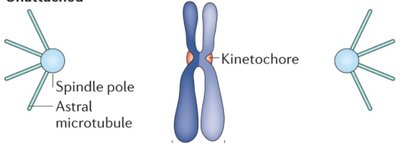
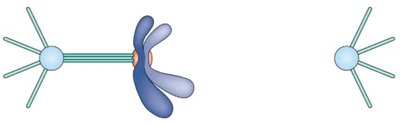
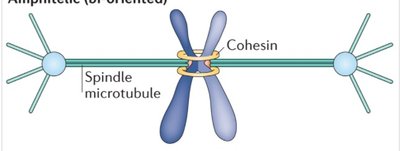
Problems in this checkpoint can result in cells with abnormal chromosome numbers, a hallmark of many cancers.
Growth Factors and Cell Division
Role of Growth Factors
Growth factors are signaling molecules that stimulate cell division. Early experiments showed that human cells required blood serum to grow in culture, not for nutrients, but for an unidentified factor that promoted cell division. This factor was later identified as Platelet-Derived Growth Factor (PDGF).
PDGF: A protein released by platelets during blood clotting that stimulates fibroblast division and wound healing.
Fibroblasts: Cells that produce collagen and other extracellular matrix (ECM) components, essential for tissue repair.
PDGF binds to its receptor on the cell surface, triggering a signaling cascade that leads to cell cycle progression.
Cancer: Uncontrolled Cell Division
Mechanisms of Cancer Development
Cancer arises when the regulatory mechanisms of the cell cycle are disrupted, often due to mutations in genes that control cell division. These mutations can lead to:
Loss of response to growth-inhibitory signals
Constitutive activation of growth-promoting pathways
Failure of cell cycle checkpoints, resulting in abnormal chromosome numbers
Mutations can be spontaneous or induced by environmental factors such as smoking. Cancer cells often ignore signals that normally inhibit division, leading to uncontrolled proliferation.
The Discovery of DNA as the Genetic Material
Historical Experiments
Early 20th-century scientists debated whether proteins or DNA carried genetic information. Key experiments resolved this question:
Griffith's Experiment (1928): Demonstrated transformation in Streptococcus pneumoniae, where non-virulent bacteria acquired virulence from heat-killed virulent bacteria.
Avery, MacLeod, and McCarty (1944): Showed that DNA, not protein or RNA, was responsible for transformation.
Hershey-Chase Experiment (1952): Used radioactive labeling to show that DNA, not protein, entered bacteria during viral infection, confirming DNA as the hereditary material.
Chargaff's Rules and DNA Composition
Erwin Chargaff's work disproved the idea that DNA was a simple repeating polymer. He found that:
The amount of adenine (A) equals thymine (T), and the amount of guanine (G) equals cytosine (C) in any given species.
The relative amounts of these bases vary between species, providing evidence for DNA's complexity and specificity.
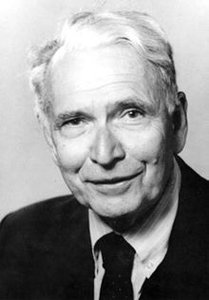
Chargaff's findings were critical for the discovery of the double helix structure of DNA.
Key Terms and Concepts
Transformation: The genetic alteration of a cell by the uptake of foreign DNA.
Genotype: The genetic makeup of an organism.
Phenotype: The observable characteristics of an organism.
Bacteriophage: A virus that infects bacteria, used in the Hershey-Chase experiment.
Summary Table: Key Experiments in DNA Discovery
Experiment | Organism/System | Main Finding |
|---|---|---|
Griffith (1928) | S. pneumoniae | Transformation of non-virulent to virulent bacteria |
Avery, MacLeod, McCarty (1944) | S. pneumoniae | DNA is the transforming principle |
Hershey-Chase (1952) | Bacteriophage T2, E. coli | DNA, not protein, is the genetic material |
Chargaff (1950s) | Various species | Base pairing rules (A=T, G=C) |
