Back
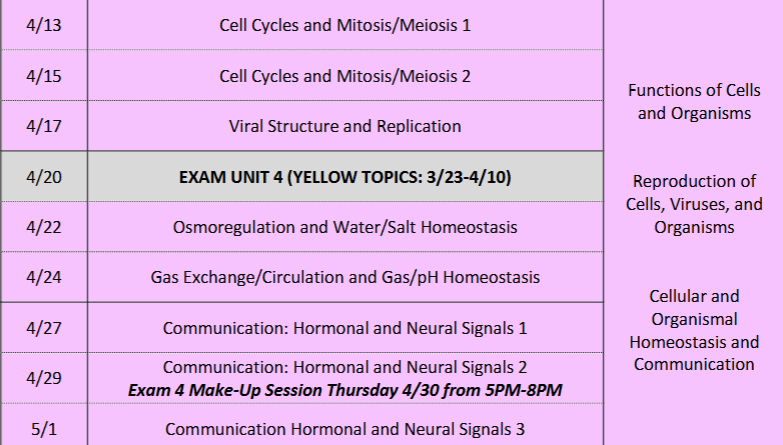
Cell Cycles, Mitosis/Meiosis, Viral Replication, Homeostasis, and Cellular Communication
Study Guide - Smart Notes
 Tailored notes based on your materials, expanded with key definitions, examples, and context.
Cell Cycles and Mitosis/Meiosis
Overview of the Cell Cycle
The cell cycle is the series of events that cells undergo as they grow and divide. It consists of interphase (G1, S, G2 phases) and the mitotic phase (mitosis and cytokinesis). - Interphase: The cell grows, replicates its DNA, and prepares for division. - Mitosis: The process by which a cell divides its nucleus and genetic material to produce two identical daughter cells. - Meiosis: Specialized cell division that reduces chromosome number by half, producing four genetically unique gametes.
Mitosis vs. Meiosis
- Mitosis: Occurs in somatic cells; results in two identical cells. - Meiosis: Occurs in germ cells; results in four non-identical gametes. - Key Differences: Meiosis includes two rounds of division and crossing over, increasing genetic diversity. Example: Human skin cells undergo mitosis for repair, while sperm and egg cells are produced via meiosis.
Viral Structure and Replication
Structure of Viruses
Viruses are acellular entities composed of genetic material (DNA or RNA) surrounded by a protein coat called a capsid. Some viruses have an additional lipid envelope. - Capsid: Protein shell protecting viral genome. - Envelope: Lipid membrane derived from host cell, present in some viruses.
Viral Replication Cycles
- Lytic Cycle: Virus injects genome, hijacks host machinery, produces new viruses, and lyses the cell. - Lysogenic Cycle: Viral genome integrates into host DNA, replicates with host, and can later enter lytic cycle. Example: Influenza virus uses an envelope to enter host cells, while bacteriophages often follow the lytic cycle.
Osmoregulation and Water/Salt Homeostasis
Osmoregulation in Animals
Osmoregulation is the process by which organisms maintain the balance of water and electrolytes. - Kidneys: Main organ for osmoregulation in vertebrates, filtering blood and regulating salt/water balance. - Transport Proteins: Facilitate movement of ions across membranes.
Mechanisms of Homeostasis
- Negative Feedback: Maintains internal stability by counteracting changes. - Hormonal Regulation: Hormones like antidiuretic hormone (ADH) control water reabsorption. Example: Marine fish excrete excess salt, while freshwater fish conserve salt.
Gas Exchange, Circulation, and Gas/pH Homeostasis
Gas Exchange Mechanisms
Gas exchange is the process of obtaining oxygen and removing carbon dioxide. - Lungs: Main organ for gas exchange in mammals. - Gills: Used by aquatic animals.
Circulatory System
- Heart: Pumps blood throughout the body. - Blood Vessels: Transport gases, nutrients, and waste.
pH Homeostasis
- Buffer Systems: Maintain blood pH within narrow range. - Respiratory Regulation: Adjusts CO2 levels to control pH. Example: During exercise, increased CO2 lowers pH, triggering faster breathing.
Communication: Hormonal and Neural Signals
Hormonal Signaling
Hormones are chemical messengers released by endocrine glands, affecting target cells throughout the body. - Endocrine System: Includes glands like pituitary, thyroid, and adrenal. - Signal Transduction: Hormones bind to receptors, triggering cellular responses.
Neural Signaling
Neurons transmit electrical impulses and release neurotransmitters for rapid communication. - Synapse: Junction between neurons where neurotransmitters are released. - Action Potential: Electrical signal traveling along neuron. Example: Adrenaline released during stress increases heart rate; neural signals control muscle contraction.
Functions and Reproduction of Cells, Viruses, and Organisms
Cellular Functions
Cells perform essential functions such as metabolism, growth, and response to stimuli.
Reproduction
- Cell Division: Mitosis and meiosis for cellular reproduction. - Viral Replication: Viruses reproduce by infecting host cells. - Organismal Reproduction: Sexual and asexual reproduction in multicellular organisms.
Cellular and Organismal Homeostasis and Communication
Homeostasis
Homeostasis is the maintenance of stable internal conditions. - Feedback Mechanisms: Negative and positive feedback regulate physiological processes.
Communication
- Hormonal: Slow, widespread effects. - Neural: Fast, targeted effects. Example: Blood glucose regulation involves both hormonal (insulin) and neural (autonomic nervous system) signals.