 Back
Cell Division, Genetic Inheritance, and Chromosome Behavior: Study Notes for General Biology
Study Guide - Smart Notes
 Tailored notes based on your materials, expanded with key definitions, examples, and context.
Cell Division and the Cell Cycle
Overview of Cell Division
Cell division is a fundamental process in biology, enabling growth, development, tissue renewal, and reproduction. It involves the duplication and segregation of cellular components, including chromosomes and organelles, to produce two daughter cells.
Asexual reproduction: In unicellular organisms, cell division reproduces the entire organism.
Sexual reproduction: In multicellular organisms, cell division produces germ cells for reproduction.
Growth and development: Cell division allows a single cell to form multicellular tissues.
Tissue renewal: Damaged tissues are repaired through cell division.
Challenges of Cell Division
Cells must duplicate all genetic material and organelles.
DNA must be accurately copied and distributed.
Cell division must be responsive to external signals and timing events.
Cellular Organization of Genetic Material
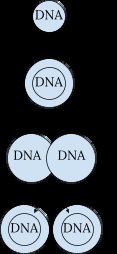
The genetic material of a cell is organized into chromosomes, which are composed of DNA and proteins. Each species has a characteristic number of chromosomes.
Genome: All of a cell’s genetic information.
Chromosome: DNA double helix wrapped around proteins.
Chromatin: Complex of DNA and proteins in eukaryotic chromosomes.
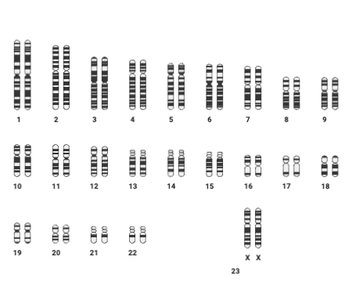
Karyotype: Display of the chromosomes in a cell.
Chromosome Structure Before Division
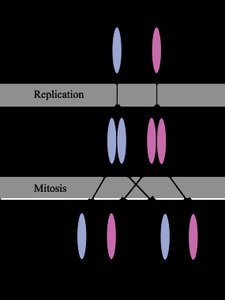
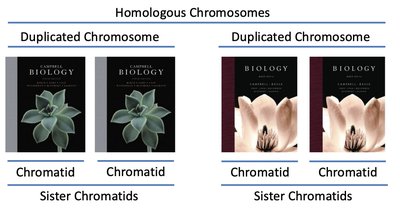
Chromosomes replicate to form duplicated chromosomes, each consisting of two sister chromatids joined by a centromere.
Phases of the Cell Cycle
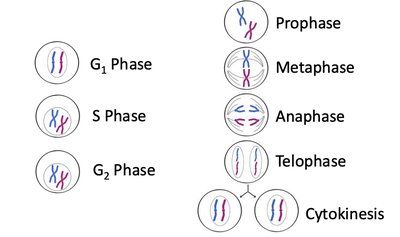
The cell cycle consists of interphase (G1, S, G2) and the mitotic phase (mitosis and cytokinesis).
Interphase: Cell grows and replicates DNA (G1, S, G2).
G0: Non-dividing state.
Mitotic phase: Nuclear division (mitosis) and cytoplasmic division (cytokinesis).
Mitosis: Steps and Mechanisms
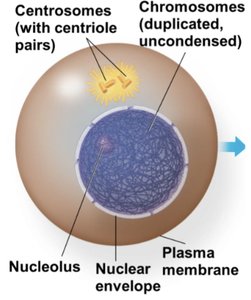
G2 of Interphase
During G2, the nuclear envelope encloses the nucleus, centrosomes have duplicated, and chromosomes are not yet condensed.
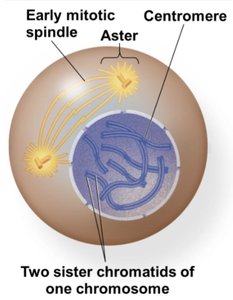
Prophase
Chromosomes condense, duplicated chromosomes appear as two sister chromatids, and the mitotic spindle begins to form.
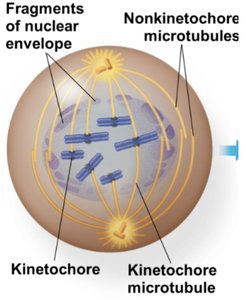
Prometaphase
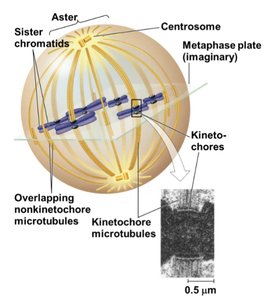
The nuclear envelope fragments, microtubules attach to chromatids via kinetochores, and chromosomes are pulled by microtubules.
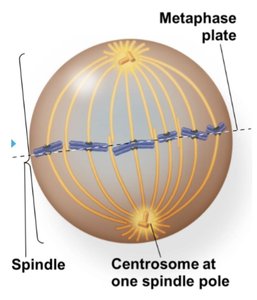
Metaphase
Chromosomes align at the metaphase plate, and kinetochores attach to microtubules from opposite poles.
Anaphase
Sister chromatids separate and are pulled toward opposite ends of the cell.
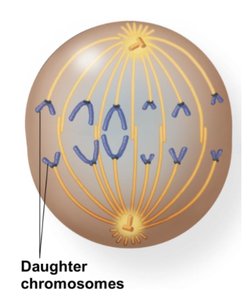
Telophase and Cytokinesis
Nuclear envelopes reform, chromosomes decondense, and the cell membrane divides the cytoplasm at the cleavage furrow.
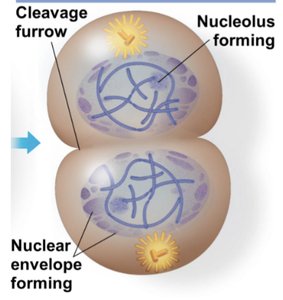
Mechanisms of Chromosome Movement
Mitotic Spindle and Microtubules
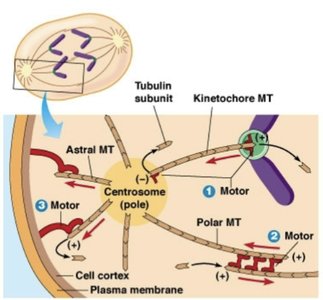
The mitotic spindle, composed of microtubules and associated proteins, controls chromosome movement during mitosis.
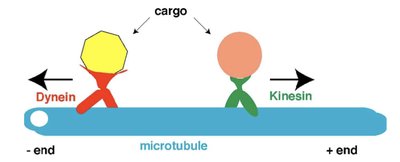
Microtubules: Tubulin protein tubes with + and - ends; dynamic in length.
Motor proteins: Dynein moves toward - end; kinesin moves toward + end.
Centrosome Formation and Movement
Centrosomes duplicate prior to cell division and organize microtubules. During prophase, microtubules elongate and push centrosomes apart.
Cytokinesis: Actin-Based Contraction
Cytokinesis is driven by actin filaments and myosin motors forming a contractile ring, which contracts to form the cleavage furrow.
Cell Division in Prokaryotes
Binary Fission
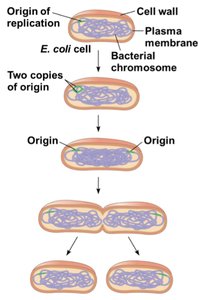
Prokaryotes reproduce by binary fission, where a single chromosome replicates and the cell divides.
Regulation of the Cell Cycle
External Regulatory Mechanisms
Growth factors: Proteins that stimulate cell growth.
Density-dependent inhibition: Cells stop dividing when in contact with other cells.
Cell Cycle Control System
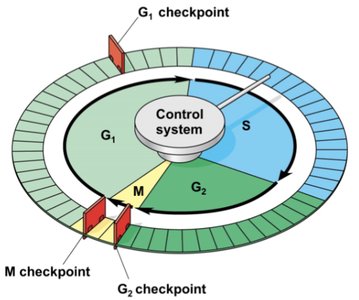
The cell cycle is regulated by checkpoints that determine whether a cell can proceed through the cycle.
Cancer and Cell Cycle Regulation
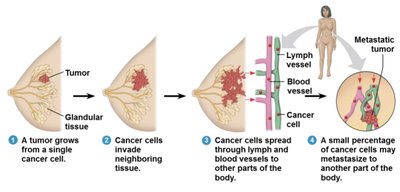
Cancer results from unchecked cell division due to failure of cell cycle checkpoints.
Meiosis and Genetic Inheritance
Sexual Reproduction and Chromosome Number
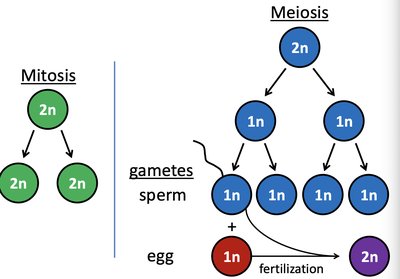
Sexual reproduction combines genetic information from two parents. Humans have 46 chromosomes (23 pairs), with somatic cells being diploid and gametes being haploid.
Meiosis: Reduction Division
Meiosis consists of two divisions (Meiosis I and II), producing four haploid gametes from one diploid parent cell.
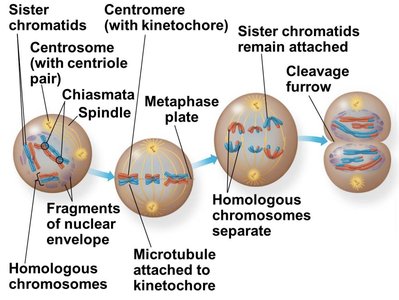
Meiosis I: Homologous chromosomes pair and separate.
Meiosis II: Sister chromatids separate.
Genetic Variation in Meiosis
Meiosis increases genetic variation through independent assortment, crossing over, and random fertilization.
Independent assortment: Homologous pairs orient randomly in metaphase I.
Crossing over: Homologous chromatids exchange genetic material in prophase I.
Random fertilization: Any sperm can fuse with any ovum, producing diverse zygotes.
Life Cycle Variations
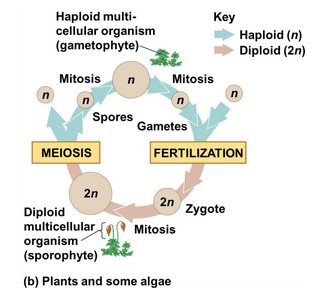
Some organisms, such as plants and algae, exhibit alternation of generations, with both diploid and haploid multicellular stages.
Mendelian Genetics and Patterns of Inheritance
Basic Concepts
Character: Heritable feature that varies among individuals.
Trait: Variant of a character.
Gene: Unit of heredity; specific DNA region.
Allele: Variant of a gene.
Locus: Position of a gene on a chromosome.
Mendel’s Experimental Design
Mendel used pea plants to study inheritance, focusing on traits with two distinct forms and tracking them through generations.
Mendel’s Model of Genetic Inheritance
Alternative versions of genes (alleles) account for variations.
Each organism inherits two alleles for each gene.
Dominant alleles determine phenotype; recessive alleles may be masked.
Law of Segregation: Alleles separate during gamete formation.
Punnett Squares and Testcrosses
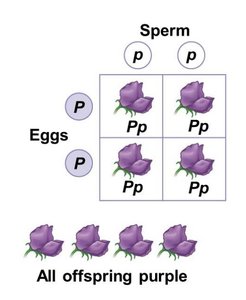
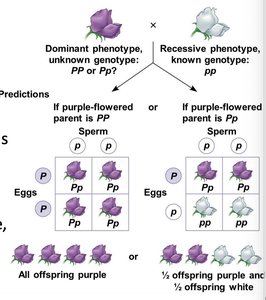
Punnett squares predict offspring genotypes and phenotypes. Testcrosses determine the genotype of individuals with dominant phenotypes.
Dihybrid Crosses and Law of Independent Assortment
Genes on different chromosomes assort independently during gamete formation, leading to genetic variation.
Probability in Genetics
Multiplication rule: Probability of two independent events occurring together is the product of their probabilities.
Addition rule: Probability of either of two mutually exclusive events is the sum of their probabilities.
Complex Patterns of Inheritance
Incomplete dominance: Phenotype is intermediate between dominant and recessive homozygotes.
Codominance: Both alleles affect phenotype in separate ways (e.g., blood type AB).
Multiple alleles: More than two alleles exist for a gene (e.g., blood types).
Polygenic inheritance: Phenotype arises from combined effects of multiple genes (e.g., skin color).
Pedigree Analysis
Pedigrees trace the flow of alleles through generations and help predict inheritance patterns.
Dominant inheritance: Disease appears every generation; affected individuals must have affected parent.
Recessive inheritance: Disease may skip generations; affected individuals may have unaffected parents.
Chromosomal Basis of Inheritance
Chromosome Theory and Evidence
Mendelian genes have specific positions on chromosomes, which undergo segregation and independent assortment during meiosis.
Sex-Linked Genes and Inheritance
Genes located on sex chromosomes display inheritance patterns linked to organism sex.
X-linked recessive disorders are more common in males.
X inactivation in female mammals results in Barr bodies.
Linkage and Recombination
Genes on the same chromosome may be linked and inherited together unless crossing over occurs.
Linkage map: Genetic map based on recombination frequencies.
Chromosome Segregation Errors
Incomplete chromosome separation during meiosis can affect offspring chromosome number, leading to genetic disorders.
