 Back
BackCell Division, Genetic Variation, and Evolution: Foundations of Biology
Study Guide - Smart Notes
 Tailored notes based on your materials, expanded with key definitions, examples, and context.
Living Systems and Hierarchical Organization
Emergent Properties in Biological Hierarchies
Biological systems are organized in a hierarchy, where each level exhibits emergent properties—characteristics that arise from the interactions of components at lower levels. These properties cannot be deduced solely by examining individual parts, but rather emerge as complexity increases. The phenomenon of "life" itself is considered an emergent property.

Unifying Themes in Biology
Cell Theory
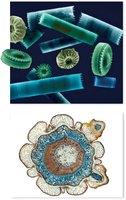
The cell theory is a fundamental concept in biology, stating that all organisms are composed of cells and that all cells arise from preexisting cells. This theory forms the basis for understanding growth, reproduction, and the continuity of life.
Molecular Basis of Inheritance
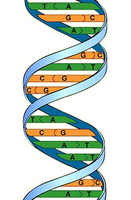
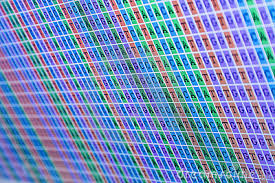
Inheritance in living organisms is governed by deoxyribonucleic acid (DNA), which encodes cellular information through sequences of four nucleotides. A gene is a discrete unit of information, while the genome refers to the entire set of DNA instructions. The continuity of life depends on the faithful replication of DNA during cell division.
Diversity and Unity of Life
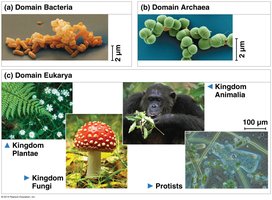
The diversity of life arises through evolution, while the underlying unity of biochemistry and genetics suggests a common origin for all life. Evolutionary change over time leads to the vast diversity observed in living organisms. Life is classified into three domains:
Bacteria – single-celled prokaryotes
Archaea – single-celled prokaryotes
Eukarya – single-celled or multicellular eukaryotes
Cell Division and Its Importance
Roles of Cell Division
Cell division is essential for the continuity of life. In multicellular eukaryotes, it is required for development from a zygote, growth, and maintenance. The ability to produce more of their own kind distinguishes living things from nonliving matter.
Human Health Impacts
Cell division is directly related to human health. For example, Down Syndrome results from abnormal cell division, and cancer is caused by uncontrolled cell division. About 1 in 800 babies in the USA are born with Down Syndrome, and approximately 40% of men and women will be diagnosed with cancer in their lifetime.
Genetic Variation and Evolution
Sources of Genetic Variation
Genetic variation is essential for evolution. It arises from:
Mutations – random alterations in genetic information
Genetic recombination during meiosis
Independent assortment of chromosomes
Sexual recombination in reproduction
Mutations can occur during DNA replication or through insertions/deletions of DNA fragments. They are relatively rare and usually have small effects, which can be positive, negative, or neutral.
Definitions and Chromosome Structure
DNA: The molecule containing all genetic information of an organism.
Chromosome: A tightly wound strand of DNA located in the nucleus.
Gene: A segment of a chromosome coding for a specific protein.
Genome: The total genetic information of an organism.
Homologous chromosomes: Chromosomes with the same genes at the same loci, one from each parent.
Allele: An alternative state of a gene.
Karyotype: The array of chromosomes in an organism.
Haploid (n): One copy of each chromosome.
Diploid (2n): Two copies of each chromosome, one from each parent.
Cell Division: Mitosis and Meiosis
Mitosis
Mitosis produces two identical diploid daughter cells. The process involves:
Chromosome replication before division
Chromosome condensation (prophase)
Chromosomes align at the center (metaphase)
Sister chromatids separate (anaphase)
Daughter cells are identical (telophase)
Meiosis
Meiosis produces four haploid daughter cells (gametes) from one diploid cell. It involves two cell divisions:
Meiosis I: Reduction division, homologous chromosomes pair and undergo crossing over (genetic recombination), then separate.
Meiosis II: Similar to mitosis, chromatids separate into haploid cells.
The direction each chromosome takes during reduction division is random (independent assortment), resulting in genetic diversity.
Sexual Reproduction and Chromosome Number
Sexual reproduction involves both haploid (n) and diploid (2n) stages. Fertilization doubles the chromosome number, while meiosis reduces it to haploid. Without meiosis, chromosome numbers would increase exponentially with each generation.
Genetic Variation in Meiosis
Independent Assortment and Crossing Over
During meiosis, independent assortment and crossing over generate genetic diversity. For an organism with n pairs of chromosomes, the number of possible gametes is . Humans (n=23) can produce different gametes. The number of unique zygotes is trillion.
Crossing over during meiosis I results in chromatids with unique combinations of alleles from each parent, ensuring that each gamete is genetically distinct.
Summary Table: Key Differences Between Mitosis and Meiosis
Process | Number of Divisions | Number of Daughter Cells | Chromosome Number | Genetic Variation |
|---|---|---|---|---|
Mitosis | 1 | 2 | Diploid (2n) | None (identical cells) |
Meiosis | 2 | 4 | Haploid (n) | High (crossing over, independent assortment) |
Evolution: Definition and Mechanisms
Definition of Evolution
Evolution is defined as a change in gene frequency in a population over time. Individuals with adaptive variations are more likely to survive and reproduce, leading to an increase in the frequency of those genes in subsequent generations. All variation is ultimately genetic, resulting from changes in DNA or chromosomes.
Key Learning Objectives
Understand that genetic variation is essential for evolution.
Know the sources of genetic variation: mutations, recombination, independent assortment, and sexual reproduction.
Differentiate between homologous chromosomes and sister chromatids.
Define allele.
Compare the outcomes of meiosis and mitosis.
Additional info: Academic context was added to clarify definitions, processes, and the importance of genetic variation and cell division. Images were included only when directly relevant to the explanation of hierarchical organization, cell theory, molecular inheritance, and domains of life.
