 Back
Cell Division: Mitosis and Meiosis Study Guide
Study Guide - Smart Notes
 Tailored notes based on your materials, expanded with key definitions, examples, and context.
Cell Division
Types of Cell Division
Cell division is a fundamental process by which cells reproduce and organisms grow, repair, and maintain their tissues. There are two main types of cell division in eukaryotes: mitosis and meiosis.
Mitosis: Produces two genetically identical daughter cells for growth, repair, and asexual reproduction.
Meiosis: Produces four genetically unique daughter cells (gametes) with half the chromosome number for sexual reproduction.
Prokaryotic Cell Division: Prokaryotes divide by binary fission, a simpler process involving DNA replication and cell splitting.
Cell Types
Somatic Cells: Body cells that undergo mitosis.
Reproductive Cells: Gametes (sperm and egg) produced by meiosis.
The Cell Cycle
The cell cycle is the series of events that cells go through as they grow and divide. It consists of interphase (G1, S, G2 phases) and the mitotic phase (mitosis and cytokinesis).
Interphase: The cell grows, replicates its DNA, and prepares for division.
G1 Phase: Cell growth and normal functions.
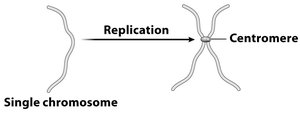
S Phase: DNA replication occurs, producing sister chromatids.
G2 Phase: Preparation for mitosis.
Chromosomes, Chromatids, and Chromatin
Chromosome: A structure made of DNA and proteins (histones) that carries genetic information.
Chromatin: The loose, uncondensed form of DNA in the nucleus.
Chromatid: One of two identical halves of a replicated chromosome, joined at the centromere.
Sister Chromatids: The two identical chromatids formed after DNA replication.
Checkpoints in the Cell Cycle
Checkpoints are control mechanisms that ensure the cell cycle proceeds correctly and help prevent cancer.
G1 Checkpoint: Assesses cell size, nutrients, and DNA integrity.
G2 Checkpoint: Ensures DNA replication is complete and checks for DNA damage.
Metaphase (M) Checkpoint: Ensures chromosomes are properly attached to spindle fibers before division.
Mitosis
Purpose and Steps of Mitosis
Mitosis is the process by which somatic cells divide to produce two identical daughter cells. It is essential for growth, repair, and maintenance.
Prophase: Chromosomes condense, spindle fibers form.
Metaphase: Chromosomes align at the cell's equator.
Anaphase: Sister chromatids are pulled apart to opposite poles.
Telophase: Nuclear membranes reform around each set of chromosomes.
Cytokinesis: Division of the cytoplasm, resulting in two separate cells.
Spindle Fibers: Protein structures that help separate chromosomes during mitosis.
Are Daughter Cells Identical? Yes, both to each other and to the parent cell.
Mnemonic for Mitosis Steps
Please Make A Tea (Prophase, Metaphase, Anaphase, Telophase)
Meiosis
Purpose and Steps of Meiosis
Meiosis is the process by which reproductive cells (gametes) are produced. It reduces the chromosome number by half, ensuring genetic diversity.
Haploid: A cell with one set of chromosomes (n).
Diploid: A cell with two sets of chromosomes (2n).
Fertilization: Two haploid gametes unite to form a diploid zygote.
Goals of Meiosis
Reduce chromosome number by half.
Generate genetic diversity.
Homologous Pairs
Humans have 23 pairs of chromosomes, each pair consisting of one maternal and one paternal copy, called homologous pairs.
Meiosis I
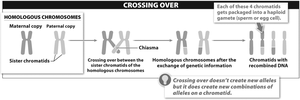
Prophase I: Homologous chromosomes pair up and crossing over occurs.
Metaphase I: Homologous pairs align at the equator.
Anaphase I: Homologous chromosomes are separated.
Telophase I and Cytokinesis: Two haploid cells are formed.
Meiosis II
Prophase II: Chromosomes condense in each haploid cell.
Metaphase II: Chromosomes align at the equator.
Anaphase II: Sister chromatids are separated.
Telophase II and Cytokinesis: Four haploid cells are produced.
Resulting Daughter Cells
Four haploid cells, each genetically unique and not identical to the parent cell.
Male vs. Female Gamete Production
Males: Produce sperm cells.
Females: Produce egg cells.
Eggs are larger and contain more cytoplasm; sperm are smaller and motile.
Genetic Variation in Meiosis
Crossing Over and Independent Assortment
Crossing over and independent assortment during meiosis are key sources of genetic variation.
Crossing Over: Occurs during Prophase I, where homologous chromosomes exchange genetic material at the chiasma.
Results in new combinations of alleles on chromatids, increasing genetic diversity.
Independent Assortment: Homologous pairs are randomly distributed to daughter cells, further increasing variation.
Importance of Meiosis for Gamete Production
Mitosis would not work for gamete production because it does not reduce chromosome number or generate genetic diversity.
Meiosis ensures offspring have the correct chromosome number and are genetically unique.
Apoptosis and Cancer
Relationship Between Cell Cycle and Cancer
Apoptosis: Programmed cell death, important for removing damaged or unnecessary cells.
Cancer results from uncontrolled cell division due to failure of cell cycle checkpoints.
Comparison of Mitosis and Meiosis
Feature | Mitosis | Meiosis |
|---|---|---|
Number of Divisions | 1 | 2 |
Number of Daughter Cells | 2 | 4 |
Chromosome Number | Diploid (2n) | Haploid (n) |
Genetic Identity | Identical | Unique |
Function | Growth, repair | Gamete production |
Additional info: Independent assortment and crossing over are critical for genetic diversity in sexually reproducing organisms.
