 Back
BackCell Division: Mitosis, the Cell Cycle, and Chromosome Dynamics
Study Guide - Smart Notes
 Tailored notes based on your materials, expanded with key definitions, examples, and context.
Cell Division and Chromosomes
Overview of Cell Division
Cell division is a fundamental process in biology, essential for growth, development, and tissue repair in multicellular organisms. Most cell divisions result in genetically identical daughter cells, except for meiosis, which produces gametes with half the chromosome number of the parent cell.
Mitosis: Produces two genetically identical daughter cells.
Meiosis: Produces nonidentical gametes (sperm and egg) with half the chromosome number.
In unicellular organisms, cell division is a means of reproduction.
In multicellular organisms, it supports growth, repair, and development from a fertilized egg.
Chromosomes and Chromatin Structure
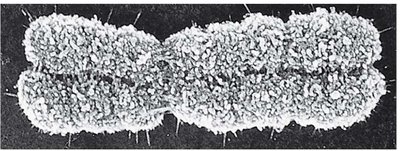
Chromosomes are structures composed of DNA and proteins, carrying genetic information. Each duplicated chromosome consists of two identical sister chromatids joined at a region called the centromere.
Chromatin: The complex of DNA and proteins that condenses to form chromosomes during cell division.
Centromere: The region where sister chromatids are most closely attached.
Cohesins: Protein complexes that hold sister chromatids together.
The Cell Cycle
Phases of the Cell Cycle
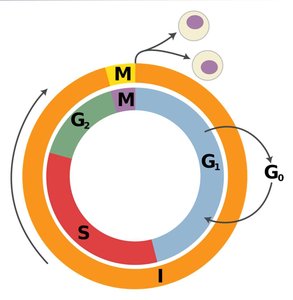
The cell cycle is the ordered sequence of events in the life of a cell, from its origin to its own division. It consists of interphase and the mitotic (M) phase.
Interphase: Includes G1 (first gap), S (synthesis), and G2 (second gap) phases. The cell grows during all three, but DNA is replicated only during S phase.
Mitotic (M) Phase: Includes mitosis (nuclear division) and cytokinesis (cytoplasmic division).
Interphase Details
G1 Phase: Cell grows and synthesizes proteins and organelles.
S Phase: DNA replication occurs, resulting in duplicated chromosomes.
G2 Phase: Further growth and preparation for mitosis.
Mitosis: Process and Phases
Overview of Mitosis
Mitosis is conventionally divided into five phases: prophase, prometaphase, metaphase, anaphase, and telophase. Cytokinesis overlaps with the latter stages of mitosis.

Detailed Phases of Mitosis
Prophase: Chromatin condenses into visible chromosomes; mitotic spindle begins to form; nucleoli disappear.
Prometaphase: Nuclear envelope fragments; spindle microtubules attach to kinetochores on chromosomes.
Metaphase: Chromosomes align at the metaphase plate; spindle fibers attach to kinetochores from opposite poles.
Anaphase: Sister chromatids separate and move toward opposite poles; cell elongates.
Telophase: Nuclear envelopes reform; chromosomes decondense; mitosis is complete.
Cytokinesis: Division of the cytoplasm, forming two daughter cells.
The Mitotic Spindle and Chromosome Movement
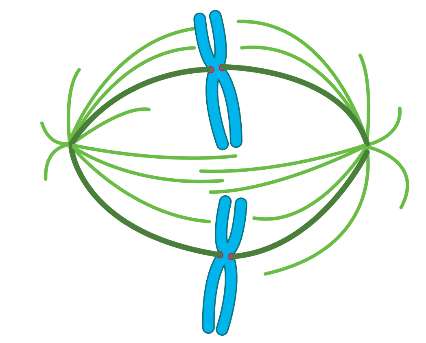
The mitotic spindle is a structure made of microtubules that orchestrates the movement of chromosomes during mitosis. In animal cells, spindle assembly begins in the centrosome, which replicates and migrates to opposite poles.
Aster: Radial array of short microtubules extending from each centrosome.
Kinetochore Microtubules: Attach to kinetochores and move chromosomes.
Nonkinetochore Microtubules: Overlap and elongate the cell during anaphase.
Mechanism of Chromosome Movement
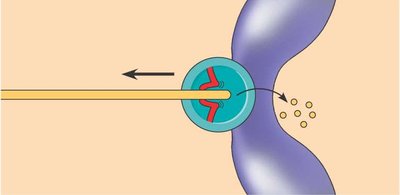
During anaphase, the enzyme separase cleaves cohesins, allowing sister chromatids to separate. Chromosomes move toward spindle poles as kinetochore microtubules shorten by depolymerizing at their kinetochore ends.
Experimentally, it was shown that microtubules shorten at the kinetochore end, not the spindle pole end.
Motor proteins at the kinetochore help move chromosomes along the microtubules.
Cytokinesis: Animal vs. Plant Cells
Cytokinesis in Animal Cells
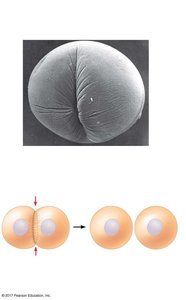
In animal cells, cytokinesis occurs by cleavage, forming a cleavage furrow that pinches the cell in two. This process involves a contractile ring of actin microfilaments and myosin.
Cytokinesis in Plant Cells
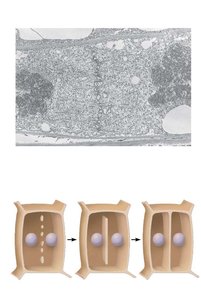
In plant cells, cytokinesis occurs by the formation of a cell plate. Vesicles from the Golgi apparatus coalesce at the center of the cell, forming a new cell wall that separates the daughter cells.
Summary Table: Key Events in Mitosis
Phase | Main Events |
|---|---|
Prophase | Chromosomes condense, spindle forms, nucleoli disappear |
Prometaphase | Nuclear envelope fragments, spindle attaches to kinetochores |
Metaphase | Chromosomes align at metaphase plate |
Anaphase | Sister chromatids separate, move to poles |
Telophase | Nuclear envelopes reform, chromosomes decondense |
Cytokinesis | Cytoplasm divides, forming two cells |
Key Terms and Concepts
Chromosome: Structure carrying genetic material, found in the nucleus of eukaryotic cells.
Sister Chromatids: Two identical copies of a chromosome connected by a centromere.
Centrosome: Microtubule organizing center, important for spindle formation.
Kinetochore: Protein structure on chromatids where spindle fibers attach.
Cleavage Furrow: Indentation that begins the process of cytokinesis in animal cells.
Cell Plate: Structure that forms in plant cells during cytokinesis, leading to new cell wall formation.
Practice Questions
How many cells are produced after five consecutive cell divisions starting from a single zygote?
What would be the DNA content of a cell immediately after mitosis, at the end of S phase, and at the end of G2?
Which aspect of the cell cycle would be most disrupted by a drug that blocks actin function?
Additional info: This guide focuses on mitosis and the cell cycle, which are foundational topics in cell biology and genetics. For further study, review the regulation of the cell cycle, checkpoints, and the differences between mitosis and meiosis.
