 Back
Cell Membranes and Transport: Structure, Function, and Mechanisms
Study Guide - Smart Notes
 Tailored notes based on your materials, expanded with key definitions, examples, and context.
Cell Membranes and Transport
Introduction to Cell Membranes
The cell membrane, also known as the plasma membrane, is a dynamic structure that separates the interior of the cell from its external environment. It plays a critical role in regulating the movement of substances into and out of the cell, maintaining homeostasis, and facilitating communication and structural support.
Structure of the Cell Membrane: The Fluid Mosaic Model
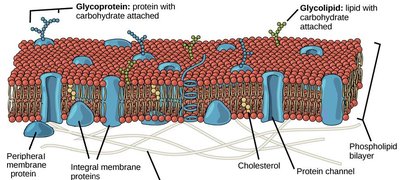
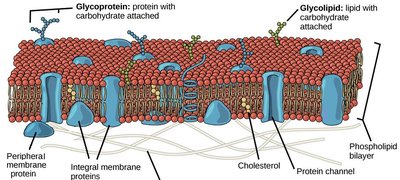
Phospholipid Bilayer: The fundamental structure of the membrane is a double layer of phospholipids, with hydrophilic (water-attracting) heads facing outward and hydrophobic (water-repelling) tails facing inward.
Proteins: Embedded within the bilayer, proteins serve as channels, carriers, receptors, and enzymes. They are classified as integral (spanning the membrane) or peripheral (attached to the surface).
Carbohydrates: Attached to proteins (glycoproteins) or lipids (glycolipids) on the extracellular surface, carbohydrates are involved in cell recognition and protection.
Cholesterol: Interspersed among phospholipids, cholesterol modulates membrane fluidity and stability.
Functions of the Cell Membrane
Selective Permeability: The membrane controls what enters and leaves the cell, allowing some substances to pass while blocking others.
Communication: Membrane proteins act as receptors for signaling molecules, enabling cells to respond to their environment.
Structural Support: The membrane provides shape and support to the cell, anchoring the cytoskeleton.
Cell Recognition: Carbohydrate chains on the membrane surface help cells identify each other.
Movement of Substances Across Cell Membranes
Diffusion
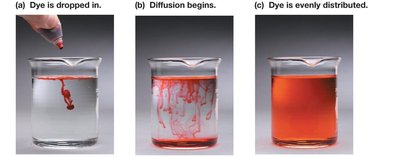
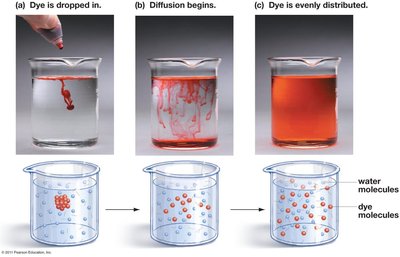
Diffusion is the passive movement of particles from an area of high concentration to an area of low concentration, driven by the concentration gradient, until equilibrium is reached. This process does not require cellular energy.
Simple Diffusion: Small, non-polar molecules (e.g., O2, CO2) move directly through the lipid bilayer.
Facilitated Diffusion: Larger or polar molecules (e.g., glucose, ions) move across the membrane via specific transport proteins (channels or carriers).
Osmosis
Osmosis is the diffusion of water molecules across a selectively permeable membrane from an area of higher water concentration (lower solute concentration) to an area of lower water concentration (higher solute concentration).
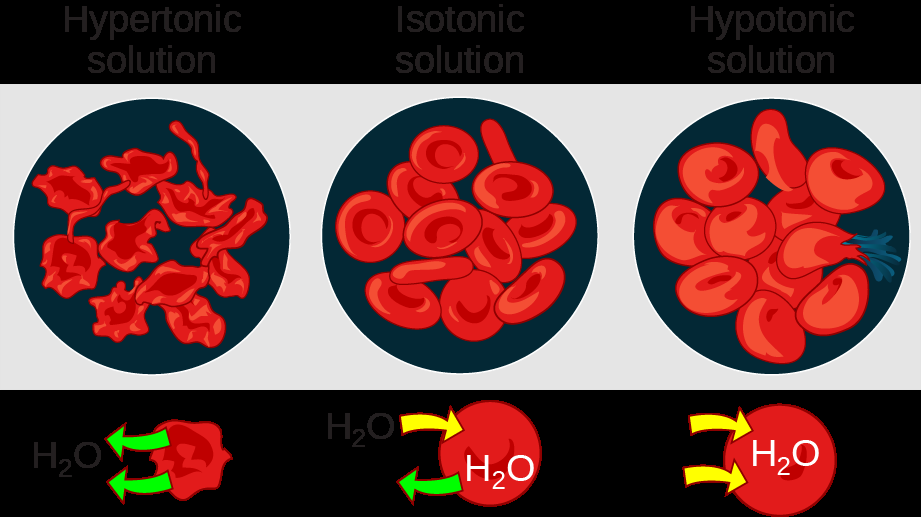
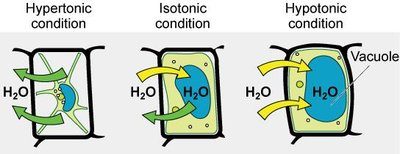
Isotonic Solution: Solute concentration is equal inside and outside the cell; water moves in and out at equal rates, and cell volume remains stable.
Hypotonic Solution: Lower solute concentration outside the cell; water enters the cell, causing it to swell or even burst (lyse).
Hypertonic Solution: Higher solute concentration outside the cell; water leaves the cell, causing it to shrink (crenate in animal cells, plasmolyze in plant cells).
Examples and Applications of Osmosis and Tonicity
Medical Application: Administering a hypotonic IV solution can cause water to enter red blood cells, leading to cell swelling and possible lysis. Therefore, IV fluids are typically isotonic to prevent harm.
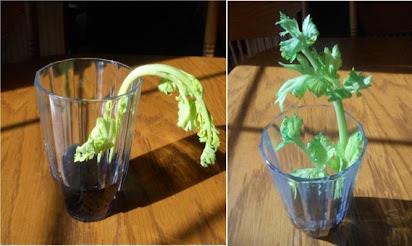
Agricultural Application: High soil salinity creates a hypertonic environment for plant roots, causing water to leave plant cells and resulting in wilting and reduced growth.


Membrane Transport Mechanisms
Passive Transport
Passive transport does not require cellular energy. Molecules move down their concentration gradient.
Simple Diffusion
Facilitated Diffusion
Osmosis
Facilitated Diffusion
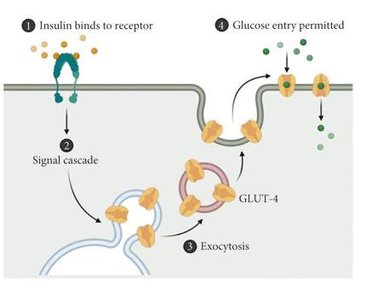
Transport proteins (channels or carriers) help specific substances diffuse across the membrane. For example, glucose enters cells via the GLUT-4 transporter, which is regulated by insulin.
Active Transport
Active transport requires energy (usually ATP) to move substances against their concentration gradient. This process is essential for maintaining concentration differences across membranes.
Protein Pumps: Such as the sodium-potassium (Na+/K+) pump, which maintains ion gradients in nerve cells.
Bulk Transport: Large substances are moved via endocytosis (into the cell) or exocytosis (out of the cell).
Glucose Transport and Diabetes
Insulin and Glucose Uptake
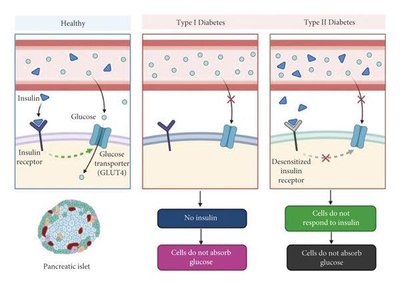
Insulin is a hormone that facilitates the uptake of glucose into cells by promoting the insertion of glucose transporters (GLUT-4) into the cell membrane. This process is crucial for maintaining blood glucose levels.
Diabetes Mellitus
Type 1 Diabetes: The pancreas does not produce insulin, so glucose cannot enter cells efficiently.
Type 2 Diabetes: Cells become resistant to insulin, or insulin receptors are desensitized, also preventing glucose uptake.
Summary Table: Types of Membrane Transport
Type of Transport | Energy Required? | Direction (Gradient) | Examples |
|---|---|---|---|
Simple Diffusion | No | Down | O2, CO2 |
Facilitated Diffusion | No | Down | Glucose, ions |
Osmosis | No | Down (water potential) | Water |
Active Transport | Yes (ATP) | Against | Na+/K+ pump |
Bulk Transport | Yes (ATP) | Varies | Endocytosis, Exocytosis |
Key Terms
Selective Permeability: Property of membranes that allows some substances to cross more easily than others.
Concentration Gradient: A difference in the concentration of a substance across a space.
Isotonic, Hypotonic, Hypertonic: Terms describing the relative solute concentrations of solutions separated by a membrane.
Transport Proteins: Proteins that assist in the movement of substances across the membrane.
ATP (Adenosine Triphosphate): The main energy currency of the cell, used in active transport.
