 Back
BackCell Membranes: Structure, Function, and Transport Mechanisms
Study Guide - Smart Notes
 Tailored notes based on your materials, expanded with key definitions, examples, and context.
Cell Membranes
Introduction to Cell Membranes
The cell membrane, also known as the plasma membrane, is a fundamental structure in all cellular life. It regulates the internal environment of the cell by controlling the movement of molecules, thus playing a critical role in cellular metabolism. The membrane's structure and composition are essential for its function as a selective barrier.
Metabolism: The controlled use of energy by cells to build, break apart, store, and release substances.
Fluid-Mosaic Model: Describes the membrane as a flexible, dynamic structure with various embedded molecules.
Basic Structure of the Plasma Membrane
The plasma membrane is composed of several classes of macromolecules, primarily phospholipids, proteins, sterols, and carbohydrates. Its semi-fluid nature allows for flexibility and adaptability.
Phospholipids: Amphipathic molecules with hydrophilic heads and hydrophobic tails, forming the bilayer.
Proteins: Integral and peripheral proteins perform various functions, including transport and signaling.
Sterols (Cholesterol): Regulate membrane fluidity and stability.
Carbohydrates: Contribute to cell specificity and tissue formation.
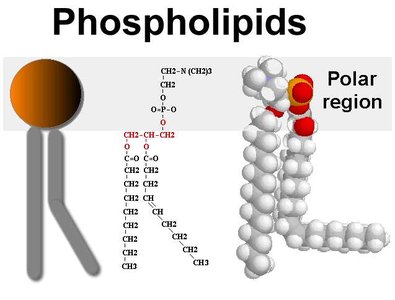
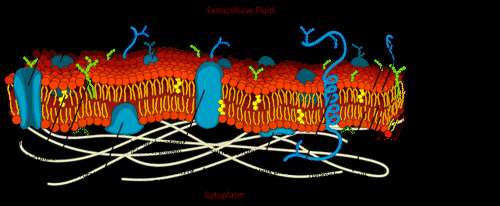
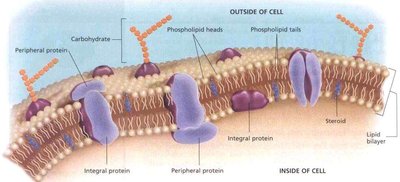
Fluid-Mosaic Model
The fluid-mosaic model illustrates the dynamic and heterogeneous nature of the plasma membrane. Phospholipids form a bilayer, while proteins, sterols, and carbohydrates are interspersed, creating a mosaic of functional components.
Fluidity: Maintained by unsaturated fatty acid tails and cholesterol.
Mosaic: Refers to the diverse array of proteins and other molecules embedded in the bilayer.
Semi-Permeable Nature of Cell Membranes
Cell membranes are selectively permeable, allowing certain molecules to pass while restricting others. This selectivity is crucial for maintaining cellular homeostasis.
Selective Permeability: Water and some gases move freely, while other solutes are regulated.
Regulation: Achieved through membrane proteins and other components.
Transport Across the Plasma Membrane
Passive Transport
Passive transport involves the movement of substances down their concentration gradient without the expenditure of cellular energy. It is essential for the exchange of gases, nutrients, and waste products.
Simple Diffusion: Movement of molecules (e.g., O2, CO2, small non-polar molecules) through the phospholipid bilayer.
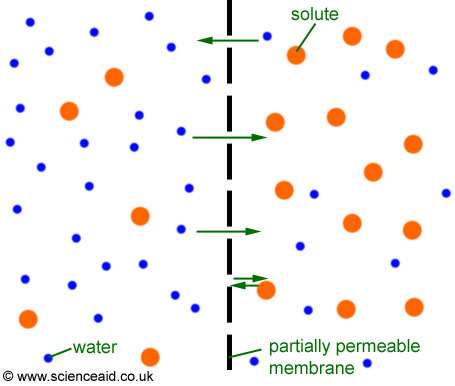
Osmosis: Diffusion of water across a selectively permeable membrane.
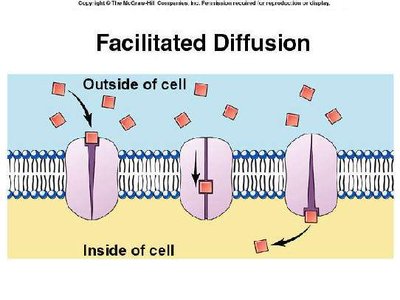
Facilitated Diffusion: Movement of molecules through integral proteins, such as aquaporins.
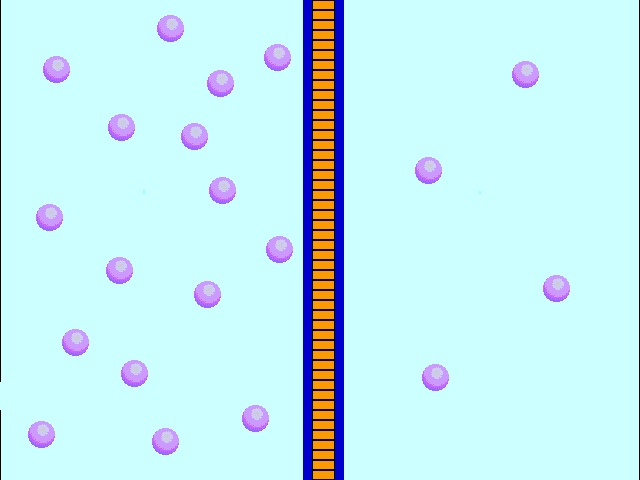
Key Terms in Diffusion and Osmosis
Solvent: The dissolving agent, often water.
Solute: The dissolved substance.
Diffusion: Movement from higher to lower concentration.
Osmosis: Diffusion of water across a membrane.
Osmoregulation: Control of water balance by cells.
Hypertonic Solution: Higher solute concentration outside the cell; water moves out.
Hypotonic Solution: Lower solute concentration outside the cell; water moves in.
Isotonic Solution: Equal solute concentration; water movement is balanced.
Tonicity
Tonicity refers to the osmotic pressure between two solutions separated by a semipermeable membrane. It determines the direction of water movement and affects cell volume.
Hypertonic: Water moves out of the cell, causing shrinkage.
Hypotonic: Water moves into the cell, causing swelling.
Isotonic: No net movement; cell volume remains stable.
Energy-Requiring Transport
Active transport mechanisms move substances against their concentration gradient, requiring energy input from ATP. These processes are vital for maintaining cellular concentrations of ions and other molecules.
Active Transport: Movement through proteins, against the gradient, using ATP.
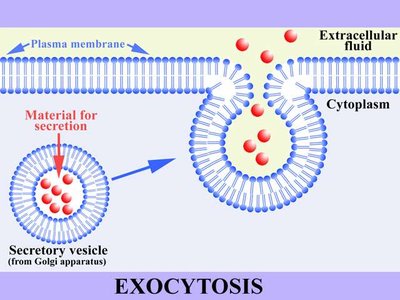
Exocytosis: Export of large molecules or groups via vesicles.
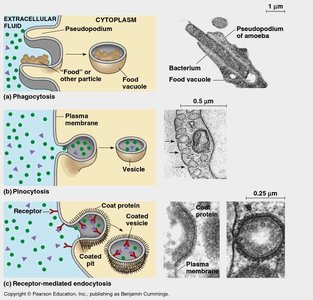
Endocytosis: Import of large molecules or groups via vesicles.
Types of Endocytosis
Pinocytosis: 'Cell drinking'; uptake of fluid molecules.
Phagocytosis: 'Cell eating'; engulfment of particles or microorganisms.
Receptor-Mediated Endocytosis: Selective uptake using binding receptors.
Membrane Proteins
Types of Membrane Proteins
Membrane proteins are essential for transport, signaling, cell adhesion, and recognition. They contribute to the functional diversity of the plasma membrane.
Transport Proteins/Channel Proteins: Provide hydrophilic channels for specific ions and molecules; facilitate both passive and active transport. Example: Hemoglobin (in red blood cells, for oxygen transport).
Receptor Site Proteins: Bind specific ligands (e.g., hormones, neurotransmitters) to trigger cellular responses.
Cell Adhesion/Junction Proteins: Work with carbohydrates to form glycoproteins, aiding tissue formation and cell communication.
Cell Recognition Proteins: Surface markers that distinguish species, individuals, and cell types; important in immune response and blood group determination.
Blood Groups and Cell Recognition
Cell recognition proteins explain the existence of human blood groups and organ rejection. Antigens on cell surfaces are recognized by the immune system, which produces antibodies against foreign antigens.
Antigens: Substances to which the immune system responds.
Antibodies: Proteins produced to target foreign antigens.
Summary Table: Types of Membrane Transport
Transport Type | Energy Required | Direction | Example |
|---|---|---|---|
Simple Diffusion | No | High to Low | O2, CO2 |
Osmosis | No | High to Low (water) | Water movement |
Facilitated Diffusion | No | High to Low | Glucose, ions |
Active Transport | Yes (ATP) | Low to High | Na+/K+ pump |
Exocytosis | Yes (ATP) | Out of cell | Secretion of hormones |
Endocytosis | Yes (ATP) | Into cell | Phagocytosis, pinocytosis |
Summary Table: Types of Membrane Proteins
Protein Type | Function | Example |
|---|---|---|
Transport/Channel | Move ions/molecules | Hemoglobin |
Receptor Site | Signal transduction | Hormone receptor |
Cell Adhesion/Junction | Tissue formation | Glycoprotein |
Cell Recognition | Immune response | Blood group antigen |
Key Equations
Diffusion Rate:
Osmotic Pressure:
Example: In a hypertonic solution, a cell will lose water and shrink due to osmosis.
Example: The Na+/K+ pump uses ATP to move sodium and potassium ions against their concentration gradients.
Additional info: The notes have been expanded to include academic context, definitions, and examples for clarity and completeness.
