 Back
BackTopic3 Cell Membranes: Structure, Function, and Transport Mechanisms
Study Guide - Smart Notes
 Tailored notes based on your materials, expanded with key definitions, examples, and context.
The Membrane
Introduction to Biological Membranes
Biological membranes are essential structures that define the boundaries of cells and organelles, regulate the movement of substances, and facilitate communication and signaling. The plasma membrane, in particular, is a dynamic and complex structure composed primarily of lipids and proteins, which together enable selective permeability and cellular homeostasis.
Membrane Structure: Lipids and Proteins
1. Membranes: Lipids and Proteins
The cell membrane is primarily composed of a phospholipid bilayer interspersed with proteins, cholesterol, and carbohydrates. This arrangement is described by the fluid mosaic model, which highlights the lateral mobility of components and the amphipathic nature of phospholipids.
Phospholipids: Amphipathic molecules with hydrophilic heads and hydrophobic tails, forming a bilayer that serves as a semi-permeable barrier.
Proteins: Integral and peripheral proteins are embedded within or associated with the lipid bilayer, performing various functions such as transport, signaling, and structural support.
Cholesterol: Modulates membrane fluidity and stability.
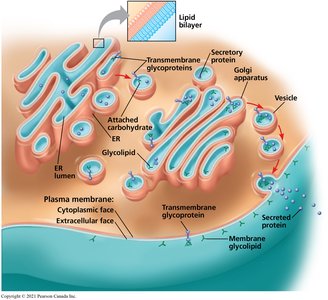
Carbohydrates: Attached to lipids (glycolipids) or proteins (glycoproteins), contributing to cell recognition and signaling.

Membrane Thickness and Domains
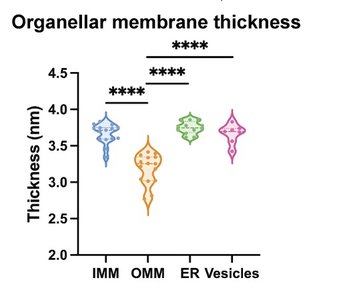
Membrane thickness can vary between organelles and even within subcompartments, influencing membrane function and protein localization.
Lipid Rafts and Ordered Domains
Lipid rafts are microdomains within the membrane enriched in cholesterol and sphingolipids, serving as platforms for signaling and protein sorting. The organization of these domains can be pharmacologically modulated, affecting protein function and cellular responses.
Membrane Sidedness and Protein Trafficking
Membranes exhibit sidedness, meaning that the composition of the cytoplasmic and extracellular faces differs. Glycoproteins and glycolipids are typically found on the extracellular side, playing roles in cell recognition and signaling.

Membrane Proteins: Structure and Mobility
Membrane proteins can move laterally within the bilayer unless anchored. Experiments with hybrid cells demonstrate the mixing of membrane proteins, supporting the fluid mosaic model.

Integral Membrane Proteins
Integral proteins often span the membrane with alpha-helical segments, possessing distinct extracellular and cytoplasmic domains.
Functions of Membrane Proteins
Membrane proteins perform diverse functions, including:
Transport: Channels and carriers facilitate the movement of substances across the membrane.
Enzymatic Activity: Some proteins catalyze reactions at the membrane surface.
Signal Transduction: Receptors transmit signals from the extracellular environment to the cell interior.
Cell-Cell Recognition: Glycoproteins serve as identification tags.
Intercellular Joining: Proteins form junctions between adjacent cells.
Attachment to Cytoskeleton and ECM: Provides structural support and maintains cell shape.

Medical Implications: HIV Resistance
Some individuals are resistant to HIV infection due to the absence of specific co-receptors (e.g., CCR5) on their cell membranes, preventing viral entry.

Selective Permeability of Membranes
2. Membranes: Selective Permeability
The plasma membrane is selectively permeable, allowing certain molecules to cross more easily than others. This property is essential for maintaining cellular homeostasis and responding to environmental changes.
Hydrophobic molecules (e.g., O2, CO2): Pass easily through the lipid bilayer.
Small polar molecules (e.g., H2O): Cross slowly or via specific channels.
Ions and large polar molecules: Require transport proteins to cross the membrane.

Transport Across Membranes
3. Passive Transport: Diffusion
Passive transport involves the movement of substances down their concentration gradients without the input of cellular energy. Diffusion is the spontaneous movement of molecules from regions of higher to lower concentration.
3. Passive Transport: Osmosis
Osmosis is the diffusion of water across a selectively permeable membrane. Water moves from areas of higher free water concentration to areas of lower free water concentration, often balancing solute concentrations on both sides of the membrane.

Summary Table: Types of Membrane Transport
Transport Type | Energy Required? | Direction | Example |
|---|---|---|---|
Passive Transport (Diffusion) | No | Down concentration gradient | O2, CO2 diffusion |
Facilitated Diffusion | No | Down concentration gradient | Glucose via carrier protein |
Active Transport | Yes (ATP) | Against concentration gradient | Na+/K+ pump |
Bulk Transport (Exo/Endocytosis) | Yes | Vesicle-mediated | Secretion of insulin, uptake of LDL |
Key Equations
Fick's Law of Diffusion:
Where J is the flux, D is the diffusion coefficient, and is the concentration gradient.
Conclusion
Cell membranes are dynamic structures essential for compartmentalization, selective transport, and communication. Their composition and organization enable a wide range of physiological processes, from nutrient uptake to immune defense and signal transduction.
