 Back
Lecture 5 Slides: Cell Membranes: Structure, Function, and Transport Mechanisms
Study Guide - Smart Notes
 Tailored notes based on your materials, expanded with key definitions, examples, and context.
Cell Membranes
Introduction to Cell Membranes
The cell membrane, also known as the plasma membrane, is a fundamental structure that defines the boundary of the cell and regulates the movement of substances into and out of the cell. Its unique structure allows it to maintain homeostasis and support cellular function.
Constraints on Cell Size
Surface Area to Volume Ratio
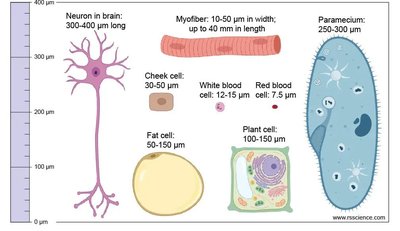
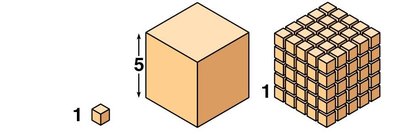
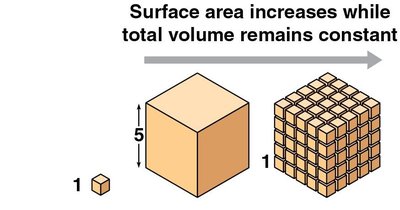
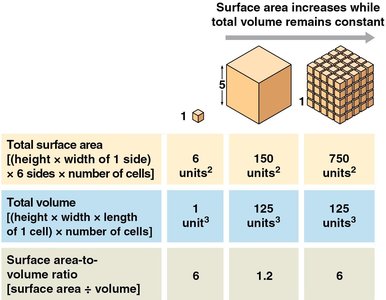
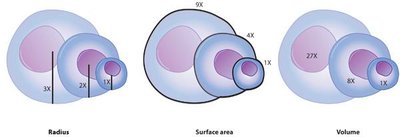
Cell size is limited by the relationship between surface area and volume. As a cell grows, its volume increases faster than its surface area, which restricts the rate at which materials can enter or leave the cell.
Surface Area: The total area available for exchange of materials.
Volume: The space inside the cell that requires nutrients and produces waste.
Limitation: If a cell becomes too large, it cannot efficiently exchange materials with its environment.
Mathematical Relationship: For a sphere or cube, as the radius or side length increases, surface area increases by the square of the dimension, while volume increases by the cube.
Equation:
Biological Implication: Cells remain small or adopt shapes that increase surface area (e.g., microvilli) to maximize exchange efficiency.
Structure of the Cell Membrane
The Fluid Mosaic Model
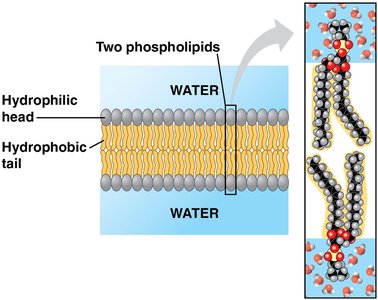
The cell membrane is described by the fluid mosaic model, which depicts the membrane as a dynamic and flexible structure composed of a phospholipid bilayer with embedded proteins, cholesterol, and carbohydrates.
Phospholipids: Amphipathic molecules with hydrophilic heads and hydrophobic tails, forming a bilayer.
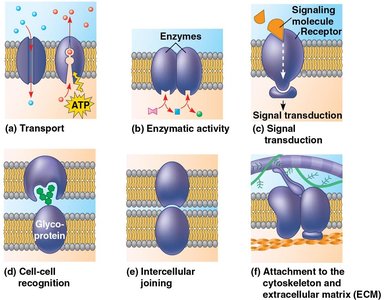
Proteins: Integral and peripheral proteins serve various functions such as transport, signaling, and structural support.
Cholesterol: Modulates membrane fluidity and stability.
Carbohydrates: Attached to proteins and lipids on the extracellular surface, involved in cell recognition.

Membrane Fluidity
Factors Influencing Membrane Fluidity
Membrane fluidity is essential for proper membrane function and is influenced by several factors:
Fatty Acid Composition: Unsaturated hydrocarbon tails increase fluidity, while saturated tails make the membrane more rigid.
Cholesterol Content: Acts as a fluidity buffer, preventing membranes from becoming too rigid or too fluid.
Temperature: Higher temperatures increase fluidity; lower temperatures decrease it.
Species Adaptation: Organisms living in extreme environments have unique membrane compositions to maintain optimal fluidity.
Transport Across the Cell Membrane
Overview of Transport Mechanisms
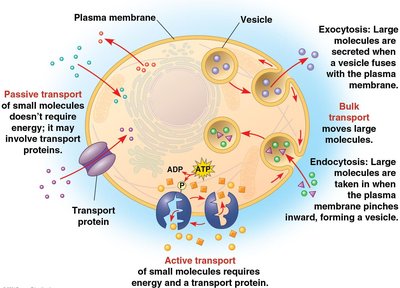
The cell membrane regulates the movement of substances through several mechanisms, classified as passive or active transport, and bulk transport for large molecules.
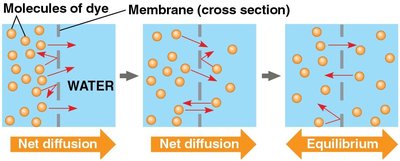
Passive Transport: Movement of molecules down their concentration gradient without energy input.
Active Transport: Movement of molecules against their concentration gradient, requiring energy (usually ATP).
Bulk Transport: Movement of large particles via endocytosis and exocytosis.
Passive Transport
Passive transport includes simple diffusion, facilitated diffusion, and osmosis.
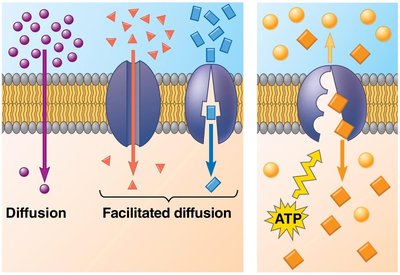
Simple Diffusion: Movement of small, nonpolar molecules (e.g., O2, CO2) directly through the lipid bilayer.
Facilitated Diffusion: Movement of polar or charged molecules via channel or carrier proteins.
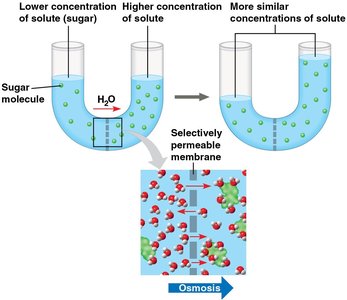
Osmosis: Diffusion of water across a selectively permeable membrane.
Facilitated Diffusion
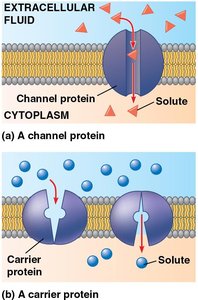
Facilitated diffusion uses membrane proteins to transport substances that cannot diffuse freely through the lipid bilayer.
Channel Proteins: Provide hydrophilic tunnels for specific molecules or ions (e.g., aquaporins for water).
Carrier Proteins: Bind to molecules and change shape to shuttle them across the membrane.
Osmosis and Water Balance
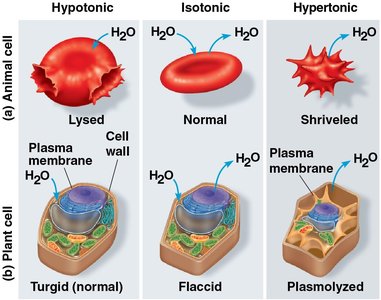
Osmosis is the movement of water from areas of low solute concentration to high solute concentration. Maintaining water balance is critical for cell survival, especially in cells without walls.
Hypotonic Solution: Lower solute concentration outside; water enters the cell, which may burst (lyse).
Isotonic Solution: Equal solute concentration; no net water movement.
Hypertonic Solution: Higher solute concentration outside; water leaves the cell, causing it to shrink.
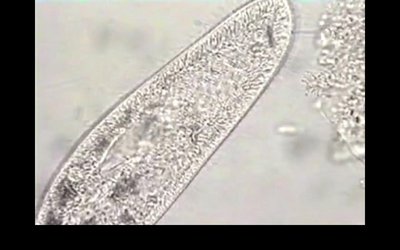
Adaptations: Contractile vacuoles in protists like Paramecium pump out excess water.
Active Transport
Active transport moves substances against their concentration gradients, requiring energy input, usually from ATP.
Carrier Proteins: Such as the sodium-potassium (Na+-K+) pump, which maintains membrane potential in animal cells.
Membrane Potential: The voltage difference across a membrane, created by ion pumps.
Electrochemical Gradient: Combination of concentration gradient (chemical force) and membrane potential (electrical force).
Example Equation:
Bulk Transport: Endocytosis and Exocytosis
Bulk transport moves large molecules or particles across the membrane via vesicles.
Endocytosis: The cell engulfs material, forming a vesicle (e.g., phagocytosis for food particles).
Exocytosis: Vesicles fuse with the plasma membrane to release contents outside the cell.
Pinocytosis: Uptake of extracellular fluid and dissolved solutes.
Summary Table: Types of Membrane Transport
Type | Energy Required? | Direction | Example |
|---|---|---|---|
Simple Diffusion | No | Down gradient | O2, CO2 |
Facilitated Diffusion | No | Down gradient | Glucose, ions via channels |
Osmosis | No | Down water potential | Water |
Active Transport | Yes (ATP) | Against gradient | Na+/K+ pump |
Bulk Transport | Yes | In or out | Endocytosis, exocytosis |
Conclusion
The cell membrane is a dynamic structure essential for maintaining cellular integrity and function. Its selective permeability and various transport mechanisms enable cells to regulate their internal environment, communicate, and interact with their surroundings.
