 Back
BackCell Signaling, Cell Cycle, and Patterns of Inheritance
Study Guide - Smart Notes
 Tailored notes based on your materials, expanded with key definitions, examples, and context.
Cell Signaling
Overview of Cell Signaling
Cell signaling is the process by which cells communicate with each other to coordinate their activities. This process involves the reception of signals, transduction of the signal through the cell, and a final cellular response. Cell signaling is essential for growth, development, and homeostasis in multicellular organisms.
Reception: The target cell detects a signaling molecule (ligand) that binds to a receptor protein on the cell surface or inside the cell.
Transduction: The binding of the ligand changes the receptor in some way, initiating a signal transduction pathway, often involving phosphorylation cascades.
Response: The transduced signal triggers a specific cellular response, such as gene expression, cell movement, or metabolic changes.
Types of Receptors
Receptor Tyrosine Kinases (RTKs): Membrane receptors that dimerize and autophosphorylate upon ligand binding, activating downstream signaling pathways. Essential for cell proliferation and growth.
G-Protein Coupled Receptors (GPCRs): Membrane receptors that activate G-proteins, which then activate or inhibit other proteins such as enzymes or ion channels. Involved in many physiological processes; targets for many pharmaceuticals.
Ion-Gated Channels: Ligand binding opens or closes ion channels, leading to changes in membrane potential. Important in muscle and nervous system function.
Intracellular Receptors: Found inside the cell (cytoplasm or nucleus); bind steroid hormones and act as transcription factors to regulate gene expression directly.
Example: Quorum Sensing in Bacteria
Bacteria use signaling molecules (autoinducers) to sense population density. When a critical concentration is reached, bacteria coordinate behaviors such as biofilm formation or bioluminescence. Disrupting this communication is a novel approach to fighting antibiotic resistance.
The Cell Cycle and Cell Division
Phases of the Cell Cycle
The cell cycle is the series of events that cells go through as they grow and divide. It consists of interphase (G1, S, G2) and the mitotic phase (mitosis and cytokinesis).
G1 Phase: Cell growth and preparation for DNA replication.
S Phase: DNA synthesis; chromosomes are replicated.
G2 Phase: Final preparations for cell division.
Mitosis: Division of the nucleus, followed by cytokinesis (division of the cytoplasm), resulting in two genetically identical diploid cells.
Checkpoints and Regulation
Checkpoints: Control points where the cell cycle can be halted if conditions are not favorable (e.g., DNA damage, incomplete replication).
Cyclin-Dependent Kinases (CDKs): Enzymes that regulate the cell cycle by phosphorylating target proteins; activity is controlled by cyclins.
Maturation Promoting Factor (MPF): A complex of cyclin and CDK that triggers the cell's entry into mitosis.
Genetic Disorders from Cell Division Errors
Nondisjunction: Failure of chromosomes to separate properly during meiosis, leading to disorders such as Down syndrome (trisomy 21), Edward's syndrome (trisomy 18), Turner's syndrome (XO), and Klinefelter syndrome (XXY).
Meiosis and Sexual Life Cycles
Phases of Meiosis
Meiosis is the process by which diploid cells divide to produce four haploid gametes (sperm or egg cells), introducing genetic variation.
Meiosis I: Homologous chromosomes separate, reducing chromosome number by half.
Meiosis II: Sister chromatids separate, similar to mitosis.
Genetic Variation: Achieved through independent assortment, crossing over (chiasmata), and random fertilization.
Mendelian Genetics and Patterns of Inheritance
Basic Principles
Gene: A heritable unit that determines a character.
Allele: Alternative versions of a gene.
Dominant/Recessive: Dominant alleles mask the effect of recessive alleles.
Homozygous: Two identical alleles for a gene.
Heterozygous: Two different alleles for a gene.
Law of Segregation: Each gamete receives only one allele of each gene.
Law of Independent Assortment: Genes for different traits assort independently during gamete formation.
Probability in Genetics
Addition Rule: Probability of either of two mutually exclusive events occurring is the sum of their probabilities.
Multiplication Rule: Probability of two independent events occurring together is the product of their probabilities.
Complex Patterns of Inheritance
Incomplete Dominance: Heterozygotes show a blend of parental traits.
Codominance: Both alleles are fully expressed in heterozygotes.
Epistasis: One gene affects the expression of another gene.
Polygenic Inheritance: Multiple genes influence a single phenotype (e.g., height, skin color).
Multifactorial Inheritance: Traits influenced by both genetic and environmental factors.
Pedigrees and Human Genetics
Pedigree: Diagram showing inheritance of traits across generations.
Autosomal Recessive: Two recessive alleles needed to express the trait; can skip generations.
Autosomal Dominant: Only one dominant allele needed; usually does not skip generations.
X-linked Recessive: More common in males; females are carriers if heterozygous.
X-linked Dominant: Affected fathers pass the trait to all daughters; affected mothers pass to 50% of children.
Barr Body and X-Inactivation
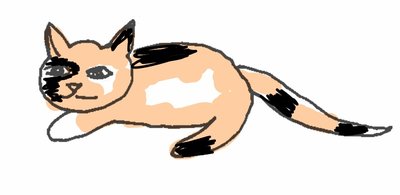
Barr Body: Inactivated X chromosome in female cells; leads to mosaic expression of X-linked genes (e.g., calico cats).
Genetic Testing
Amniocentesis: Sampling amniotic fluid to test for genetic disorders.
Chorionic Villus Sampling: Sampling placental tissue for genetic testing.
Key Terms and Definitions
Nondisjunction: Failure of chromosomes to separate during meiosis.
Wild Type: Most common phenotype in a population.
Sex-linked Genes: Genes located on sex chromosomes (X or Y).
Inheritance Pattern | Key Features | Example |
|---|---|---|
Autosomal Recessive | Trait appears only when two recessive alleles are present; can skip generations | Cystic fibrosis |
Autosomal Dominant | Trait appears with one dominant allele; usually seen in every generation | Huntington's disease |
X-linked Recessive | More common in males; females are carriers | Color blindness, hemophilia |
X-linked Dominant | Affected fathers pass trait to all daughters | Rett syndrome |
Additional info: The image of the calico cat is used to illustrate X-inactivation and mosaicism, a classic example in genetics where female cats heterozygous for fur color genes on the X chromosome display patches of different colors due to random inactivation of one X chromosome in each cell.
