 Back
BackCell Signaling, Cell Cycle Regulation, Development, and Stem Cells
Study Guide - Smart Notes
 Tailored notes based on your materials, expanded with key definitions, examples, and context.
Cell-to-Cell Signaling in Animals
Overview of Chemical Signals
Animals use chemical signals to coordinate the activities of cells throughout the body. These signals, even at extremely low concentrations, can have profound effects on target cells. Chemical signals are often long-lasting compared to electrical signals and are essential for processes such as respiration, metabolism, reproduction, and growth.
Autocrine signals: Act on the same cell that secretes them (e.g., cytokines).
Paracrine signals: Diffuse locally and act on nearby cells.
Endocrine signals: Hormones carried between cells by blood or other body fluids; produced by glands.
Neural signals (neurotransmitters): Diffuse a short distance between neurons.
Neuroendocrine signals (neurohormones): Hormones released from neurons into the blood, acting on distant cells.
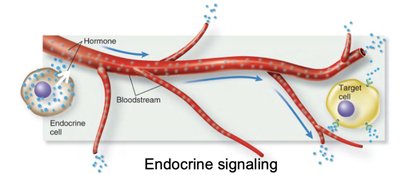
The Endocrine System
The endocrine system is a group of organs and cells (glands) that produce and secrete chemical signals into the bloodstream, enabling long-distance communication within the body. Endocrine signaling is crucial for maintaining homeostasis and regulating physiological functions.
Hormone Signaling Pathways
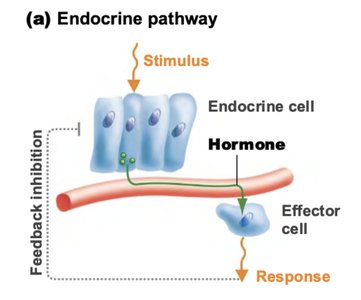
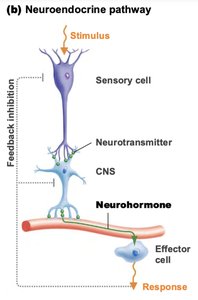
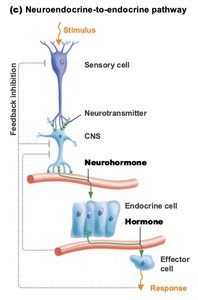
There are three major hormone signaling pathways, all regulated by negative feedback to maintain homeostasis:
Endocrine pathway: Endocrine cells release hormones in response to stimuli, which travel through the bloodstream to effector cells. The response feeds back to inhibit further hormone production.
Neuroendocrine pathway: Sensory cells release neurotransmitters that stimulate neurons to release neurohormones into the blood, affecting distant effector cells. Feedback inhibition regulates the pathway.
Neuroendocrine-to-endocrine pathway: Neurohormones stimulate endocrine cells to release hormones, adding a third layer of regulation. The hormonal signal inhibits neurohormone production via feedback.
Chemical Classes of Hormones
Hormones are classified into three main chemical classes:
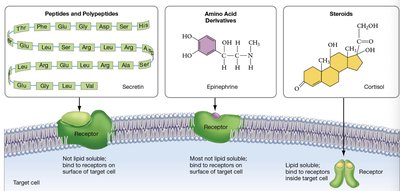
Peptides and polypeptides: Chains of amino acids (e.g., secretin).
Amino acid derivatives: Modified amino acids (e.g., epinephrine).
Steroids: Lipids with a four-ring structure (e.g., cortisol).
Both animals and plants utilize all these hormone types. The solubility of the hormone determines its mechanism of action and receptor location.
Cell Signaling and Signal Transduction
Four Steps of Cell Signaling
Cell signaling involves a series of steps that allow cells to respond to external and internal signals:
Signal reception: Ligands (e.g., steroid hormones, protein hormones) bind to specific receptors, causing a conformational change. Receptors may be intracellular (for lipid-soluble signals) or on the cell surface (for lipid-insoluble signals).
Signal processing (transduction): The signal is relayed and often amplified inside the cell. Lipid-soluble signals typically alter gene expression directly, while lipid-insoluble signals activate signal transduction cascades involving second messengers or protein kinases.
Signal response: The cell responds by changing gene expression or activating/deactivating proteins.
Signal deactivation: Mechanisms such as phosphatases turn off the signal, allowing the cell to remain sensitive to new signals.
Signal Transduction Pathways
There are several types of cell surface receptors involved in signal transduction:
Enzyme-linked receptors: Directly catalyze reactions inside the cell (e.g., receptor tyrosine kinases, RTKs).
G protein-coupled receptors (GPCRs): Activate G proteins, which then trigger the production of second messengers and protein kinase cascades.
Ligand-gated ion channels: Open or close in response to ligand binding, altering ion flow across the membrane.
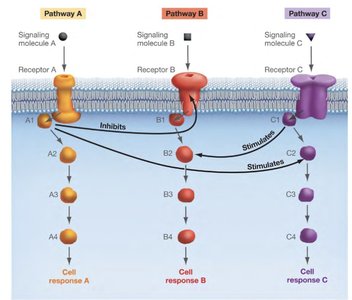
Signal transduction pathways can interact, forming complex networks that integrate multiple signals (cross-talk).
Cell Cycle and Its Regulation
Overview of the Cell Cycle
The cell cycle is the series of events that cells go through as they grow and divide. It consists of interphase (G1, S, G2 phases) and the M phase (mitosis and cytokinesis). Proper regulation ensures accurate DNA replication and division.
Cell Cycle Checkpoints
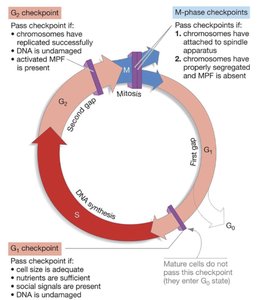
Checkpoints are critical control points where the cell assesses whether to proceed with division:
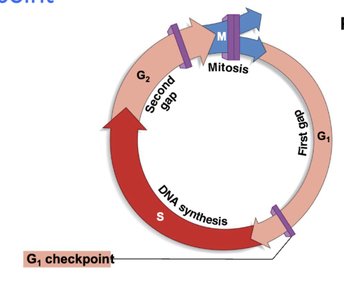
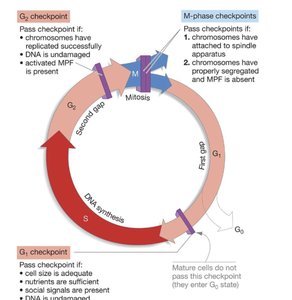
G1 checkpoint: Checks for adequate cell size, sufficient nutrients, presence of growth signals, and undamaged DNA.
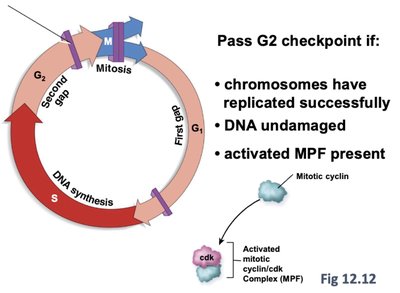
G2 checkpoint: Ensures DNA has replicated successfully, is undamaged, and that mitosis-promoting factor (MPF) is present.
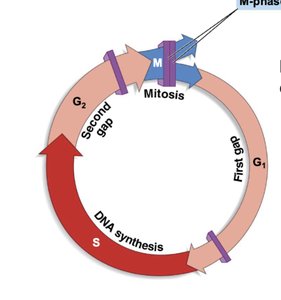
M-phase checkpoint: Verifies that chromosomes are properly attached to the spindle and segregated.
Regulation by Cyclins and Cdks
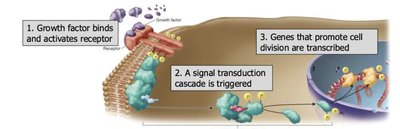
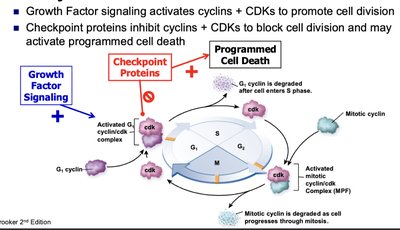
Cyclins and cyclin-dependent kinases (Cdks) are key regulators of the cell cycle. Cyclins are proteins whose levels fluctuate during the cell cycle, while Cdks are enzymes that, when bound to cyclins, phosphorylate target proteins to advance the cell cycle. Checkpoint proteins can inhibit cyclin-Cdk complexes to halt the cycle or trigger programmed cell death (apoptosis).
Role of p53 in Cell Cycle Control
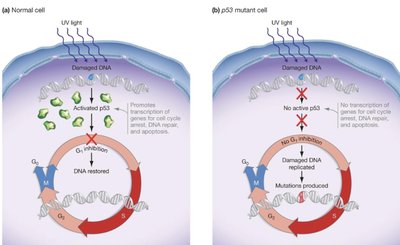
The p53 protein is a tumor suppressor that halts the cell cycle in response to DNA damage, allowing for repair or triggering apoptosis. Mutations in the p53 gene are associated with many cancers, as they lead to uncontrolled cell division.
Cancer: Out-of-Control Cell Division
Properties and Types of Cancer
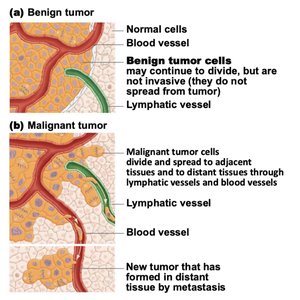
Cancer is a group of diseases characterized by uncontrolled cell division, invasion of nearby tissues, and the potential to spread (metastasize) to distant sites. Tumors can be:
Benign: Noncancerous and noninvasive.
Malignant: Cancerous, invasive, and capable of metastasis.
Genetic Basis of Cancer
Cancer arises from mutations in genes that regulate the cell cycle:
Oncogenes: Mutated proto-oncogenes that drive cell growth and division (gain-of-function mutations).
Tumor suppressor genes: Normally inhibit cell division; loss-of-function mutations lead to uncontrolled growth.
Key behaviors of cancer cells include evading apoptosis, avoiding differentiation, and having unstable genomes.
Development, Differentiation, and Stem Cells
Somatic vs. Germline Cell Lineages
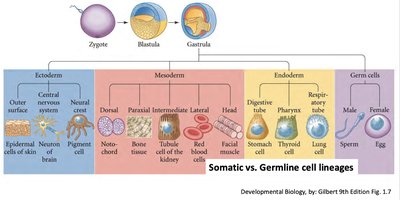
During development, cells differentiate into various lineages, including somatic (body) cells and germline (reproductive) cells. The three primary germ layers—ectoderm, mesoderm, and endoderm—give rise to all tissues and organs.
Stem Cells: Types and Properties
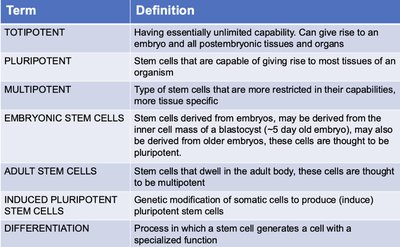
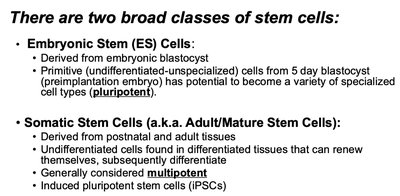
Stem cells are undifferentiated cells with the ability to self-renew and differentiate into specialized cell types. They are classified by their potency:
Term | Definition |
|---|---|
Totipotent | Can give rise to all cell types, including embryo and extraembryonic tissues |
Pluripotent | Can give rise to most tissues of an organism |
Multipotent | Can give rise to a limited range of cell types |
Embryonic Stem Cells | Derived from early embryos; pluripotent |
Adult Stem Cells | Found in adult tissues; typically multipotent |
Induced Pluripotent Stem Cells | Somatic cells reprogrammed to pluripotency |
Differentiation | Process by which a stem cell generates a specialized cell |
Embryonic Stem Cells and Blastocyst Structure
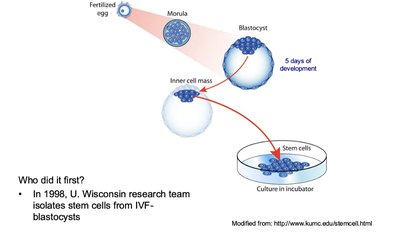
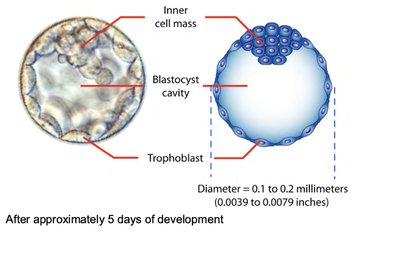
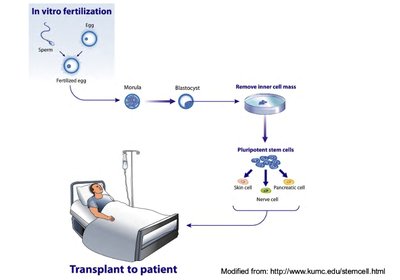
Embryonic stem cells are derived from the inner cell mass of the blastocyst, a structure formed about five days after fertilization. These cells are pluripotent and can give rise to all cell types in the body.
Stem Cell Applications and Sources
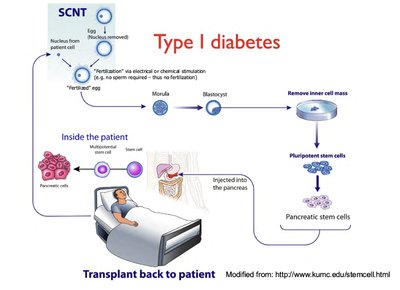
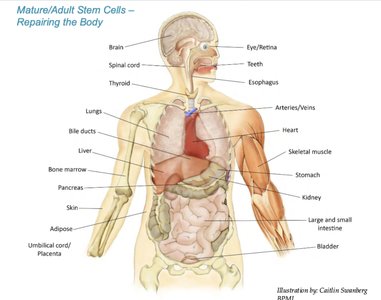
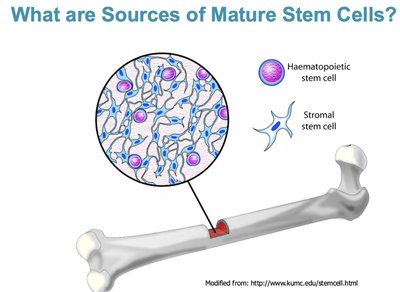
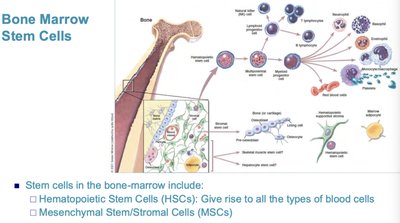
Stem cells can be used for regenerative medicine, such as treating diseases by generating healthy tissues. Sources include surplus embryos from IVF, somatic cell nuclear transfer (therapeutic cloning), and adult tissues (e.g., bone marrow).
Regulation of Development: Hox Genes and Morphogens
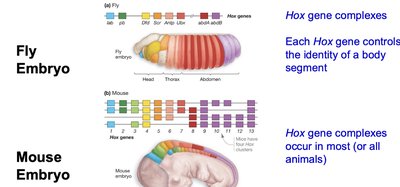
Hox genes are master regulators of development, controlling the identity of body segments in animals. Their order on the chromosome corresponds to their expression pattern along the anterior-posterior axis. Morphogens, such as auxin in plants, provide positional information during development.
Gametogenesis and Fertilization
Gametogenesis is the process by which gametes (sperm and eggs) are produced via mitotic and meiotic divisions. Spermatogenesis in males results in four sperm cells from each primary spermatocyte, while oogenesis in females produces one egg cell from each primary oocyte.
Additional info: These notes integrate foundational concepts from cell signaling, cell cycle regulation, cancer biology, developmental biology, and stem cell biology, providing a comprehensive overview suitable for college-level biology students.
