 Back
BackCell Signaling: Mechanisms and Biological Importance
Study Guide - Smart Notes
 Tailored notes based on your materials, expanded with key definitions, examples, and context.
Cell Signaling: Overview
Introduction to Cell Signaling
Cell signaling is a fundamental process by which cells communicate with each other to coordinate responses, maintain homeostasis, and regulate development. Defects in signaling pathways can lead to diseases such as diabetes and cancer.
Cellular signaling controls nerve impulses, learning, memory, wound healing, hormonal responses, and immune system movement.
Problems in cell signaling regulation can result in disease or death.
Example: Insulin Signaling and Diabetes
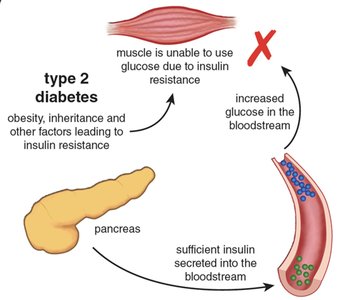
Insulin is a hormone produced by the pancreas in response to high blood sugar. It signals muscle cells to take up glucose from the blood. In diabetes, this signaling pathway is defective, leading to impaired glucose uptake and energy deficiency.
Type 1 diabetes: Pancreas does not produce insulin.
Type 2 diabetes: Cells develop insulin resistance.
Stages of Cell Signaling
The Three Stages
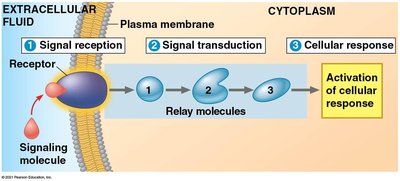
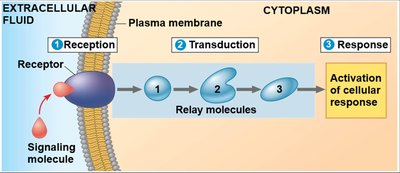
Cell signaling involves three main stages: reception, transduction, and response. Each stage is essential for the cell to detect and react to external signals.
Reception: The cell detects a signaling molecule (ligand) that binds to a receptor protein.
Transduction: The receptor undergoes a conformational change, initiating a signal transduction pathway, often involving multiple steps.
Response: The transduced signal triggers a specific cellular response, such as gene activation or metabolic changes.
Types of Signals and Signaling Molecules
Signal Molecules
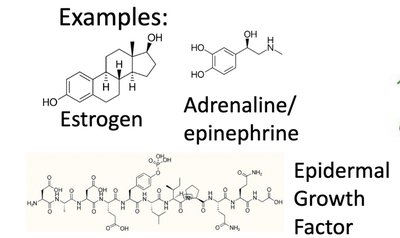
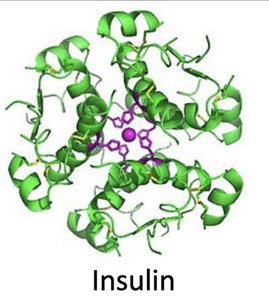
Cells use a variety of molecules as signals, including proteins, steroids, and small molecules. The chemical nature of the signal determines how it interacts with the cell.
Proteins: e.g., insulin, epidermal growth factor
Steroids: e.g., estrogen, testosterone
Small molecules: e.g., epinephrine (adrenaline)
Modes of Cell Communication
Local Signaling
Local signaling occurs between adjacent cells or over short distances. It includes direct contact and the release of signaling molecules that affect nearby cells.
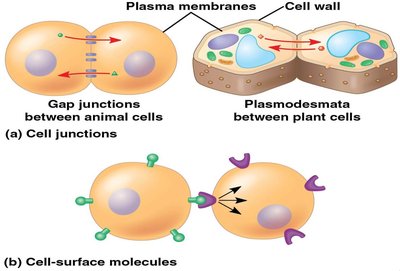
Cell junctions: Gap junctions in animals, plasmodesmata in plants allow direct cytoplasmic exchange.
Cell-surface molecules: Enable cell-cell recognition.
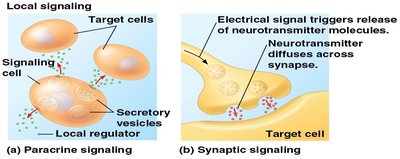
Paracrine signaling: Secreted molecules affect nearby target cells.
Synaptic signaling: Neurotransmitters diffuse across synapses to target cells.
Long-Distance Signaling
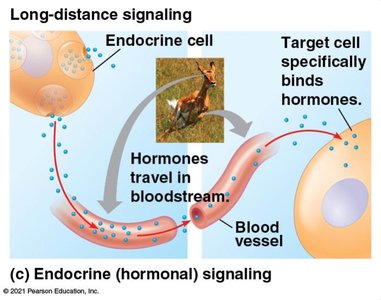
Long-distance signaling involves hormones traveling through the bloodstream to reach target cells. Only cells with the appropriate receptor can respond.
Endocrine signaling: Hormones are released by specialized cells and travel via the circulatory system.
Signal Reception: Receptors and Their Locations
Membrane Receptors
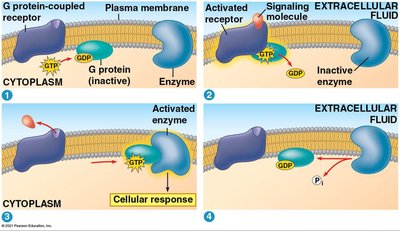
Most signal receptors are located in the plasma membrane and interact with hydrophilic (water-soluble) signals that cannot cross the membrane.
G protein-coupled receptors (GPCRs): Transmembrane proteins that activate G proteins inside the cell.
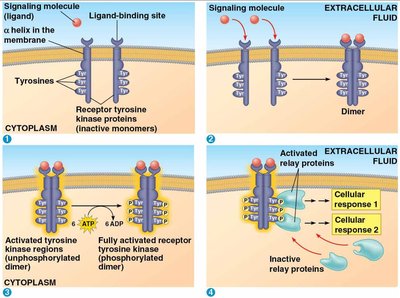
Receptor tyrosine kinases (RTKs): Membrane receptors that catalyze the transfer of phosphate groups from ATP to proteins, often forming dimers.
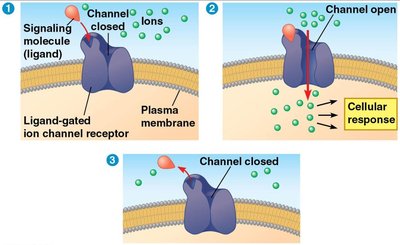
Ion channel receptors: Ligand-gated channels that open or close in response to signal binding, allowing ions to pass through.
Intracellular Receptors
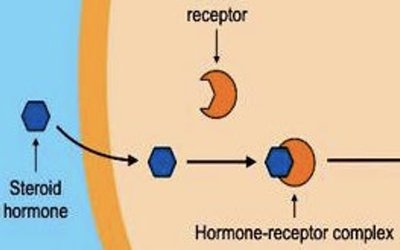
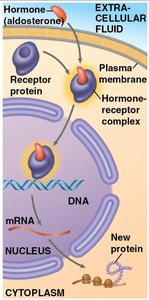
Some receptors are located in the cytoplasm or nucleus and interact with small or hydrophobic signals that can cross the membrane, such as steroid and thyroid hormones.
Activated hormone-receptor complexes can act as transcription factors, regulating gene expression.
Signal Transduction: Pathways and Mechanisms
Transduction Pathways
Signal transduction involves relay molecules that transmit the signal from the receptor to target molecules inside the cell. Multistep pathways can amplify the signal and provide opportunities for regulation.
Phosphorylation cascade: Sequential activation of proteins by phosphorylation, often mediated by protein kinases.
Second messengers: Small, nonprotein, water-soluble molecules or ions (e.g., cyclic AMP, calcium ions) that diffuse through the cell and amplify the signal.
Phosphorylation and Dephosphorylation
Protein kinases transfer phosphate groups from ATP to proteins (phosphorylation), while protein phosphatases remove them (dephosphorylation). This acts as a molecular switch to regulate protein activity.
Phosphorylation:
Dephosphorylation:
Cellular Response
Types of Responses
The final outcome of cell signaling can be regulation of gene expression in the nucleus or changes in cytoplasmic activities, such as enzyme activation or ion channel opening.
Nuclear response: Activation of transcription factors, leading to gene expression changes.
Cytoplasmic response: Alteration of protein activity, metabolic changes, or ion channel regulation.
Regulation of Cell Signaling
Amplification, Specificity, Efficiency, and Termination
Cell signaling is tightly regulated to ensure appropriate responses. Key aspects include amplification, specificity, efficiency, and termination.
Amplification: Enzyme cascades increase the magnitude of the response.
Specificity: Different cell types have unique protein collections, allowing distinct responses to the same signal.
Efficiency: Scaffolding proteins organize relay molecules to enhance signal transduction.
Termination: Inactivation mechanisms ensure signals are not perpetuated indefinitely.
Case Study: Insulin Signaling Pathway
Mechanism and Disease Implications
The insulin receptor is a receptor tyrosine kinase. Upon insulin binding, it triggers a cascade leading to glucose transporter (GLUT4) fusion with the membrane, allowing glucose uptake. Defects in this pathway result in high blood sugar and metabolic complications.
Short-term response: GLUT4 vesicle fusion and glucose uptake.
Long-term response: Transcriptional changes affecting metabolism.
Diabetes: Lack of insulin or insulin resistance impairs glucose uptake, leading to fatigue and metabolic imbalance.
Summary Table: Types of Cell Signaling
Type | Distance | Signal Molecule | Receptor Location | Example |
|---|---|---|---|---|
Direct Contact | Adjacent cells | Membrane-bound | Plasma membrane | Immune cell recognition |
Paracrine | Short | Local regulators | Plasma membrane | Growth factors |
Synaptic | Short | Neurotransmitters | Plasma membrane | Nerve signaling |
Endocrine | Long | Hormones | Plasma membrane or cytoplasm | Insulin signaling |
Key Terms
Ligand: A molecule that binds to a receptor to initiate signaling.
Receptor: A protein that detects and binds to signaling molecules.
Second messenger: Small molecules that relay signals inside the cell.
Phosphorylation: Addition of a phosphate group to a protein, often regulating its activity.
Transcription factor: A protein that regulates gene expression.
Additional info:
Cell signaling is covered in detail in Chapter 11 of most introductory biology textbooks.
Understanding signaling pathways is essential for studying physiology, development, and disease mechanisms.
