Back
Cell Structure and Function: A Mini-Textbook Study Guide
Study Guide - Smart Notes
 Tailored notes based on your materials, expanded with key definitions, examples, and context.
Cellular Structure
Importance of Small Cell Size
Cell size is a critical factor in cellular function, affecting energy requirements, waste production, and material transport. Smaller cells are more efficient due to their higher surface area-to-volume ratio, which facilitates faster exchange of materials with the environment.
Require less energy: Smaller cells need less energy to maintain their functions.
Produce less waste: Reduced metabolic activity leads to less waste production.
Efficient transport: Shorter distances for material transport within the cell.
DNA regulation: Sufficient DNA to control cell functions.
Surface Area-to-Volume Ratio: The ratio is higher in smaller cells, allowing for more efficient nutrient uptake and waste removal.
Total Volume | Total Surface Area | Surface-to-Volume Ratio |
|---|---|---|
27 units3 | 54 units2 | 2 |
27 units3 | 162 units2 | 6 |
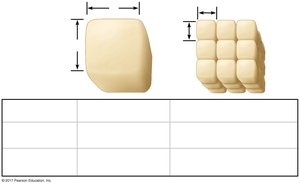
Example: A group of small cubes has a greater surface area relative to volume than a single large cube of the same total volume.
Cell Membrane Structure
Phospholipid Bilayer and Membrane Proteins
The cell membrane is composed of a phospholipid bilayer with embedded proteins. This structure separates the internal environment from the external environment and regulates the movement of substances.
Phospholipids: Have hydrophilic heads and hydrophobic tails, forming a bilayer.
Proteins: Channel proteins facilitate transport; other proteins have hydrophilic and hydrophobic regions.
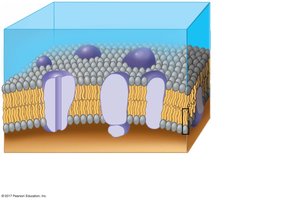
Example: Channel proteins allow ions and molecules to pass through the membrane.
Prokaryotic vs. Eukaryotic Cells
Basic Cell Components
All cells share certain features: plasma membrane, DNA, ribosomes, and cytosol. However, prokaryotic and eukaryotic cells differ in complexity and structure.
Prokaryotic cells: Bacteria and archaea; lack a nucleus and membrane-bound organelles; smaller and simpler.
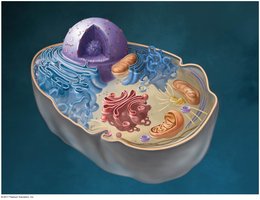
Eukaryotic cells: All other life forms; have a membrane-enclosed nucleus and organelles.
Eukaryotic Cell Structure
Functional Compartmentalization
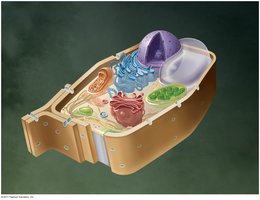
Eukaryotic cells are organized into compartments, each with specialized functions. This compartmentalization increases efficiency and allows for complex cellular processes.
Nucleus and ribosomes: Genetic control.
Endoplasmic reticulum, Golgi apparatus, lysosomes, vacuoles, peroxisomes: Manufacture, distribution, and breakdown of molecules.
Mitochondria and chloroplasts: Energy processing.
Cytoskeleton, plasma membrane, cell wall: Structural support, movement, and communication.
The Nucleus and Ribosomes
Nucleus: Genetic Control Center
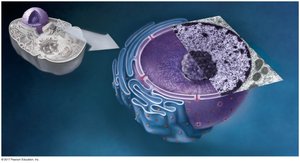
The nucleus contains the cell's DNA and directs protein synthesis via messenger RNA (mRNA). The nucleolus within the nucleus assembles ribosome subunits.
DNA: Genetic instructions for cell function.
Nucleolus: Ribosome assembly.
Ribosomes: Protein Synthesis
Ribosomes are composed of ribosomal RNA and proteins. They synthesize proteins according to instructions from DNA. Cells with high protein production have many ribosomes.
Free ribosomes: Synthesize proteins for use within the cell.
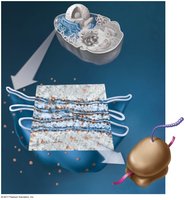
Bound ribosomes: Attached to the endoplasmic reticulum; synthesize proteins for export or membrane insertion.
The Endomembrane System
Interconnected Organelles
The endomembrane system includes organelles that interact in the synthesis, distribution, storage, and export of molecules. These organelles are structurally and functionally connected.
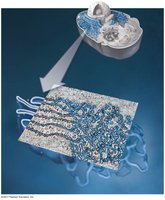
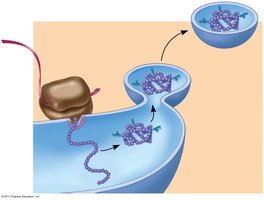
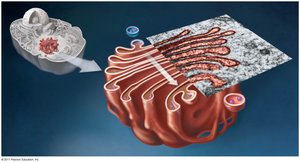
Endoplasmic reticulum (ER): Biosynthetic workshop; smooth ER synthesizes lipids and processes toxins, rough ER produces membranes and proteins.
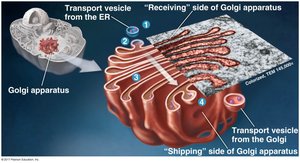
Golgi apparatus: Modifies, sorts, and ships cell products.
Lysosomes: Digestive compartments.
Vacuoles: Storage and maintenance.
Peroxisomes: Metabolic compartments.
Lysosomes and Vacuoles
Lysosomes: Cellular Digestion
Lysosomes contain enzymes that break down ingested substances and damaged organelles, playing a key role in cellular maintenance and recycling.
Digestive enzymes: Break down food and cellular debris.
Autophagy: Recycling of damaged organelles.
Vacuoles: Storage and Maintenance
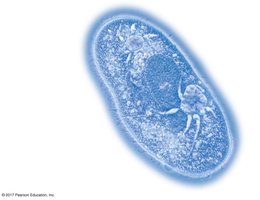
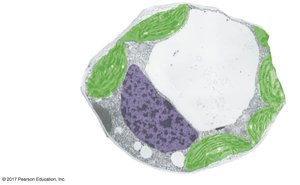
Vacuoles are large vesicles with diverse functions. In protists, contractile vacuoles expel excess water. In plants, the central vacuole stores molecules and wastes and supports growth.
Energy-Converting Organelles
Mitochondria: Cellular Respiration
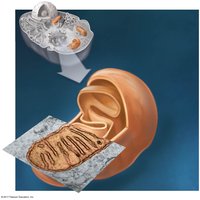
Mitochondria are the site of cellular respiration, converting chemical energy from food into ATP. They have two internal compartments: the intermembrane space and the mitochondrial matrix.
Intermembrane space: Narrow region between membranes.
Mitochondrial matrix: Contains DNA, ribosomes, and enzymes.
Chloroplasts: Photosynthesis
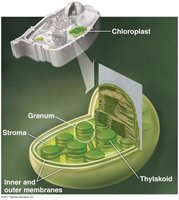
Chloroplasts convert solar energy to chemical energy through photosynthesis. They are found in plants and algae and contain structures such as thylakoids, grana, and stroma.
Endosymbiont Theory
Evolution of Mitochondria and Chloroplasts
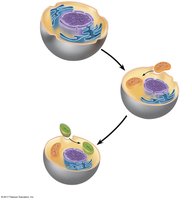
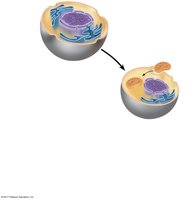
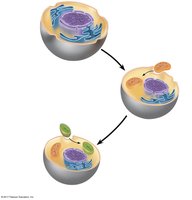
The endosymbiont theory proposes that mitochondria and chloroplasts originated as prokaryotes engulfed by ancestral eukaryotic cells. This explains their double membranes and own DNA.
Mitochondria: Present in all eukaryotes.
Chloroplasts: Present only in photosynthetic eukaryotes.
The Cytoskeleton
Cellular Support and Movement
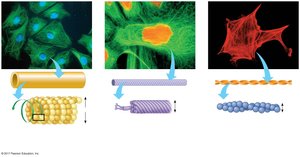
The cytoskeleton is a network of protein filaments that maintain cell shape, anchor organelles, and enable movement. It consists of microfilaments, intermediate filaments, and microtubules.
Microfilaments: Actin protein; involved in cell movement.
Intermediate filaments: Provide structural stability.
Microtubules: Tubulin protein; involved in organelle movement and cell division.
Plant Cell Walls and Cell Junctions
Cell Wall Structure and Function
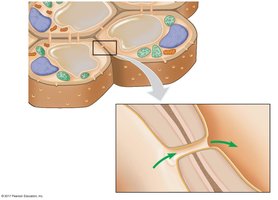
Plant cells have a rigid cell wall composed primarily of cellulose. The cell wall provides protection, structural support, and helps maintain cell shape. Plasmodesmata are channels that connect plant cells, allowing communication and transport of substances.
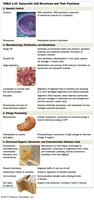
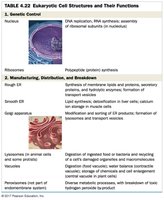
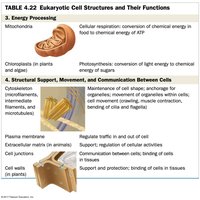
Summary Table: Eukaryotic Cell Structures and Functions
Overview of Major Organelles
The following tables summarize the functions of key eukaryotic cell structures:
Structure | Main Function |
|---|---|
Nucleus | DNA replication, RNA synthesis, assembly of ribosomal subunits |
Ribosomes | Protein synthesis |
Rough ER | Synthesis of membrane lipids and proteins, secretory proteins, hydrolytic enzymes; formation of transport vesicles |
Smooth ER | Lipid synthesis, detoxification, calcium storage |
Golgi apparatus | Modification, sorting, and shipping of cell products |
Lysosomes | Digestion of ingested food, recycling of damaged organelles |
Vacuoles | Storage, digestion, maintenance |
Peroxisomes | Metabolic processes |
Mitochondria | Cellular respiration, ATP production |
Chloroplasts | Photosynthesis |
Cytoskeleton | Structural support, movement |
Plasma membrane | Regulates traffic in and out of cell |
Cell wall | Support and protection |