 Back
Cell Structure and Function: A Mini-Textbook Study Guide
Study Guide - Smart Notes
 Tailored notes based on your materials, expanded with key definitions, examples, and context.
Scientist Spotlight: Flossie Wong-Staal, Ph.D.
Contributions to Virology
Flossie Wong-Staal was a pioneering virologist whose work significantly advanced our understanding of retroviruses and HIV. Her research enabled the development of diagnostic tests for HIV and contributed to the field of molecular biology.
Retroviruses and Cancer: Discovered that retroviruses can cause cancer, highlighting the role of viruses in disease.
HIV Research: First scientist to clone HIV and develop a genetic map of the virus, facilitating the creation of HIV tests.
Academic Journey: Immigrated from Hong Kong, studied at UCLA, and earned a Ph.D.
Personal Interests: Competitive ballroom dancer.
Chapter 4: A Tour of the Cell
Objectives
This chapter explores the fundamental unit of life—the cell. It covers the differences between prokaryotic and eukaryotic cells, plant and animal cell structures, and the functions of various organelles.
Cells as Basic Units: All living organisms are composed of cells.
Prokaryotic vs. Eukaryotic Cells: Structural and functional differences.
Plant vs. Animal Cells: Unique features and organelles.
Organelles: Description and function of typical cell components.
Prokaryotic and Eukaryotic Cell Structure
Comparison of Cell Types
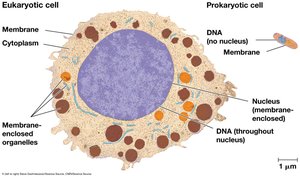
Cells are classified as prokaryotic or eukaryotic based on their internal structure. Both types share certain features, but eukaryotic cells possess additional complexity.
Common Features: Cytosol, plasma membrane, DNA, ribosomes.
Prokaryotic Cells: Lack membrane-bound organelles; DNA is not enclosed in a nucleus.
Eukaryotic Cells: Contain membrane-bound organelles, including a nucleus.
Plasma Membrane: Structure and Function
Phospholipid Bilayer and Selective Permeability
The plasma membrane is a critical structure that separates the cell from its environment and regulates the movement of substances.
Structure: Composed of a phospholipid bilayer with embedded proteins.
Function: Acts as a semi-permeable barrier, allowing nutrients in and waste out.
Cell Size Limitation: As cells grow, volume increases faster than surface area, limiting the rate of molecular transport.
Mathematical Context:
Volume increases as units3, surface area as units2.
Cells remain small to maintain efficient transport across the membrane.
Organelles and Cell Parts
Membrane-Bound and Non-Membrane-Bound Structures
Organelles are specialized structures within eukaryotic cells that perform distinct functions. Some cell parts, like ribosomes, are not enclosed by membranes.
Organelles: Internal membranes create unique environments for specific functions.
Ribosomes: Sites of protein synthesis; can be free in cytosol or attached to the rough ER.
Flow of Information in the Cell
DNA, Chromatin, and Gene Expression
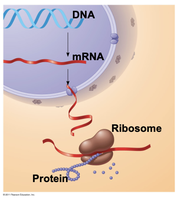
Genetic information flows from DNA to RNA to protein. DNA is organized with histones into chromatin, which can be relaxed for transcription.
DNA: Wrapped around histones to form chromatin.
Gene Expression: mRNA is produced from relaxed chromatin and exits the nucleus for translation.
Nucleus
Structure and Function
The nucleus is the control center of the cell, housing genetic material and coordinating gene expression.
Nucleolus: Site of rRNA synthesis, which forms ribosomes.
Nuclear Envelope: Double membrane with pores for mRNA transport.
Connection: Outer membrane connects to the rough ER.
Ribosomes
Protein Synthesis
Ribosomes are the molecular machines responsible for translating mRNA into proteins.
Free Ribosomes: Located in the cytosol; synthesize proteins for use within the cell.
Bound Ribosomes: Attached to the rough ER; synthesize proteins for secretion or membrane insertion.
Endoplasmic Reticulum (ER)
Rough and Smooth ER
The ER is a network of membranes involved in protein and lipid synthesis.
Rough ER: Processes and modifies proteins, adds carbohydrates, and produces membranes.
Smooth ER: Synthesizes lipids (phospholipids, steroids), metabolizes carbohydrates, detoxifies chemicals, and stores calcium ions.
Golgi Apparatus
Modification and Sorting of Molecules
The Golgi apparatus receives proteins and lipids from the ER, modifies them, and sorts them for transport to their final destinations.
Modification: Glycoproteins are altered.
Sorting: Molecules are sorted and packaged into vesicles for secretion or delivery within the cell.
Vesicles and Vacuoles
Transport and Storage
Vesicles and vacuoles are membrane-bound sacs that transport, store, and digest substances within the cell.
Vesicles: Small sacs for transport, lysosomes, and peroxisomes; contain enzymes and solutes.
Vacuoles: Larger sacs for storage; types include food vacuoles (animals), central vacuole (plants), and contractile vacuoles (protists).
Endomembrane System
Integration of Organelles
The endomembrane system includes the ER, Golgi apparatus, vesicles, and vacuoles, working together to process and transport molecules.
Coordination: Organelles interact to modify, package, and distribute proteins and lipids.
Energy Processing Organelles
Chloroplasts and Mitochondria
Cells convert energy from one form to another using specialized organelles.
Chloroplasts: Convert light energy to glucose via photosynthesis (plants and algae).
Mitochondria: Convert glucose to ATP via cellular respiration (all eukaryotes).
Metabolism: Includes dehydration and hydrolysis reactions.
Lysosomes and Peroxisomes
Digestive and Detoxifying Functions
Lysosomes and peroxisomes are specialized vesicles that break down substances and detoxify harmful compounds.
Lysosomes: Contain digestive enzymes; break down food, old organelles, and bacteria; acidic environment (pH 5).
Peroxisomes: Break down alcohol, produce and degrade hydrogen peroxide; contain specialized enzymes.
Cytoskeleton
Structural Support and Movement
The cytoskeleton is a network of protein filaments that provides structural support, facilitates movement, and organizes cell contents.
Intermediate Filaments: Maintain cell shape and organelle position (e.g., keratin).
Microfilaments: Support membrane surface, enable shape changes and muscle contractions (e.g., actin).
Microtubules: Act as highways for vesicle and organelle transport; motor proteins move along them; form cilia and flagella.
Centrosomes and Centrioles
Microtubule Organization
Centrosomes and centrioles organize microtubules, which are essential for cell division and intracellular transport.
Centrosome: Composed of two centrioles; organizes microtubules.
Animal Cells: All microtubules extend from a centrosome.
Cell Wall
Protection and Structure
The cell wall is a rigid structure found outside the plasma membrane in plants, bacteria, and fungi, providing protection and support.
Plant Cell Wall: Made of cellulose; prevents osmotic lysis.
Bacterial and Fungal Cell Walls: Composed of other materials.
Extracellular Matrix
Communication and Attachment
The extracellular matrix surrounds animal cells, facilitating communication and attachment to other cells and surfaces.
Composition: Proteins and carbohydrates (proteoglycans, glycoproteins).
Function: Cell communication and attachment.
