 Back
BackCell Structure and Function: A Tour of the Cell
Study Guide - Smart Notes
 Tailored notes based on your materials, expanded with key definitions, examples, and context.
Cell Structure and Function
Introduction to Cell Theory
The cell is the fundamental unit of life, and understanding its structure and function is essential for biology. The cell theory forms the basis of modern biology and states:
Cells are the smallest form of function in living organisms.
All life is composed of cells, whether unicellular or multicellular.
All cells come from pre-existing cells, disproving the idea of spontaneous generation.
Levels of Biological Organization
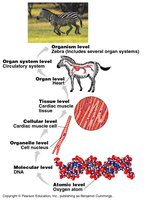
Biological systems are organized hierarchically, from atoms to organisms. This organization allows for specialization and complexity in living systems.
Atomic level: Atoms such as oxygen form molecules.
Molecular level: DNA and other molecules make up organelles.
Organelle level: Organelles like the nucleus are part of cells.
Cellular level: Cells form tissues.
Tissue level: Tissues form organs.
Organ level: Organs form organ systems.
Organism level: Organ systems make up the whole organism.
Cell Types
Prokaryotic Cells
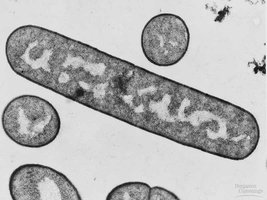
Prokaryotic cells are simpler and lack a true nucleus. Their DNA is located in the nucleoid region, and they do not have membrane-bound organelles.
Examples: Bacteria and Archaea
Features: DNA free in cytoplasm, no double membrane-bound organelles
Eukaryotic Cells
Eukaryotic cells are more complex, with a true nucleus and various membrane-bound organelles.
Examples: Fungi, Animals, Plants, Protista
Features: Nucleus enclosed by double membrane, organelles such as mitochondria and chloroplasts
Cell Diversity
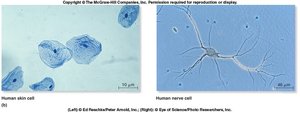
Cells vary in shape and function, reflecting their specialized roles in multicellular organisms.
Human skin cells: Flat and protective
Human nerve cells: Long and branched for signal transmission
Cytoplasm and Cytosol
Structure and Function
The cytoplasm is the region between the plasma membrane and the nucleus, containing organelles and cytosol. The cytosol is the fluid portion outside organelles, where many metabolic pathways occur.
Cytoplasm: Includes all organelles and fluids within the plasma membrane
Cytosol: Sap-like fluid outside organelles, rich in macromolecules and ions
Eukaryotic Cell Organelles
Nucleus
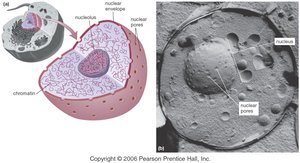
The nucleus is the control center of the cell, surrounded by a double-membrane nuclear envelope with pores for molecular transport.
Contains: DNA, RNA, proteins
Nuclear pores: Regulate passage of molecules
Nucleolus
The nucleolus is found inside the nucleus and is responsible for manufacturing ribosomal RNA, a major component of ribosomes.
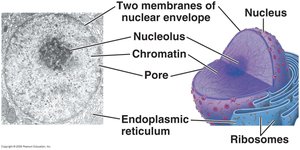
Ribosomes
Ribosomes are the sites of protein synthesis, composed of ribosomal RNA and proteins. They can be free in the cytoplasm or attached to membranes.
Free ribosomes: Synthesize proteins for internal use
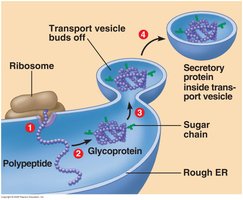
Attached ribosomes: Synthesize secretory proteins
The Endomembrane System
The endomembrane system is a network of internal membranes that compartmentalize the cell and facilitate various biochemical activities.
Components: Endoplasmic reticulum (ER), transport vesicles, Golgi bodies, lysosomes, vacuoles
Function: Separation and specialization of cellular processes
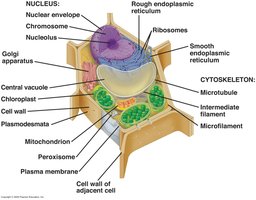
Endoplasmic Reticulum (ER)
The ER is a network of membranes continuous with the nuclear envelope. It comes in two forms:
Rough ER: Studded with ribosomes, involved in protein synthesis
Smooth ER: Lacks ribosomes, involved in lipid synthesis and detoxification
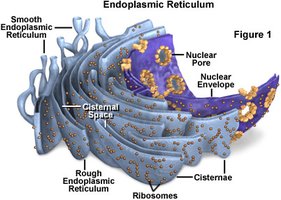
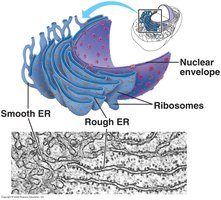
Transport Vesicles
Transport vesicles are small spheres of phospholipids that move molecules between organelles within the cytosol.
Golgi Bodies
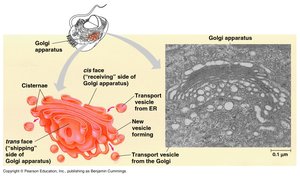
The Golgi apparatus is the cell's shipping and modification center. It receives proteins and macromolecules from the ER, modifies them, and directs them to their proper destinations.
CIS side: Receiving side
Cisternae: Middle region for modification
TRANS side: Shipping side
Lysosomes
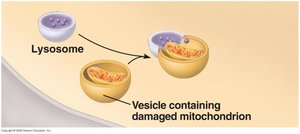
Lysosomes are membrane-bound sacs containing digestive enzymes. They break down cellular waste and damaged organelles, and can digest entire cells in certain processes.
Autophagy: Digestion of damaged organelles
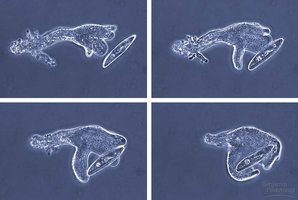
Phagocytosis: Ingestion of solids by forming vacuoles
Vacuoles
Vacuoles are storage organelles. Plant cells typically have a large central vacuole, while animal and protist cells may have many small or specialized vacuoles.
Central vacuole: Water regulation, storage of pigments, proteins, ions, waste
Contractile vacuole: Regulates water pressure and locomotion in protists
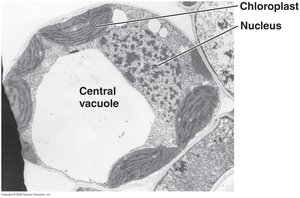
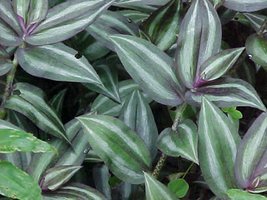
Crystals (Raphides)
Some plant cells contain crystals called raphides, which are composed of calcium oxalate and serve as a defense mechanism.
Cytoskeleton
Structure and Function
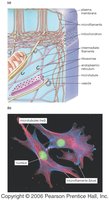
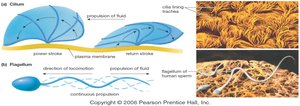
The cytoskeleton is a network of microtubules, microfilaments, centrioles, flagella, and cilia that provide mechanical support and facilitate transport within the cell.
Microtubules: Hollow rods made of tubulin, shape and support cell, involved in cell division, cilia, and flagella
Centrioles: Found only in animal cells, involved in cell division
Flagella: Whip-like extensions for locomotion
Cilia: Shorter extensions for locomotion and feeding
Microfilaments: Solid rods made of actin, responsible for movement and cell shape
Cell Wall
Structure and Function
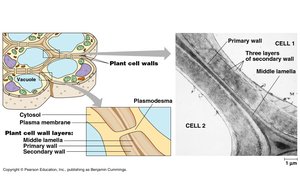
The cell wall is an external layer that provides protection and support. It is found in plants, bacteria, and fungi, and is composed of polysaccharides such as cellulose.
Plasmodesmata: Pits in plant cell walls for cell-to-cell communication
Energy Transformations
Mitochondria
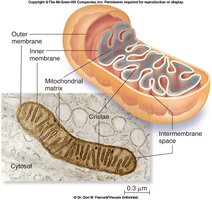
Mitochondria are double membrane-bound organelles responsible for aerobic respiration and ATP production. They contain their own DNA and can self-replicate.
Cristae: Highly folded inner membrane surfaces
Matrix: Inner region where biochemical reactions occur
Chloroplasts
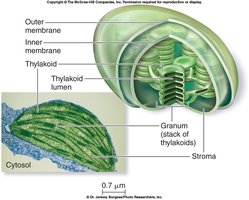
Chloroplasts are found only in plants and are responsible for photosynthesis. They contain chlorophyll and their own DNA.
Thylakoids: Membrane-bound sacs containing chlorophyll
Grana: Stacks of thylakoids, site of light reactions
Stroma: Gelatinous inner region, site of dark reactions
Why Are Cells So Small?
Surface Area to Volume Ratio
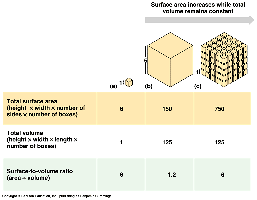
Cells must exchange nutrients and waste with their environment. As cells increase in size, their volume grows faster than their surface area, limiting efficient exchange.
Surface area: Increases at a rate of
Volume: Increases at a rate of
Implication: Larger cells have greater difficulty exchanging materials through the plasma membrane
Summary Table: Prokaryotic vs. Eukaryotic Cells
Feature | Prokaryotic Cells | Eukaryotic Cells |
|---|---|---|
Nucleus | No (nucleoid region) | Yes (true nucleus) |
Membrane-bound organelles | No | Yes |
Examples | Bacteria, Archaea | Fungi, Animals, Plants, Protista |
DNA location | Free in cytoplasm | Enclosed in nucleus |
