 Back
Cell Structure and Function: A Tour of the Cell
Study Guide - Smart Notes
 Tailored notes based on your materials, expanded with key definitions, examples, and context.
Cell Structure and Function
Overview of Cell Types
Cells are the fundamental units of life, classified into prokaryotic and eukaryotic types. Prokaryotic cells lack a nucleus and membrane-bound organelles, while eukaryotic cells possess these features. - Prokaryotic cells: Include bacteria and archaea; DNA is located in the nucleoid region. - Eukaryotic cells: Include plants, animals, fungi, and protists; DNA is enclosed within a nucleus. - Key organelles: Mitochondria, chloroplasts (in plants), nucleus, vacuoles, and cell walls (in plants and bacteria). 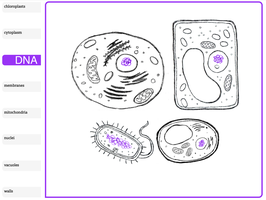
Structure of Animal and Plant Cells
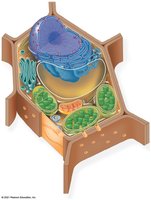
Eukaryotic cells are highly organized, with distinct organelles performing specialized functions. - Animal cells: Contain a nucleus, mitochondria, endoplasmic reticulum, Golgi apparatus, lysosomes, and cytoskeleton. - Plant cells: Possess all animal cell organelles plus chloroplasts, a central vacuole, and a rigid cell wall. - Cell wall: Provides structural support in plants. - Chloroplasts: Site of photosynthesis in plant cells. 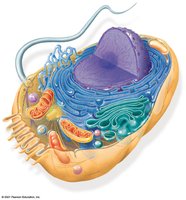
Plasma Membrane Structure
The plasma membrane is a selectively permeable barrier composed of a phospholipid bilayer with embedded proteins. - Phospholipid bilayer: Hydrophilic heads face outward; hydrophobic tails face inward. - Proteins: Integral and peripheral proteins facilitate transport and communication. - Carbohydrate chains: Involved in cell recognition. 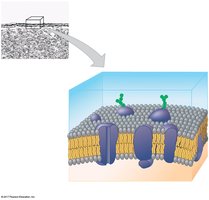
Genetic Information and Protein Production
The nucleus stores genetic information and directs protein synthesis. Ribosomes are the sites of protein production. - Nucleus: Contains DNA organized as chromatin; surrounded by a nuclear envelope with pores. - Nucleolus: Site of ribosome assembly. - Ribosomes: Can be free in the cytosol or bound to the endoplasmic reticulum (ER). 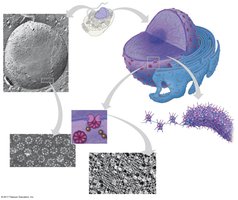
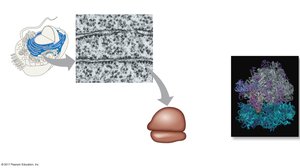
Protein Sorting and Ribosome Function
Proteins are sorted based on their destination within or outside the cell. - Free ribosomes: Synthesize proteins for use in the cytosol. - Membrane-bound ribosomes: Synthesize proteins for membranes, lysosomes, or secretion. 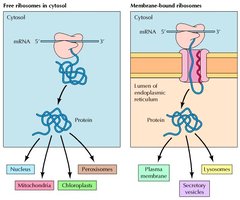
Endoplasmic Reticulum (ER)
The ER is a network of membranes involved in protein and lipid synthesis. - Rough ER: Studded with ribosomes; synthesizes proteins and glycoproteins. - Smooth ER: Lacks ribosomes; synthesizes lipids, metabolizes carbohydrates, detoxifies drugs, and stores calcium ions. 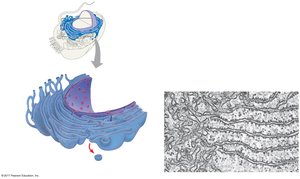
Golgi Apparatus
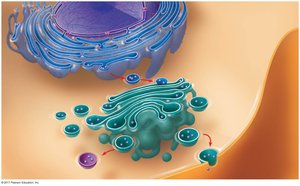
The Golgi apparatus processes, sorts, and ships proteins and lipids received from the ER. - Cis face: Receiving side. - Trans face: Shipping side. - Function: Modifies products, packages them into vesicles for secretion or use within the cell. 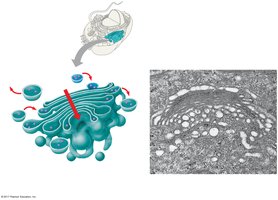
Experimental Evidence for the Secretory Pathway
Experiments trace the movement of proteins through the cell, confirming the secretory pathway. - Pulse-chase experiments: Label proteins and follow their journey from ER to Golgi to plasma membrane. 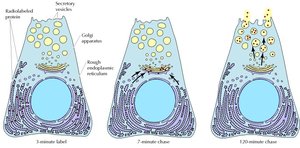
Lysosomes and Autophagy
Lysosomes are organelles containing digestive enzymes for breaking down macromolecules. - Phagocytosis: Cell engulfs particles for digestion. - Autophagy: Lysosomes digest damaged organelles. - Origin: Lysosomes are produced from the Golgi apparatus. 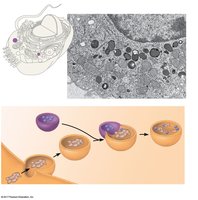
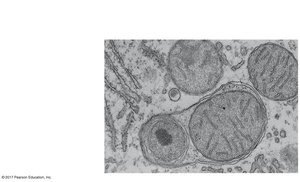
Mitochondria and Chloroplasts: Energy-Producing Organelles
Mitochondria and chloroplasts are responsible for cellular energy production. - Mitochondria: Site of cellular respiration; converts glucose to ATP via oxidative phosphorylation. - Chloroplasts: Site of photosynthesis; converts solar energy to chemical energy in plants. - Both organelles: Contain their own DNA and ribosomes, supporting the endosymbiont theory. 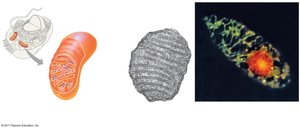
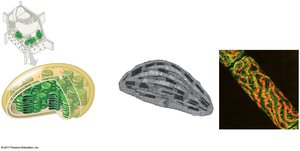
Endosymbiont Theory
The endosymbiont theory explains the origin of mitochondria and chloroplasts. - Theory: Eukaryotic cells engulfed prokaryotic cells, which became mitochondria and chloroplasts. - Evidence: Both organelles have double membranes, their own DNA, and ribosomes. 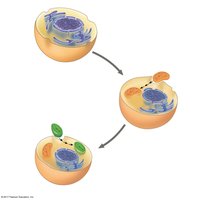
Cytoskeleton: Structure and Movement
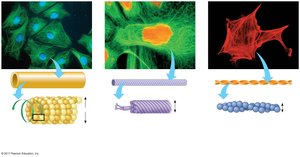
The cytoskeleton is a network of fibers that provides structural support and enables cell movement. - Microtubules: Hollow tubes; maintain cell shape, aid in cell division, and serve as tracks for organelle movement. - Microfilaments: Thin rods; involved in muscle contraction and cell movement. - Intermediate filaments: Provide mechanical support. 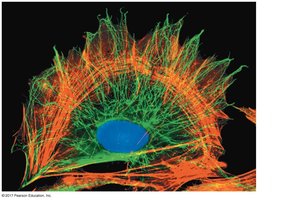
Centrosomes and Centrioles
Centrosomes are microtubule-organizing centers in animal cells, containing a pair of centrioles. - Function: Important for cell division and organization of microtubules. 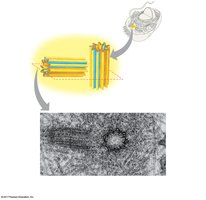
Cell Junctions and Cell Walls
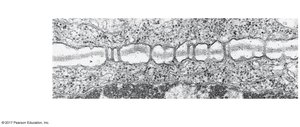
Cells are organized into tissues via junctions and walls. - Tight junctions: Prevent fluid movement between cells. - Anchoring junctions: Bind cells into strong tissues. - Gap junctions: Allow ions and small molecules to pass between cells. - Cell walls: Provide structural support in plants; plasmodesmata allow communication between plant cells. 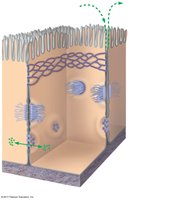
Summary Table: Comparison of Cell Organelles
Organelle | Function | Present in Animal Cells | Present in Plant Cells |
|---|---|---|---|
Nucleus | Stores genetic information | Yes | Yes |
Mitochondria | ATP production | Yes | Yes |
Chloroplast | Photosynthesis | No | Yes |
Cell wall | Structural support | No | Yes |
Golgi apparatus | Protein processing | Yes | Yes |
Lysosome | Digestion | Yes | Rare |
Vacuole | Storage | Small | Large |
Additional info: Some plant cells may contain lysosome-like organelles, but large central vacuoles perform most digestive functions. ----------------------------------------
