 Back
Cell Structure and Function: Eukaryotic and Prokaryotic Cells, Organelles, and the Endomembrane System
Study Guide - Smart Notes
 Tailored notes based on your materials, expanded with key definitions, examples, and context.
Cell Theory and Universal Properties of Cells
Cell Theory
The cell theory is a foundational concept in biology, stating that all living organisms are composed of cells, the cell is the smallest unit of life, and all cells arise from pre-existing cells. This theory highlights the universality and continuity of life at the cellular level.
All life is composed of cells: Every organism, from bacteria to plants and animals, is made up of one or more cells.
Cells are the smallest unit of life: The cell is the basic structural and functional unit of all living things.
Cells arise from other cells: New cells are produced by the division of existing cells.
Universal Properties of Cells
Plasma membrane: A selectively permeable barrier that encloses the cell, controlling the movement of substances in and out.
DNA genome: Genetic material that contains instructions for cellular structure and function.
Cytoplasm: The semi-fluid substance inside the cell where metabolic reactions occur.
Ribosomes: Complexes that synthesize proteins by translating genetic information.
Prokaryotic vs. Eukaryotic Cells
Fundamental Differences
Cells are classified as prokaryotic or eukaryotic based on structural and functional differences.
Prokaryotic cells: Lack a nucleus and membrane-bound organelles; DNA is located in the nucleoid region. Examples include bacteria and archaea.
Eukaryotic cells: Possess a true nucleus enclosed by a nuclear envelope and various membrane-bound organelles. Examples include plants, animals, fungi, and protists.
Ribosomes
Structure and Function
Ribosomes are small complexes of protein and RNA that play a central role in translating genetic information (mRNA) into proteins. They are found in both prokaryotic and eukaryotic cells.
Composed of two subunits: Large and small subunits that sandwich the mRNA.
Function: Facilitate the matching of mRNA codons to tRNA and the assembly of amino acids into polypeptides.
Location: Free in the cytoplasm or bound to the endoplasmic reticulum in eukaryotes.
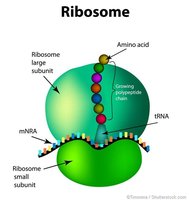
Eukaryotic Cell Organelles
The Endomembrane System
The endomembrane system is a network of membranes within eukaryotic cells that work together to modify, package, and transport lipids and proteins. It includes the nucleus, endoplasmic reticulum (ER), Golgi apparatus, and lysosomes.
Physically connected or linked by vesicles: Organelles are either directly connected or communicate via membrane-bound vesicles.
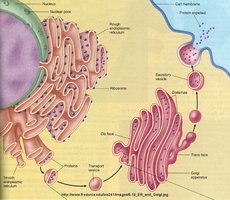
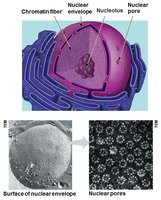
The Nucleus
The nucleus is the control center of the eukaryotic cell, housing the genetic material (DNA) and the nucleolus, which produces ribosomal subunits.
Double membrane (nuclear envelope): Separates the nucleus from the cytoplasm; contains nuclear pores for regulated exchange of materials.
Nucleolus: Site of ribosomal RNA synthesis and ribosome assembly.
Transport: mRNA and ribosomal subunits exit the nucleus; enzymes for DNA/RNA maintenance enter.
Endoplasmic Reticulum (ER)
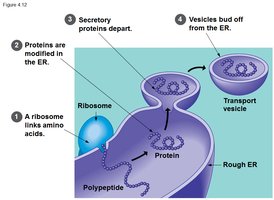
The ER is an extensive network of membranes involved in protein and lipid synthesis. It is physically connected to the nuclear envelope and consists of two regions: rough ER and smooth ER.
Rough ER: Studded with ribosomes; synthesizes and processes proteins for secretion or membrane insertion.
Smooth ER: Lacks ribosomes; synthesizes lipids, phospholipids, and steroids; involved in detoxification, especially in liver cells.
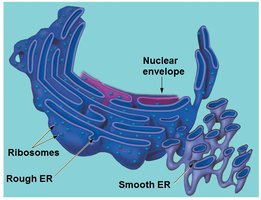
Rough ER: Protein Synthesis and Transport
Ribosomes on the rough ER synthesize proteins, which are inserted into the ER lumen, folded, and packaged into vesicles for transport.
Proteins are transported to other organelles or the plasma membrane, especially in secretory cells.
Smooth ER: Lipid Synthesis and Detoxification
Produces phospholipids and steroids.
Detoxifies drugs and alcohol, especially in liver cells.
Golgi Apparatus
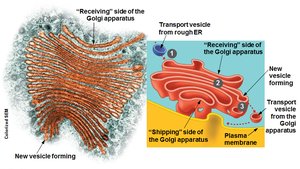
The Golgi apparatus is a series of flattened membrane sacs that modify, sort, and package proteins and lipids received from the ER. It is essential for directing molecules to their correct cellular destinations.
Receives vesicles from ER: Vesicles fuse with the Golgi, releasing their contents for further modification.
Modification and sorting: Enzymes in the Golgi modify proteins and lipids, which are then repackaged into new vesicles.
Distribution: Vesicles deliver products to the cytosol, plasma membrane, or for secretion.
Mitochondria and Chloroplasts: Energy Transformation Organelles
Mitochondria
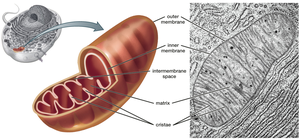
Mitochondria are the "powerhouses" of the cell, generating ATP through cellular respiration. They are found in all eukaryotic cells.
Double membrane: Outer and inner membranes; the inner membrane is highly folded into cristae, increasing surface area for energy production.
Matrix: The innermost compartment, containing enzymes for the citric acid cycle.
Function: Extract energy from food molecules and store it in ATP.
Chloroplasts
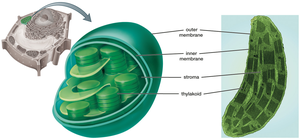
Chloroplasts are organelles found in plant cells that convert solar energy into chemical energy via photosynthesis.
Double membrane: Encloses the organelle.
Stroma: Fluid-filled space containing enzymes for the Calvin cycle.
Thylakoids: Stacks of membrane sacs containing chlorophyll, where the light-dependent reactions of photosynthesis occur.
Endosymbiont Theory
Origin of Mitochondria and Chloroplasts
The endosymbiont theory proposes that mitochondria and chloroplasts originated as free-living prokaryotes that were engulfed by ancestral eukaryotic cells. Over time, these symbiotic relationships became permanent, leading to the complex cells seen today.
Evidence: Both organelles have their own circular DNA, replicate by binary fission, possess double membranes, and have ribosomes similar to those of bacteria.
Genetic similarity: Mitochondrial DNA is similar to Rickettsia bacteria; chloroplast DNA is similar to cyanobacteria.
Sensitivity to antibiotics: Both are affected by antibiotics that target prokaryotes.

Lysosomes and Vacuoles
Lysosomes
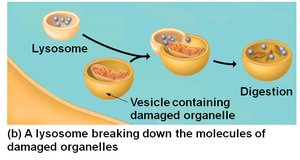
Lysosomes are membrane-bound sacs containing digestive enzymes, found mainly in animal cells. They break down macromolecules, old organelles, and foreign substances.
Function: Digest proteins, polysaccharides, fats, nucleic acids, and damaged organelles.
Role in development: Involved in processes such as the removal of webbing between fingers and toes during embryonic development.
Vacuoles
Vacuoles are large membrane-bound sacs with diverse functions, especially prominent in plant cells.
Food vacuoles: Formed by endocytosis to store and digest food.
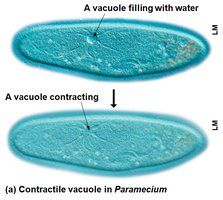
Contractile vacuoles: Found in protists like Paramecium, pump out excess water to maintain osmotic balance.
Central vacuole (plants): Stores nutrients, absorbs water, and contains pigments or toxins for defense.
Lysosomes and Food Vacuoles
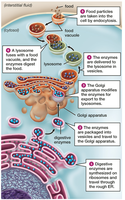
In many animal cells and protists, lysosomes fuse with food vacuoles to digest engulfed material, a process essential for nutrient acquisition and cellular maintenance.
Summary Table: Cellular Components
The following table summarizes the structure, function, and cell type association of major cellular components.
Organelle/Structure | Main Function | Found in |
|---|---|---|
Plasma membrane | Selective barrier, regulates entry/exit | All cells |
Nucleus | Houses DNA, controls cell activities | Eukaryotes |
Ribosomes | Protein synthesis | All cells |
Endoplasmic Reticulum (Rough/Smooth) | Protein and lipid synthesis | Eukaryotes |
Golgi apparatus | Modification, sorting, packaging of proteins/lipids | Eukaryotes |
Mitochondria | ATP production | Eukaryotes |
Chloroplasts | Photosynthesis | Plants, some protists |
Lysosomes | Digestion of macromolecules | Animals, some protists |
Vacuoles | Storage, water balance, digestion | Plants, fungi, some protists |
